Stopped at a Drug Checkpoint in Thailand: What Happened, What to Know, and Why a Medical Certificate Matters
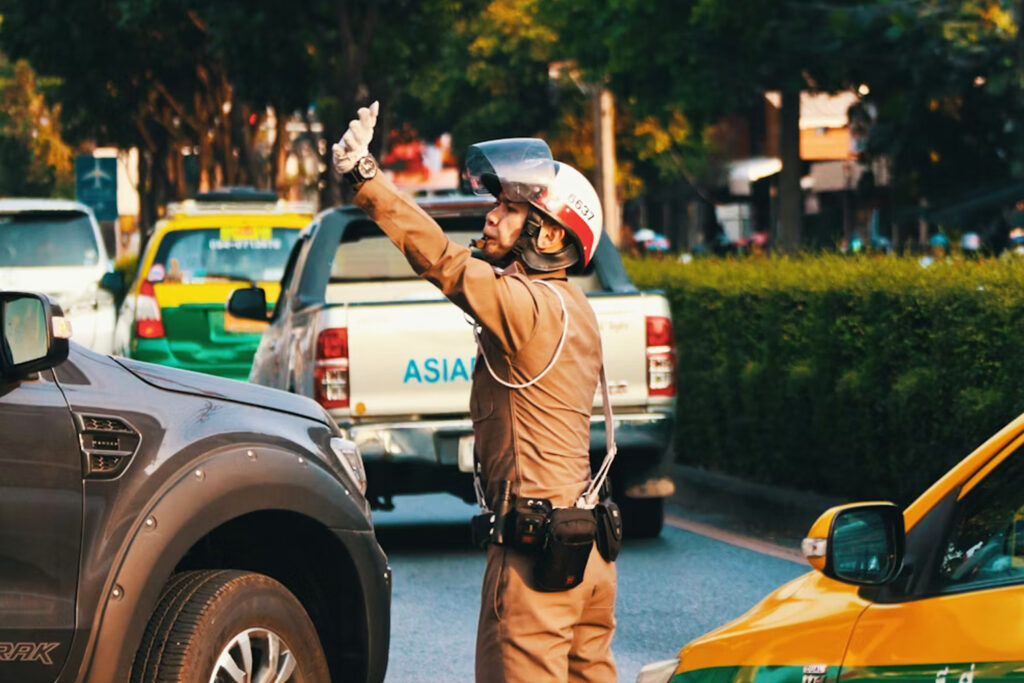

Thailand has had medical cannabis regulations in place for several years now. At the same time, illegal drug issues — cocaine, ketamine, and others — have been a persistent concern. Against that backdrop, drug checkpoints operate across the country, and in central Bangkok, the area beneath BTS elevated tracks sees regular checks given the volume of traffic passing through.
Over the past several months, it has been hard to miss how frequently these checkpoints have been running somewhere in the city.
大麻好きの警察に助けられた。トンロー付近で警察が薬物検問してて、貰ったキーフを薬物と勘違いされた。"キーフは合法"と話しても理解されなかったけど、大麻好きの警察がキーフの説明してくれて、無事釈放された。あと診断書を持ってたのも良かった。もし携帯してなかったら罰金だからね。診断書大切
— Kei | 大麻文化を作る大麻盆栽家 (@smallnycer) May 12, 2026
Recently, I was stopped at a drug checkpoint for the first time.
It was a tense experience — the first time anything like this had happened. What follows is an account of how it unfolded, what to be aware of, and what has been shared by people on the ground. For anyone traveling to Thailand with cannabis in mind, being approached at a drug checkpoint is not an unusual scenario, so hopefully this is useful as a reference.
A First Drug Checkpoint Experience in Thailand — What Cannabis Enthusiasts Should Know
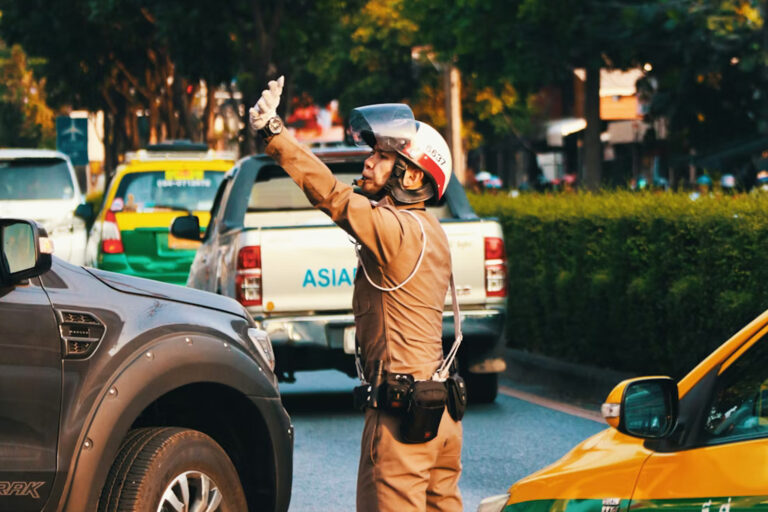
It happened around 11 PM, heading home by Bolt. Riding on the back of a motorbike through the Thonglor area under the BTS tracks, more than 20 officers were lined up conducting simultaneous checks on drivers passing through.
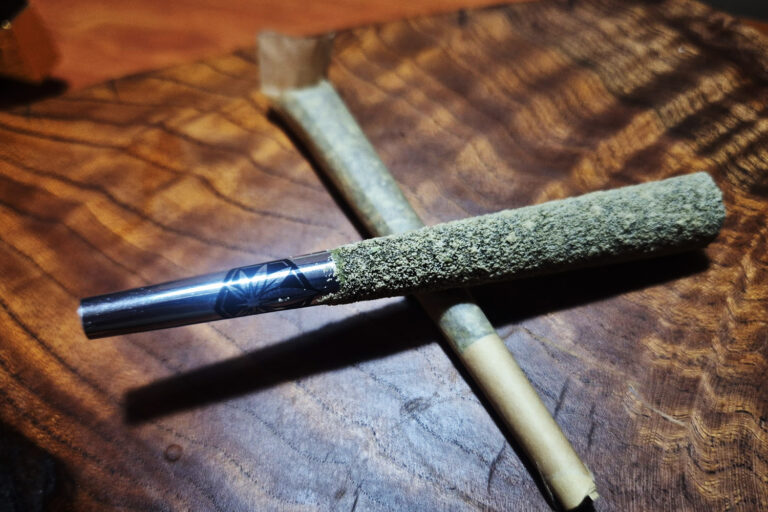
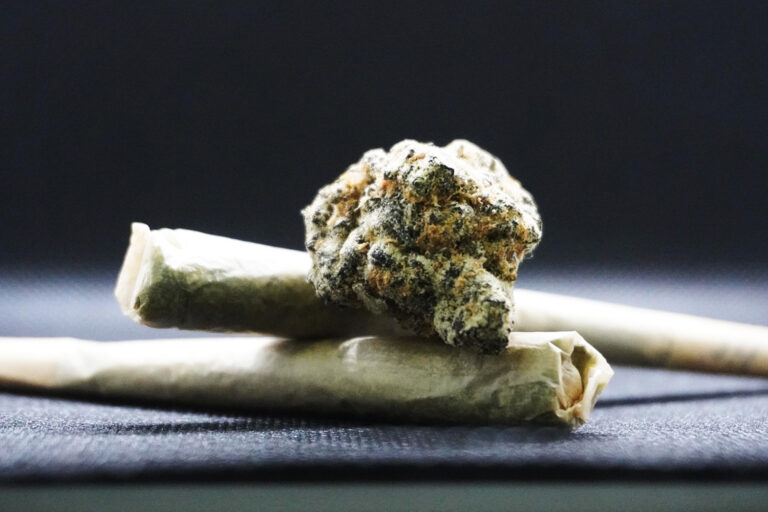
Being directed to the side of the road was inevitable. The first thing checked was whether any drugs were being carried. No illegal substances — but cannabis was, and that was communicated immediately. A case containing five rolled joints was presented and the contents confirmed.
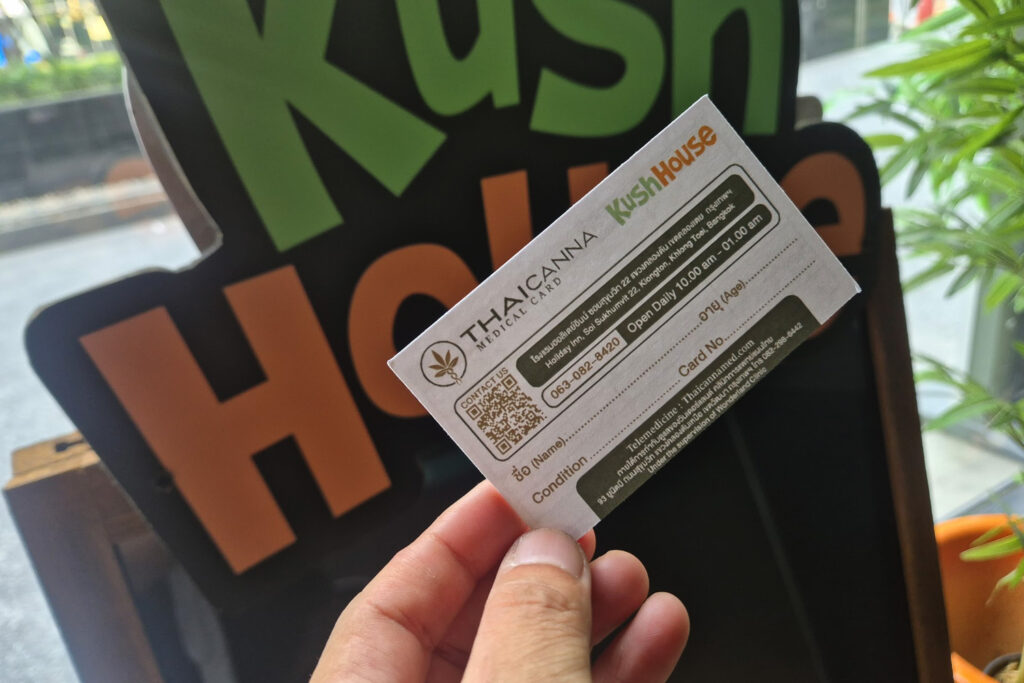
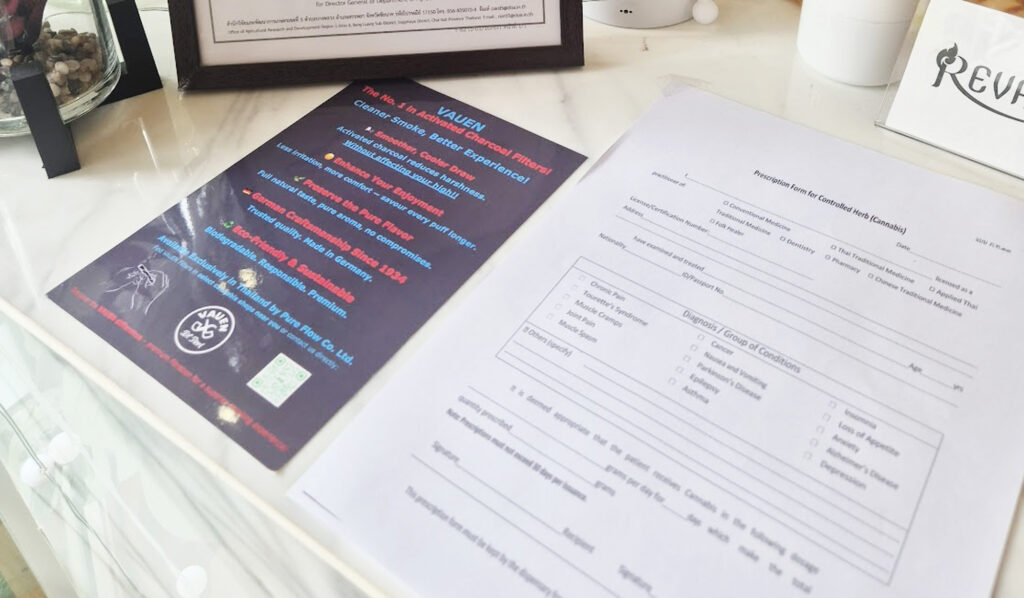
“Where did you buy it?” — the dispensary name from the medical certificate was given, and the certificate itself was shown.
Among visitors coming to Thailand specifically for cannabis, this tends to be something people are unaware of: the current regulatory direction in Thailand places increasing emphasis on the medical framework. As a result, some dispensaries and physicians recommend carrying a Medical Certificate when transporting cannabis.
There are cases where presenting one is requested at a checkpoint, and from personal experience, carrying it when transporting cannabis provides a meaningful degree of reassurance. That said, carrying a medical certificate does not guarantee that every situation will resolve without difficulty — how checkpoints are handled in practice can vary by area and circumstance.
The officer handling the check looked at the certificate, then said: “I go to that dispensary too.” Unexpected, to say the least — the officer turned out to be a cannabis enthusiast himself. Looking back, without that particular encounter, the situation could have become considerably more complicated.
After a general check of belongings, release seemed imminent — then another officer stepped in.
“Show me everything again.”
A second check. Nothing to hide, so the preference was to be done quickly, but the atmosphere suggested pushing back would be a mistake. Quietly cooperating seemed like the right call. In that second pass, a small package that hadn’t been found the first time came up. Inside was kief — received earlier that evening from a cannabis farmer acquaintance.
Kief is a powder of trichomes (resin glands) collected from cannabis flower. When heated and compressed, it becomes what is known as hashish. In Thailand, how kief is treated reportedly varies depending on region, enforcement context, and the form the product is in — and it is noted as an area requiring care.
From what had been confirmed, kief does circulate in the market, and the understanding was that it fell within legal range — which was explained on the spot. The problem was the appearance: powdered, and to the officer’s eye, it resembled cocaine. The moment the package was found, a signal went out and several officers moved in from different directions.
“Is this cocaine?” — “This is kief” was the answer, repeated multiple times. A translation app was used to try to get the explanation across, but comprehension was limited. While trying to figure out how to make it clearer, the cannabis-enthusiast officer from earlier returned and took over the explanation.
After that, it was established that nothing illegal was being carried, and eventually: “You can go.” Released.
What Has Been Heard From Others: Drug Checkpoint Realities in Thailand
Being around a lot of cannabis enthusiasts means a steady flow of firsthand accounts. Some time ago, a fairly unvarnished account of drug checkpoint realities in Thailand came through.
Thailand has a long history of discussion around non-transparent financial dealings involving police and administrative bodies. At drug checkpoints, situations involving that kind of problem have reportedly occurred depending on circumstances.
From someone close, there were accounts of high-stakes financial negotiations happening on-site around possession of illegal substances or concentrates. Stories involving LSD, MDMA, magic mushrooms, and ya ba have also come up in conversation.
Not every officer operates that way — there are officers genuinely working to keep illegal substances out of the market.
At the same time, Thailand operates with a different cultural and operational context from Japan, and there are moments where a gap between the formal framework and on-the-ground reality becomes apparent.
For Cannabis Enthusiasts Planning to Use Cannabis in Thailand
Cannabis has been legalized in Thailand, but regulation and enforcement continue to evolve. What was a relatively ambiguous situation for some time has been showing signs of tightening in recent years.
For anyone heading to Thailand as a cannabis enthusiast, being mindful of the legal framework and how it operates on the ground seems worthwhile.
The first thing to be aware of: carry a Medical Certificate when transporting cannabis.
There are situations where presenting one is requested at a checkpoint, and from personal experience, having it available can reduce the likelihood of a situation becoming difficult.
THC-containing edibles are also reportedly treated as a regulated category in some contexts. THC vapes carry a separate concern: electronic cigarettes themselves are regulated in Thailand, so possession and use warrant care. Smoking in public spaces is prohibited, and street smoking in particular can lead to problems.
Some people wonder: “If it’s illegal, why is it sold openly?” Thailand has a market structure and cultural context that differs from Japan, and there are situations where products and services that exist in grey areas circulate visibly.
Thai society is changing — gradually. But the gap between that and the expectations someone coming from Japan might bring is real, and there are moments where that becomes clear in an uncomfortable way.
Being stopped by police in a foreign country, without a shared language, while carrying cannabis — most people would find that distressing. Preparation in advance matters precisely because of that.
One more time, before closing:
When carrying cannabis in Thailand, it is recommended to have a Medical Certificate with you.If you’re not sure which dispensary to visit, our beginner-friendly dispensary guide is a good place to start.
Note: This article is based on content originally published on the Japanese edition of OG Times .