PT33 Prescription Thailand 2026 — How to Get a Medical Cannabis Certificate and Where to Use It
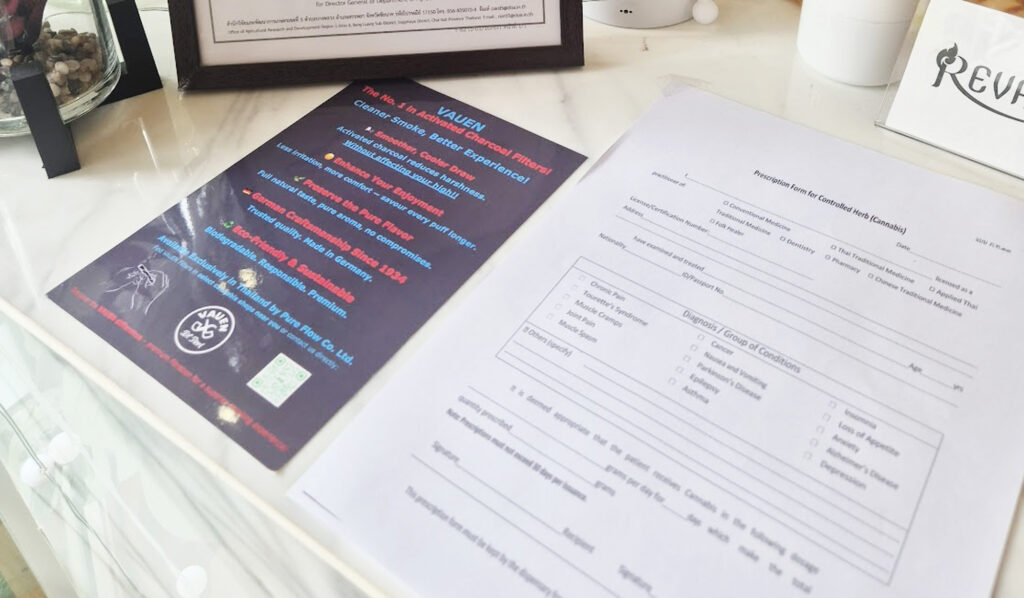

Among visitors using cannabis in Thailand, one keyword has become increasingly common: the “Medical Certificate”, or more precisely, the PT33 prescription form. Right after the 2022 decriminalization, most dispensaries sold cannabis without requiring any documentation, and from direct observation on the ground, many people still ask why it’s suddenly necessary now.
The answer is that the 2025 regulatory tightening fundamentally changed the situation. The Ministry of Public Health reclassified cannabis flower as a Controlled Herb, and the official policy direction now requires a physician’s prescription or medical certificate (PT33) for purchase and possession. This represents a clear move toward restricting cannabis to medical use only, away from recreational access. (Source: Ministry of Public Health, Thailand)
From early 2026 onward, dispensaries became required to have licensed medical personnel on-site, and a large number of shops that couldn’t meet the renewal requirements closed. The grey zone where cannabis could be bought without documentation has been shrinking steadily.
The formal prescription form that provides legal grounds for purchase is PT33 (Por Tor 33). While it’s often called a “Medical Certificate” or “diagnosis certificate” in casual conversation, understanding that PT33 is the legally meaningful document helps avoid confusion at the point of purchase or during a police check.
This guide covers three key areas:
- Why the Thai government is moving toward making PT33 mandatory
- How the risk profile changes depending on whether you have documentation or not
- What travelers need to understand in order to protect themselves
Starting with the regulatory background, this article explains why the medical certificate matters in the first place.
1: Why Is a Medical Certificate Required? Understanding Thailand’s Cannabis Law Reform
Thailand removed cannabis from its narcotic list in 2022, beginning what was widely described as decriminalization. From direct observation at the time, this was understood not as “free to use anywhere” but as a provisional measure removing criminal penalties. The result was faster-than-expected growth in recreational use, with tourists able to purchase freely from a rapidly expanding number of dispensaries. In response to this uncontrolled expansion, the Ministry of Public Health moved in June 2025 to reclassify cannabis flower as a Controlled Herb and formalized the requirement for a physician’s prescription (PT33) as the basis for legal purchase and possession. (Source: Ministry of Public Health, Thailand)
The medical certificate functions as documentation establishing that cannabis is being used for a medical purpose. It was introduced as a mechanism by which the government could suppress purely recreational use while preserving the medical framework.
The reclassification is based on the Thai Traditional Medical Knowledge Protection and Promotion Act (B.E. 2542 / 1999) and is classified as a Controlled Herb designation, not a return to the narcotic list. The penalty framework therefore differs from the Narcotics Act and is generally understood to be lighter, while the operational interpretation remains in flux.
① From 2022 Decriminalization to the 2025 Regulatory Tightening: The Legal Timeline
| Period | Key Development | Ease of Purchase |
|---|---|---|
| June 2022 | Cannabis removed from the narcotic list and decriminalized. Market expanded rapidly without adequate regulatory infrastructure | Effectively open |
| 2024 to 2025 | Government and Ministry of Public Health signal a shift toward medical-use priority | Transitional period |
| June 2025 | Cannabis flower reclassified as a Controlled Herb. PT33 prescription formally required for purchase and possession | Prescription required in principle |
| January 2026 | On-site licensed medical personnel mandated for dispensaries. Large number of non-compliant shops closed | Significantly restricted |
In June 2022, Thailand removed cannabis from its narcotic list and decriminalization began. At the same time, the Cannabis Bill that was intended to provide a regulatory framework stalled for political reasons, leaving the market to expand without clear management rules. The result was thousands of dispensaries across the country selling freely to tourists and locals alike.
From 2024 into 2025, the government and Ministry of Public Health moved toward a medical-priority framework, and in June 2025, cannabis flower was reclassified as a Controlled Herb. Under this change, purchasing or possessing cannabis without a PT33 became a legal violation in principle. From January 2026, physical on-site medical staffing requirements came into force, and the regulatory framework moved into the operational dimension. (Source: Ministry of Public Health, Thailand)
From direct observation on the ground: the surface impression is one of increasing strictness, while many shops continue operating and a dual-standard environment persists. From 2025 into 2026, however, the gap between formal rules and ground-level enforcement has been narrowing.
② How Purchasing Without a Certificate Becomes Illegal
| Factor | With PT33 | Without PT33 |
|---|---|---|
| Legal standing | Recognized as legal medical use | Treated as illegal in principle |
| Shop access | Straightforward purchase at registered dispensaries | May be refused at compliant shops |
| Police check or inspection | Able to explain the basis for use | Harder to explain; risk of confiscation or fine |
| Post-trip documentation | Can be presented as evidence of legal use | Limited documentation available |
Under the 2025 reclassification, purchasing or possessing cannabis flower requires demonstrating medical intent. The PT33 form, issued by physicians, dentists, pharmacists, or licensed Thai traditional medicine practitioners, is the document that establishes this intent. The practical difference between having and not having PT33 is summarized above.
Cannabis flower carries the strongest restrictions of all cannabis products. Extracts including oils, rosin, and wax remain in the narcotic classification and face the strictest controls. From direct observation, some dispensaries continue selling without checking for PT33, and in tourist areas a degree of informal tolerance remains. This creates a situation where purchase is possible in practice while remaining legally risky, which is precisely why the medical certificate is increasingly regarded as a tool for avoiding problems rather than a formality.
③ Do Tourists Need a Certificate Too? What Foreign Visitors Should Understand
- Establishes a medical basis for purchase that can be explained to authorities
- Demonstrates the legitimacy of the purchase
- Can serve as supporting documentation if questions arise after returning home
- Enables safe purchase at dispensaries linked to medical clinics
From research and direct observation: tourists are subject to the same PT33 requirements as everyone else. There is no exemption for foreign nationals. Since 2025, there have been reports of police conducting checks at dispensaries and verifying the legitimacy of purchases and possession, and the presence or absence of a certificate can affect how those interactions play out. (Source: Ministry of Public Health, Thailand)
Possession of cannabis flower without a certificate is categorized as “possession without proof of medical intent,” which carries the risk of fines or confiscation under current law. While enforcement on the ground remains inconsistent, travelers tend to be more vulnerable to differential treatment based on documentation status. Having a certificate significantly reduces that exposure.
2: How to Obtain a Medical Certificate, Requirements and Process
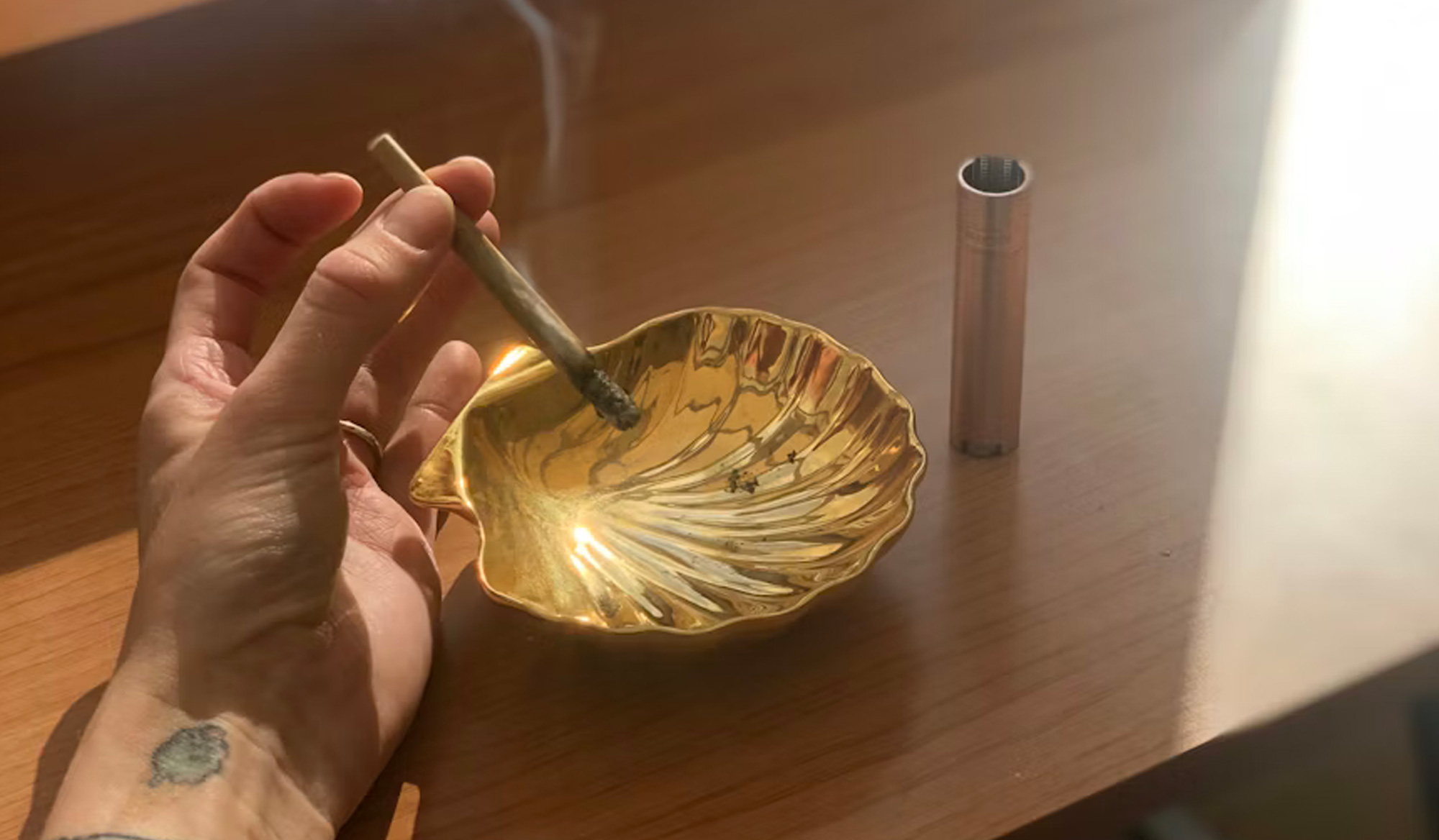
If you want to use cannabis in Thailand on a genuinely legal basis, the PT33 prescription form issued by a physician is the key document. From direct observation, this is not a paper that anyone can pick up on request, it’s a document issued within Ministry of Public Health guidelines to people who have a medically reasonable basis for use.
This section covers which practitioners can issue PT33, how the consultation process works, and what kinds of symptoms are generally within scope.
The authority to issue PT33 is limited to healthcare professionals registered with the Thai Ministry of Public Health. This includes general practitioners, specialists, hospital-affiliated physicians, certain dentists, pharmacists, and licensed Thai Traditional Medicine doctors. Foreign medical credentials or prescriptions issued outside Thailand are not accepted; the issuing practitioner must hold a Thai medical license. (Source: Ministry of Public Health, Thailand)
From direct observation in Bangkok and Chiang Mai, there are outpatient clinics operating under names like “Medical Cannabis Clinic” or “Cannabis Clinic,” and some private hospital anti-aging or wellness departments, that accept walk-in or appointment consultations from international visitors.
The most accessible route for travelers is often through a dispensary that has a PT33-issuing arrangement with a licensed clinic, or a medical cannabis clinic that handles the documentation process directly. With the January 2026 on-site medical staffing requirement in effect, it’s worth confirming in advance that the relevant dispensary or clinic is properly registered with the Ministry.
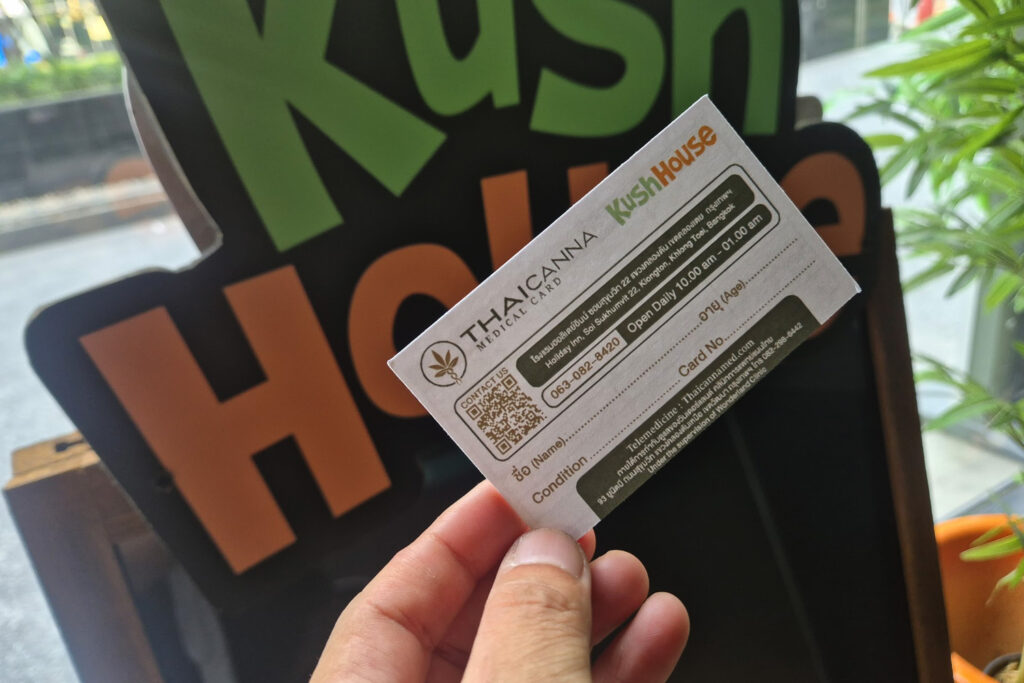
An increasingly common option for travelers is online consultation. From direct observation, several Bangkok dispensaries now guide customers toward ThaiCannaMed, an online teleconsultation platform where a video consultation with a licensed physician leads to PT33 documentation via smartphone, without requiring a visit to a physical clinic.
The regulatory status of PT33 obtained through online consultation is described as fluid. Before proceeding, it’s worth confirming that the issuing provider is linked to a physical clinic and that the dispensary can properly record and store the PT33 documentation.
For travelers who can’t visit a hospital in person, this is one of the more practical options available.
② Documents, Costs, and the Consultation Process: Step by Step
- Step 1, Booking and registration: A passport (original) is required. The intake form will ask about primary symptoms, medical history, and current medications. Common entries include insomnia, chronic pain, and anxiety-related symptoms.
- Step 2, Physician consultation: The doctor reviews symptoms, lifestyle, and treatment history, then determines whether cannabis is an appropriate option. At this stage, the intended form of use (oil, dried flower, etc.), recommended quantity, and THC/CBD balance are typically discussed.
- Step 3, PT33 issuance: The prescription document is issued with the diagnosis, intended use, recommended quantity, and validity period. Most clinics set the validity at approximately 30 days.
From personal experience, these three steps are the standard process. Costs vary by clinic, but a consultation plus PT33 issuance typically runs between 300 and 1,000 THB. The appointment usually takes 15 to 30 minutes. The original PT33 should be kept on hand for use at dispensaries, for police explanations if needed, and as documentation for any questions that arise after returning home.
③ What Conditions Qualify? The General Scope of Medical Cannabis in Thailand
- Chronic pain (back pain, joint pain, neuropathic pain, etc.)
- Pain, nausea, or appetite loss associated with cancer or serious illness
- Insomnia or poor sleep quality
- Epilepsy or seizure management
- Symptom relief for neurodegenerative conditions such as Parkinson’s disease
- Chemotherapy-related nausea, migraines, and PTSD are also cited in some cases
Medical cannabis in Thailand is positioned not as a general wellness option but as a treatment consideration for specific conditions and symptoms. Reporting has cited more than a dozen qualifying conditions, and physicians exercise clinical judgment in issuing prescriptions. From direct observation, it tends to be approached as a supplementary option for symptoms where existing treatments have not produced adequate improvement.
For travelers: the relevant question isn’t whether you have a diagnosed condition in a formal medical sense, but whether there’s a genuine medical reason, long-standing insomnia, chronic headaches, stress-related symptoms, that a physician can assess and document. Pure recreational intent without any supporting medical basis is unlikely to qualify.
3: What to Know After Obtaining a Certificate, Practical Guidance for Travelers
Many people assume that obtaining a PT33 means “cannabis use is now fully legal for me.” From direct observation on the ground, what matters far more is how the certificate is handled after it’s issued. Thailand’s regulatory framework is still developing, and while the medical use structure exists, the operational details remain inconsistent. Travelers need to understand the boundaries of what is and isn’t covered, how the certificate should be managed, and what might be asked when leaving the country.
This section covers the validity period and quantity limits, what can and can’t be purchased, the problem of unregistered clinics, and how to use the documentation effectively when questions arise after returning home.
① Validity Period, Quantity Limits, and When Re-Consultation Is Needed
- An expired PT33 is no longer valid as evidence of medical use
- Purchasing significantly more than the documented quantity may draw legal scrutiny
- Long-term residents or extended-stay travelers may need a follow-up consultation for continued use
Medical cannabis prescriptions carry a validity period. From direct observation, most clinics issue PT33 documents specifying a “quantity for up to 30 days of use,” the intended form (dried flower, oil, etc.), and a recommended THC/CBD balance. Reporting has cited a monthly limit of approximately 30 grams as a common operational guideline, based on Ministry of Public Health guidance for medical use. (Source: Ministry of Public Health, Thailand)
Even for short-stay travelers, keeping the validity period aligned with the duration of the stay is the cleaner approach.
② Does CBD Require a Prescription? What Can and Can’t Be Purchased
| Product / Form | PT33 Required | Purchase Status |
|---|---|---|
| CBD productsTHC below 0.2% | Not required in principle | ○Available |
| Cannabis flowerTHC above 0.2% | Required | △Available with PT33 |
| Other THC productsEdibles, beverages, etc. above 0.2% | Required | △Available with PT33 |
| ExtractsHigh-concentration oils, rosin, wax, etc. | Narcotic classification; strict controls apply | ✕Not available in principle |
PT33 is not required for every cannabis product. Under current guidelines: CBD products below 0.2% THC can be purchased without a prescription; cannabis flower and THC-containing products above 0.2% require PT33; and extracts remain under the strictest classification. The table above summarizes what’s available and under what conditions.
CBD products are relatively accessible, but determining THC concentration from shop labeling alone is not always straightforward. When in doubt, asking staff directly whether a PT33 is required for a given product is the safest approach.
③ When a Certificate Doesn’t Help: Fake Documents and Unregistered Clinics
- The physician’s signature and license number should be clearly recorded
- The clinic name, address, and contact information should be formally stated
- The intended use, validity period, and dosage should be specifically documented
- The issuing institution should be a Ministry of Public Health (MOPH) registered facility
A PT33 that fails to meet these criteria may be treated as invalid. From direct observation in tourist areas, there are accounts of unregistered clinics or non-practitioners issuing paperwork that looks like a medical certificate but carries no legal weight. These documents may be rejected at dispensaries and can create serious difficulties during police or airport checks.
In tourist zones, offers to issue a “certificate” quickly and cheaply are not uncommon. Always verifying that the issuing party is a properly registered medical facility is essential, not just a procedural step, but a protection against ending up with documentation that creates more problems than it solves.
④ Risk Management After Returning Home: How to Keep and Use the Documentation
Minister Takemi Keizo, responding in the National Diet of Japan: “First, the laws governing narcotics do not extend extraterritorial criminal jurisdiction to the act of use itself. Therefore, smoking cannabis abroad does not constitute a violation of Japan’s Law Concerning Control of Narcotics and Psychotropic Substances. Furthermore, even after the creation of a cannabis use offense under the revised bill, a person who smoked cannabis abroad and returned to Japan would not be prosecuted on the basis of a positive urine test alone, provided they have no possession on their person, have a documented history of recent overseas travel, and there is no corroborating evidence of domestic use. However, possession, receipt, and similar acts are subject to extraterritorial jurisdiction, so if those acts are not legal in the country of stay, relevant penalties may apply. It should also be noted that while the existing law includes use offenses for narcotics and stimulants, enforcement issues related to overseas use by returning travelers have not arisen in practice at this time.”
The PT33 certificate is important not only during the Thailand stay, it can also serve as documentation to support a clear account of events after returning home. The Diet response above provides the relevant framework for countries like Japan. Questions about cannabis use can arise in various post-trip contexts, and being able to demonstrate that the use was medically documented and legally framed in the country where it occurred is a meaningful advantage.
The following materials are worth keeping together:
- PT33 medical certificate (original)
- Receipts and purchase records from the dispensary
- Passport entry/exit stamps showing the travel dates
The central legal concern in most jurisdictions is possession, not use. Without possession, the risk of a criminal outcome is substantially lower. That said, having documentation ready in the event that questions arise is the most practical protection a traveler can carry.
4: The Risks of Purchasing Without a Certificate
The 2025 regulatory framework explicitly requires PT33 for cannabis flower purchase and possession. From direct observation, some dispensaries continue selling to tourists and locals without checking for documentation.
This creates a dual-standard situation: technically illegal under current law, but practically achievable in a number of shops. From 2026 onward, shop closures and compliance requirements have accelerated, and the available grey space has been narrowing.
This section covers the risks of purchasing without documentation and what is actually happening at the ground level.
① Informal Tolerance vs. Post-Reform Enforcement: The Reality
Since June 2025, cannabis flower has been reclassified as a Controlled Herb requiring PT33. From January 2026, mandatory on-site medical staffing came into effect. Reports indicate that of the more than 18,000 shops operating at the peak, over 7,000 failed to meet renewal requirements and closed, with approximately 10,000 continuing to operate within the medical framework. (Source: Ministry of Public Health, Thailand)
The informal tolerance that persisted for several years reflected a combination of factors: the economic weight of cannabis tourism, delays in coordinating enforcement between regulators and police, the gap between legal text and operational infrastructure, and the sheer difficulty of acting against thousands of shops quickly. With the mandatory staffing requirement and accelerated closures, that tolerance is measurably smaller than it was.
Reports of increased possession checks on tourists in areas like Phuket have appeared, and cases of significant fines for extract possession have been documented. Purchasing without PT33 now carries a meaningfully different level of risk compared to 2022 or 2023.
② Penalties and Enforcement: A Summary of Violations
| Violation | Approximate Penalty |
|---|---|
| Public smokingPublic Nuisance under Public Health Act | Fine of up to 25,000 THB, or up to approximately 3 months detention; may be more severe in aggravated cases |
| Purchase or possession without PT33 | Subject to confiscation and fines; may escalate depending on quantity and circumstances |
| Possession exceeding limitsOver 30g, etc. | May be treated as commercial activity, leading to confiscation and potential detention |
| Extracts and illegal concentratesTHC concentration violations | Narcotic classification; significant fines possible |
| Purchase from unregistered shops | Buyer may be questioned as part of enforcement action |
| Use of fraudulent certificates | Treated as a serious offense; criminal penalties and fines may apply |
From direct observation: immediate arrest solely for purchasing without PT33 is not the norm at this time. However, the risk profile is highly context-dependent, how much is being carried, where it’s being used, and the timing all affect how a situation unfolds. Understanding that variability is part of operating responsibly in the current environment.
③ A Practical Safety Mindset for First-Time Users
- Get a PT33 if at all possible: a properly registered clinic can issue one quickly, and it’s useful documentation for any questions that arise at home as well
- Keep the quantity to what you actually need: larger amounts attract more scrutiny and more potential for misunderstanding
- Avoid extracts, rosin, and unidentified edibles: these are in the highest-risk category for enforcement
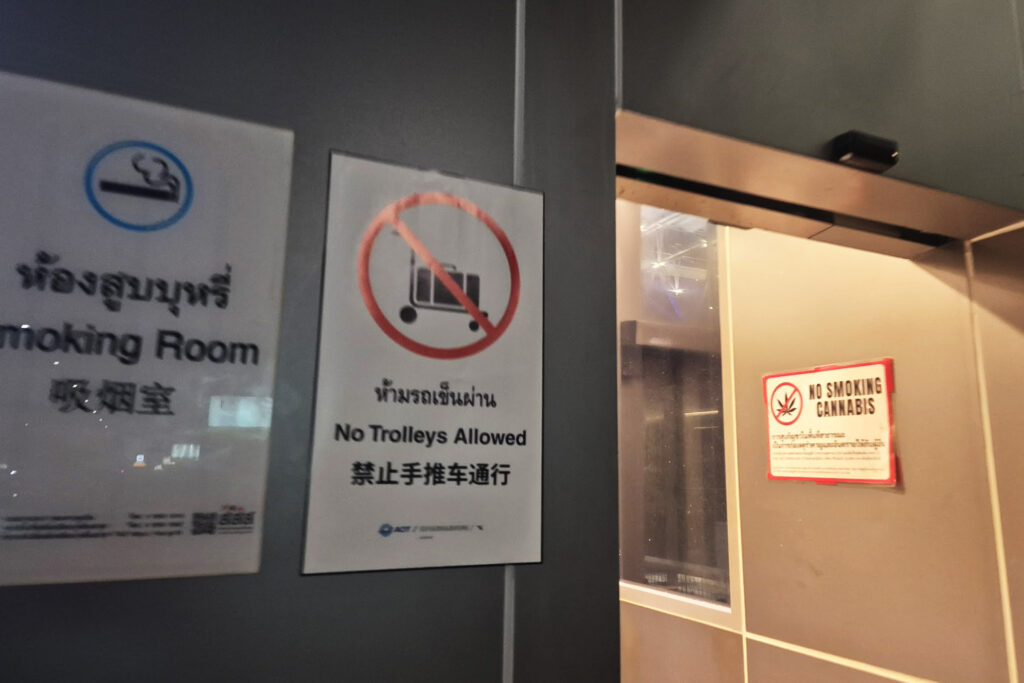
- Smoke in designated spaces at the hotel: street-level smoking is the most common trigger for a Public Nuisance citation
- Buy from registered, well-reviewed dispensaries: shops with unusually low prices or limited online presence are worth avoiding
Thailand remains in a state where cannabis is “accessible but not fully legalized.” What this requires from travelers is informed caution, not avoidance. The points above won’t eliminate all risk, but they significantly reduce the most common sources of trouble.
5: Making Good Use of Cannabis in Thailand with a Medical Certificate
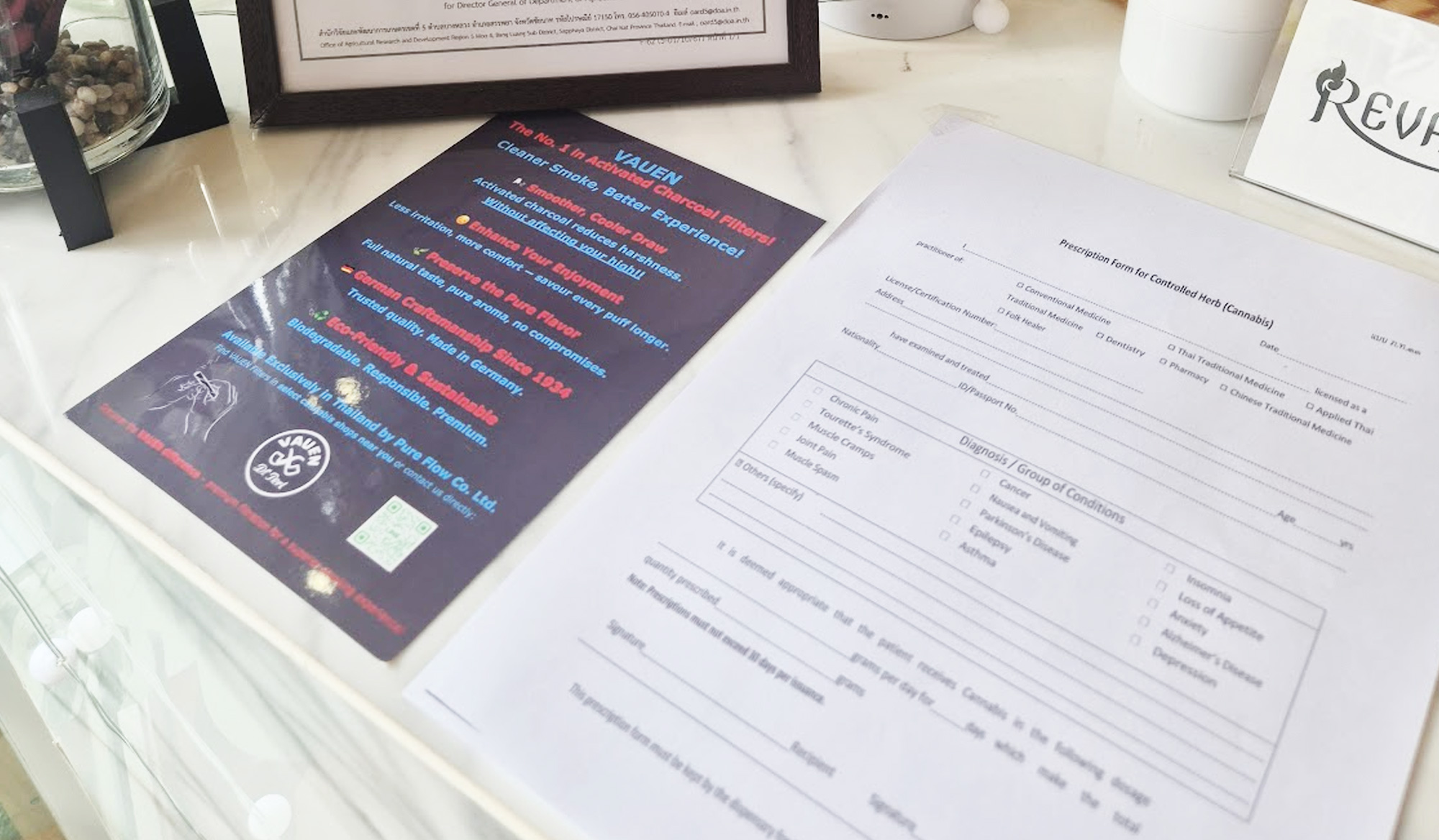
The 2025 regulatory changes made PT33 the required basis for legally purchasing cannabis flower in Thailand. From early 2026, on-site medical staffing became mandatory and shop closures accelerated. From direct observation: dispensaries that don’t check for PT33 still exist, but this reflects the transitional character of Thai enforcement, not any legal protection for buyers. For international travelers in particular, the combination of language barriers, differences in regulatory understanding, and limited ability to navigate police interactions makes the documentation gap much more consequential than it might appear.
The most practical frame for thinking about PT33 is not as a bureaucratic requirement but as a travel safety document, one that covers the purchase at the dispensary, a police check during the stay, and any questions that come up after the trip. Getting it from a properly registered clinic, documenting the quantity and purpose clearly, and keeping the paperwork are steps that take minimal time and provide meaningful protection.
Reporting has also flagged the possibility of future changes: proposals to return cannabis to the narcotic list have circulated, and political changes could shift the regulatory framework again. Thailand’s cannabis rules are still in motion. Checking the current status before traveling is always the right starting point.
Understanding the regulatory environment, then making considered choices within it, is the most realistic approach to cannabis use in Thailand right now. The goal is to be informed and careful, not to avoid the experience entirely.
Note: This article is based on content originally published on the Japanese edition of OG Times .