Indica and Sativa Don’t Mean What You Think: What the Latest Research Actually Shows

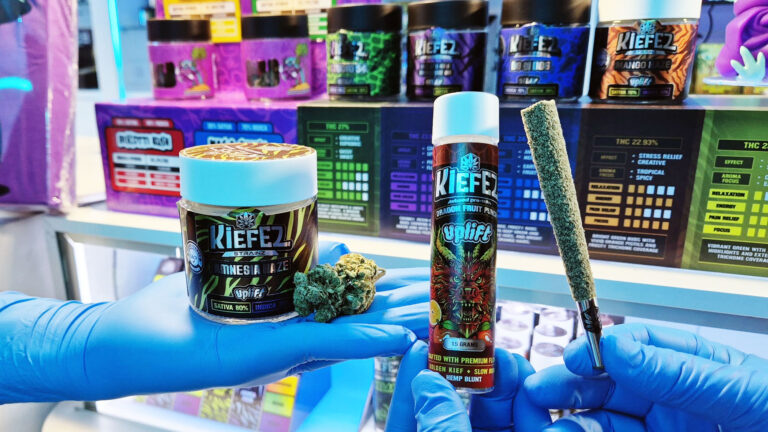
Walk into almost any cannabis dispensary and you’ll encounter the same framework: “sativa gets you high, indica makes you sleepy.” From spending time across Bangkok and Pattaya’s dispensary scene, this classification is still the default explanation offered to first-time visitors. It’s convenient, it’s memorable, and according to current genetic and pharmacological research, it’s not scientifically accurate.
The indica/sativa distinction was developed in the 18th century as a botanical classification based on plant morphology — not on psychoactive effect profiles. Modern genetic research has found that no clear genetic boundary separates indica from sativa in commercially available cannabis, and that nearly all contemporary strains are hybrids of multiple lineages. The compounds that actually shape the experience — cannabinoid ratios and terpene composition — don’t map reliably onto the indica/sativa label. (Source: National Library of Medicine (NLM))
This article covers where the classification came from, why the genetic evidence undermines it, what actually determines cannabis effects, and how to use that understanding to choose products more accurately.
1: Where Did “Indica” and “Sativa” Come From?
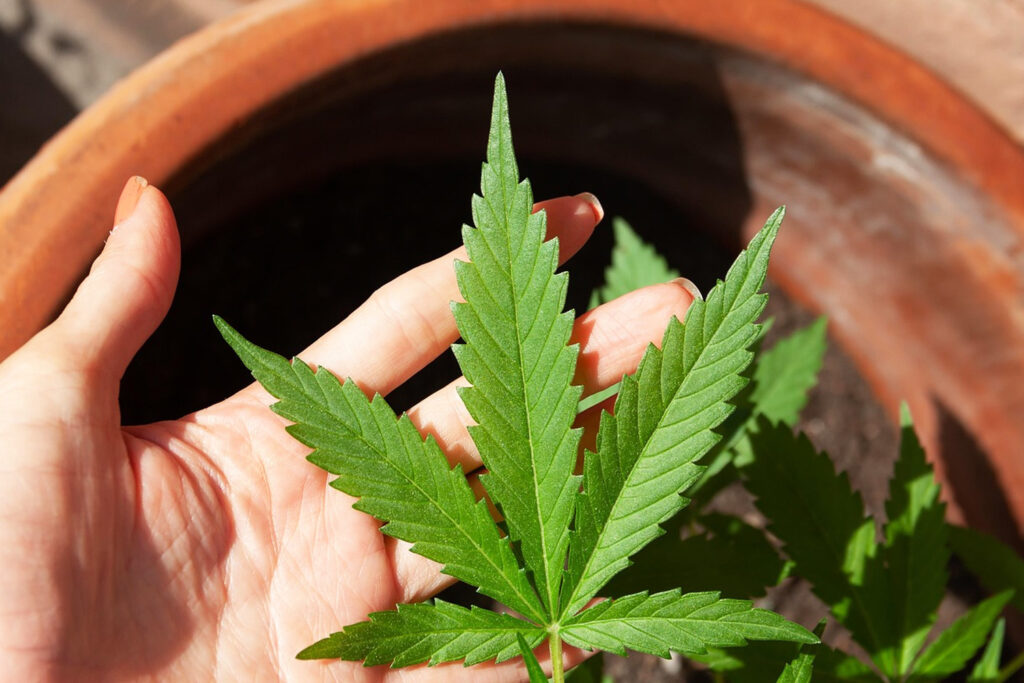
The terms originated in 18th-century botanical taxonomy, not in cannabis pharmacology. Swedish botanist Carl Linnaeus classified cultivated hemp as Cannabis sativa in 1753 — “sativa” meaning cultivated. French naturalist Jean-Baptiste Lamarck later classified a distinct Indian variety as Cannabis indica, noting differences in leaf shape and plant structure. These were morphological distinctions based on what the plants looked like, with no reference to how they affected human consciousness.
The migration of these terms into cannabis culture — where they became shorthand for effect profiles — happened gradually through decades of informal use and eventually through dispensary marketing. The connection between plant morphology and psychoactive effect was never established scientifically; it was assumed by analogy and then repeated until it became conventional wisdom.
From observation in dispensary settings: when staff explain that “indica = body high, relaxation” and “sativa = cerebral, energizing,” they’re typically reflecting received marketing convention, not botanical or pharmacological fact.
The Research Finding: No Clear Genetic Boundary Exists
Multiple genetic studies from Canadian and American research teams have analyzed hundreds of cannabis varieties and consistently found the same result: no distinct genetic boundary separates plants labeled “indica” from those labeled “sativa.” Products sold as “sativa” frequently contain predominantly indica-lineage genetics, and vice versa. (Source: National Library of Medicine (NLM))
The practical implication: the label on the package tells you about marketing convention, not about genetic identity, and certainly not about how the product will affect you.
Why the Classification Persists Despite Weak Evidence
The indica/sativa framework persists because it’s useful to the retail context, not because it’s accurate. It gives dispensary staff a simple framework to explain to customers, and it gives customers a simple framework to request what they want. That social utility keeps the language alive long after the scientific basis has been undermined.
From personal observation: growers and breeders who have actively crossed multiple lineages for decades to optimize THC content, yield, and aroma profiles know that their “100% sativa” or “100% indica” labels are commercial descriptions, not botanical facts. Essentially no commercially available modern strain is genetically pure indica or sativa — they’re all hybrids at the genetic level, whatever their marketing label says. (Source: National Library of Medicine (NLM))
2: What Actually Determines Cannabis Effects?
If indica and sativa don’t reliably predict effect, what does? The answer involves three interacting factors: cannabinoid content (primarily THC and CBD), terpene composition, and individual physiology. Of these, cannabinoid ratios and terpene profile are the most actionable for product selection.
Cannabinoid Ratios — The Intensity and Direction of Effect
THC level determines the intensity of psychoactive effect. Higher THC drives more pronounced mood elevation, sensory enhancement, and cognitive alteration — and at high doses, more risk of anxiety or cognitive overwhelm. CBD modulates THC’s psychoactive dimension: present at meaningful levels, it reduces anxiety risk and cognitive overload without eliminating the positive aspects of the THC experience.
The ratio of THC to CBD — not the indica/sativa classification — is the primary determinant of whether a product will feel intense and potentially anxious, or elevated and settled. (Source: National Library of Medicine (NLM))
Terpenes — The Direction and Character of the Experience
Terpenes are the aromatic compounds that give cannabis strains their distinctive smells — and they also contribute to the character of the effect through their interaction with the endocannabinoid system and other physiological pathways. The same THC level in two products with different terpene profiles will produce noticeably different experiences.
Key terpene profiles and their reported associations:
| Terpene | Aroma | Reported Effect Direction | Common In |
|---|---|---|---|
| Limonene | Citrus | Uplifting, mood-positive, anxiety-reducing | Many “sativa-labeled” strains |
| Myrcene | Earthy, herbal, musky | Sedating, relaxing, sleep-supporting | Many “indica-labeled” strains |
| Pinene | Pine, forest | Mental clarity, focus, alertness | Various hybrids |
| Beta-caryophyllene | Spicy, peppery | Anti-anxiety, CB2 activation, anti-inflammatory | Wide range of strains |
| Linalool | Floral, lavender | Calming, stress-reducing, sleep support | Various strains |
(Source: National Library of Medicine (NLM))
The reason myrcene-dominant strains tend to feel more sedating, and limonene-dominant strains tend to feel more uplifting, has nothing to do with whether they’re botanically classified as indica or sativa. It has to do with the direct pharmacological activity of those terpene compounds.
Choosing by Purpose Instead of by Label
If the indica/sativa label is an unreliable guide, effect-purpose matching becomes the more useful framework. The question shifts from “is this indica or sativa?” to “what do I want to feel, and which chemical profile is most likely to produce that?”
| Goal | Cannabinoid Profile | Terpene Profile to Look For |
|---|---|---|
| Focus and mental clarity | Moderate THC, moderate-to-high CBD | Pinene, limonene dominant |
| Sleep and deep rest | Lower THC or THC:CBD balanced, evening use | Myrcene, linalool dominant |
| Creative work | Moderate THC with CBD present | Limonene, beta-caryophyllene |
| Stress relief | CBD-dominant or balanced 1:1 | Linalool, beta-caryophyllene |
| Social ease | Low-to-moderate THC, meaningful CBD | Limonene, pinene |
(Source: National Library of Medicine (NLM))
From personal experience: switching from “what’s a good indica for sleep?” to “what has high myrcene and moderate THC with CBD?” at a dispensary produces considerably more useful answers — because the staff can now point to actual product data rather than guessing from a marketing category.
3: Why Hybrid Effects Shift Over Time — The Mechanism
One experience that confuses many cannabis users — and that the indica/sativa framework completely fails to explain — is the common pattern where a session starts with a lighter, more energizing quality and transitions toward deeper relaxation later. This isn’t random or psychological. It has a pharmacological explanation.
Different Compounds Have Different Onset and Peak Timings
From personal observation: the brighter, more social quality of a session tends to appear early and fade; the heavier, more sedating quality often arrives later. This timing pattern reflects the fact that different cannabinoids and terpenes have different absorption rates and metabolic timelines — they don’t all hit simultaneously or fade simultaneously.
Terpenes with lower boiling points — limonene, pinene — vaporize readily and reach peak effect quickly, producing the earlier uplifting quality. Terpenes with higher boiling points — myrcene, linalool — take longer to fully activate, and their sedating influence builds gradually. (Source: National Library of Medicine (NLM))
This staged timeline — lighter onset, heavier resolution — is a compound kinetics phenomenon, not evidence that the strain is “sativa at the start and indica at the end.”
THC and CBD Have Different Metabolic Timelines
THC engages CB1 receptors rapidly after inhalation, producing the initial mood elevation and sensory enhancement. CBD’s modulating influence develops more gradually. As the session progresses, CBD’s regulatory effect becomes more dominant relative to the initial THC peak — and the experience shifts toward greater calm and physical ease.
This is why the same product can feel more activating at minute 15 and more sedating at minute 60 — not because of any indica or sativa character, but because the compounds are operating on different timescales. (Source: National Library of Medicine (NLM))
Combustion Temperature Changes Which Terpenes Are Active
For smoked cannabis, there’s an additional layer: as a joint or pipe progresses from start to finish, the combustion temperature changes — and different terpenes vaporize at different temperatures. Early in a session, lighter terpenes (limonene, pinene) are most active. As temperature increases, heavier terpenes (myrcene, caryophyllene) become more prominent.
The experienced shift from “bright and social” to “heavy and calm” over the course of a session reflects this terpene volatility gradient — not a change in the strain’s indica or sativa character. (Source: National Library of Medicine (NLM))
4: Indica and Sativa Are Now One Genetically Mixed Plant
The practical conclusion of decades of selective breeding and cross-lineage hybridization is that the genetic distinction between indica and sativa has effectively dissolved in commercial cannabis. Research has consistently found that most commercially available cannabis strains carry mixed genetics from multiple lineages — the clean separation that the label implies doesn’t exist in the plants themselves. (Source: National Library of Medicine (NLM))
“Indica-dominant” and “sativa-dominant” as labels describe approximate effect tendencies — usually based on terpene profile and THC:CBD ratio — rather than genetic purity. The same plant that’s labeled “sativa-dominant” for its limonene-rich terpene profile may carry substantially indica lineage at the genetic level. The terminology has become a shorthand for terpene and effect direction, not a botanical category.
From personal experience across years of comparing strains in Thailand: the products that consistently delivered what the label promised weren’t the ones with the most confidently stated indica or sativa designation. They were the ones with clear, specific terpene and cannabinoid data — products where you could verify what you were getting rather than relying on a category that the underlying genetics don’t support.
The new standard for cannabis selection is chemical profile, not botanical label: THC and CBD percentages, primary terpene composition, and the purpose you’re using it for. That framework is both more accurate and more practically useful than a classification system that predates the discovery of cannabinoids entirely.
Note: This article is based on content originally published on the Japanese edition of OG Times .