Does How You Inhale Cannabis Change the High? Absorption Mechanics and What Actually Shifts


People who use cannabis regularly sometimes mention that the same product can feel different depending on how it’s inhaled. Looking back at the many people I’ve observed using cannabis here in Thailand, slow inhalers and fast inhalers often described their experiences in noticeably different terms — even when they were using the same strain at the same time.
That difference isn’t just habit. The depth of a breath, the pace of an inhale, and the rhythm of breathing all interact with how the body absorbs and responds to THC. Research has reported that THC enters the bloodstream primarily through the lungs and can reach the brain within a relatively short time after inhalation. (Source: U.S. National Library of Medicine)
This article draws from personal observation and referenced research to explore why inhale technique may influence the subjective experience of cannabis — not to prescribe a correct method, but to offer a clearer framework for understanding what’s happening.
1: Why Inhale Technique May Change How Cannabis Feels
When people talk about the cannabis experience, attention usually goes to the strain, the THC percentage, or the dose. But among the people I’ve watched here in Thailand, some of the most consistent differences in reported experience came down to how someone breathed — not just what they were using.
Someone who inhaled slowly and steadily would describe the effect as coming on gradually and spreading evenly. Someone who pulled hard and fast would often describe a sharper, more abrupt onset. The underlying possibility is that inhale pattern affects the speed and volume of THC entering the bloodstream, not just the total amount consumed. Research has noted that inhaled THC is absorbed through the alveoli in the lungs, and variables including breath volume and inhalation depth may influence uptake. (Source: U.S. National Library of Medicine)
The Background Behind Why Technique Is Said to Matter
Cannabis can be inhaled in many ways. Some people draw slowly and steadily, using breathing that resembles a deliberate breath rather than a drag. Others inhale quickly and forcefully. Among the people I’ve observed, the variation was significant — even among experienced users.
Research in this area suggests that the volume of air inhaled and the depth of the breath may affect how much cannabinoid reaches the alveolar surface for absorption. A shallower breath may deliver less smoke or vapor to the deepest lung tissue, while a deeper breath may expose more surface area. (Source: U.S. National Library of Medicine)
From my own experience, inhaling slowly produced a sensation of the effect arriving gradually. Pulling hard produced something that felt like a faster, more defined onset. These impressions were consistent enough across many people to seem worth examining.
Patterns I’ve Observed Across Different Users
Over time in Thailand’s dispensaries and smoking spaces, I noticed that people tend to settle into inhale styles that match what they prefer to feel. Those who liked calm, stable effects often inhaled slowly and exhaled without rushing. Those who wanted a clear, immediate signal often used shorter, more forceful draws.
Research confirms that the subjective cannabis experience is highly individual, and that people with the same product in the same conditions can report different effects. (Source: National Institute on Drug Abuse)
My own interpretation is that inhale style isn’t a matter of “right or wrong” but rather a variable that interacts with breath, physiology, and psychology to shape what the experience feels like.
2: How Cannabis Is Absorbed Through the Lungs
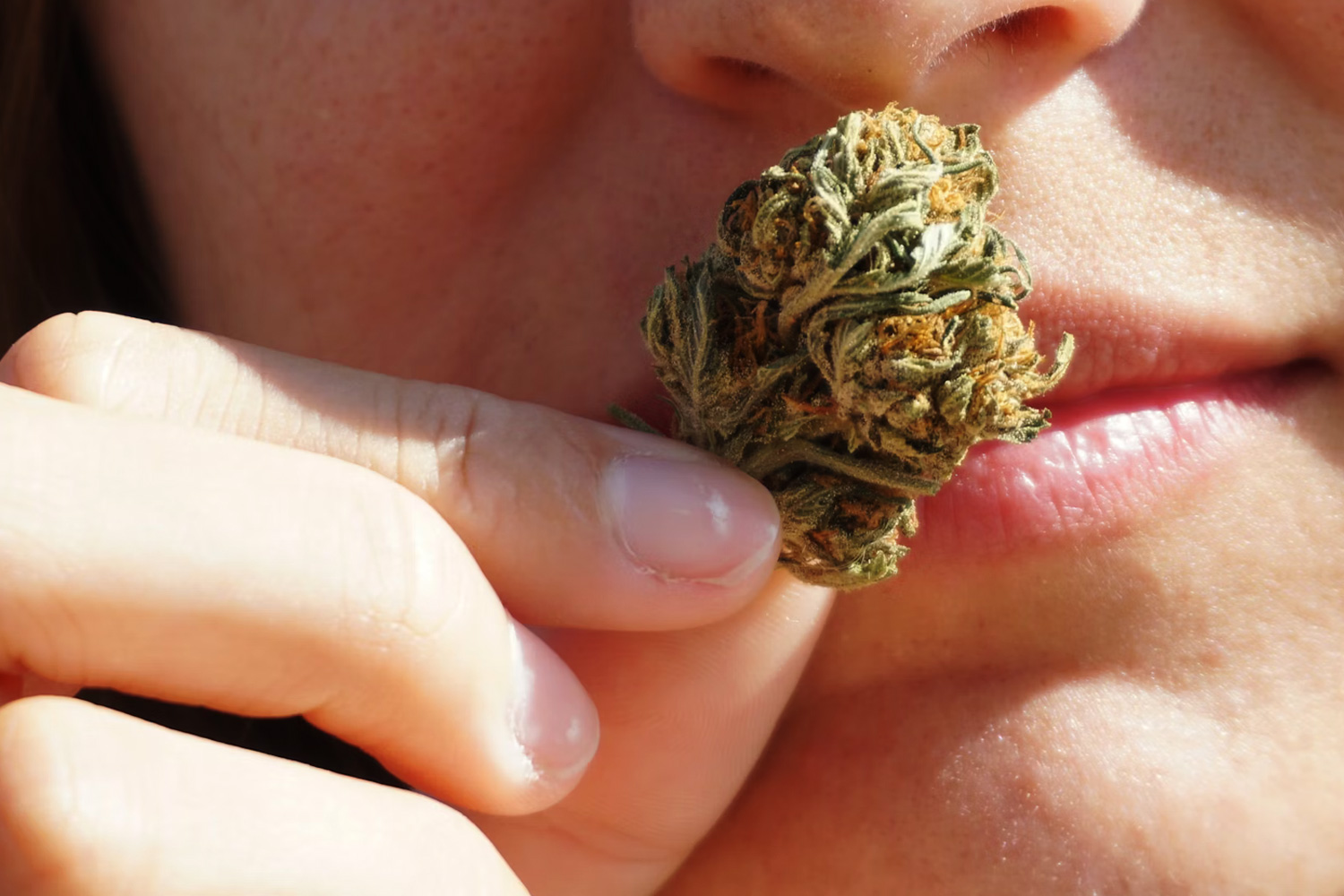
The reason inhaled cannabis tends to produce effects relatively quickly is rooted in anatomy. The lungs offer a large surface area and close proximity to the circulatory system — conditions that allow inhaled compounds to enter the blood rapidly. Understanding this mechanism helps explain why inhale pattern might matter at all.
Research has reported that THC is absorbed in the lungs and travels through the bloodstream to the brain, with onset often occurring within a few minutes of inhalation — considerably faster than oral consumption. (Source: U.S. National Library of Medicine)
How THC Is Taken Up in the Alveoli
When cannabis smoke or vapor is inhaled, it travels through the airways and reaches the alveoli — small, sac-like structures deep in the lungs where gas exchange between air and blood takes place. Research has reported that cannabinoids including THC can cross the alveolar membrane into the bloodstream at this point, after which they are carried to the brain. (Source: U.S. National Library of Medicine)
Among the people I’ve observed, most described the onset as arriving not immediately but within a few minutes — a window that seems to reflect the absorption and circulation process rather than instantaneous entry.
Breath Depth and the Speed of Absorption
One reason inhale technique is thought to matter is that deeper breaths deliver more smoke or vapor to the alveolar surface, potentially increasing the amount of THC that crosses into the bloodstream per inhalation. A shallow breath may deposit more material in the upper airways, where absorption is less efficient.
Research has noted that inhalation volume and breathing patterns may influence the quantity of cannabinoids absorbed per breath. (Source: U.S. National Library of Medicine)
From my own experience, slow and deep inhalation tended to feel like the effect built gradually. Short, sharp draws felt like the onset came more defined and faster. These differences felt real enough that they seemed to reflect something more than expectation alone.
3: What Slow, Deep Inhalation Tends to Feel Like
People who inhale slowly often describe their experience in terms of gradual onset — a spreading feeling rather than a sudden arrival. In the dispensary environments I’ve observed here, those who breathed more deliberately tended to use words like “calm,” “even,” or “building slowly” to describe the effect.
This may connect to more than just absorption speed. Breathing rhythm has its own physiological effects, independent of cannabis. Research has noted that breathing patterns are connected to autonomic nervous system activity, and that slower, deeper breathing may be associated with parasympathetic activation — the state linked to rest and recovery. (Source: U.S. National Library of Medicine)
From my own view, when someone inhales at a pace close to deliberate deep breathing, the breath itself may be working to calm physical tension — not just delivering THC at a slower rate.
Why Slow Inhalation Is Said to Produce a Gentler Onset
In the spaces I’ve observed, people who inhaled slowly often described not being hit hard by the effect — even when using moderately potent products. The working explanation is that drawing less smoke per breath over a longer period distributes the intake more evenly, rather than loading the lungs quickly.
Research has suggested that inhalation pace and volume may influence how much cannabinoid reaches the absorbing surface per breath, potentially affecting the rate of onset. (Source: U.S. National Library of Medicine)
From my own experience, using a slow and deliberate breathing rhythm made the effect feel like it arrived in layers rather than all at once. The impression was consistent enough to seem meaningful, though individual variation always plays a role.
The Relationship Between Breathing Rhythm and Relaxation Response
Slow breathing doesn’t just deliver air differently — it actively interacts with the autonomic nervous system. Research has noted that deliberate slow breathing can activate parasympathetic pathways, which are associated with reduced physical tension and lower arousal levels. (Source: U.S. National Library of Medicine)
Among the people I’ve observed, those who inhaled slowly often showed visible physical settling — quieter movement, slower speech, deeper breathing overall. The combination of slower THC intake and slower breathing itself seemed to consistently produce a calmer reported experience.
4: What Fast, Forceful Inhalation Tends to Feel Like
On the other end of the inhale spectrum, people who draw quickly and forcefully tend to describe a different quality of onset. Words like “hits fast,” “comes on strong,” or “you feel it right away” came up repeatedly in conversations I had here.
This pattern makes sense within the absorption framework. A large, forceful breath may deliver more smoke or vapor to the lungs in a short time, potentially increasing the amount of THC that reaches the bloodstream quickly. Research has reported that THC blood concentration following inhalation can rise substantially within a short window, and inhalation volume is one of the variables involved. (Source: U.S. National Library of Medicine)
Why a Large Inhale May Increase Absorption Speed
When more smoke or vapor enters the lungs in a single breath, more material is in contact with the alveolar surface simultaneously. This may result in a larger amount of THC crossing into the bloodstream in a shorter time — producing a faster and more concentrated onset.
Research has noted that inhalation volume may affect the quantity of cannabinoids absorbed per breath. (Source: U.S. National Library of Medicine)
From my own experience, the difference between a slow draw and a hard pull was noticeable in onset speed. The hard pull tended to bring the effect to a defined point quickly; the slow draw made the same destination feel more gradual.
The Background Behind a Sharper Onset
Among the people I’ve observed who preferred a fast, forceful inhale, many described the clarity of onset as part of the appeal — being able to tell quickly that the cannabis was working. For people prone to anxiety, the rapid onset sometimes had the opposite effect — jarring rather than confirming.
Research has noted that the subjective experience of cannabis is affected not only by dosage and absorption but also by psychological state and expectation. (Source: U.S. National Library of Medicine)
My own view is that the fast onset associated with forceful inhalation involves both the absorption rate and the psychological response to rapid perceptual change.
5: Why the Quality — Not Just the Intensity — Can Feel Different
One of the more interesting observations I’ve made over time here is that people don’t only describe their experience differently in terms of strength — they describe a difference in quality. Same strain, same amount, but one person says the effect felt “heady” and another says it felt “body-centered.”
These descriptions resist a simple explanation based on dose alone. They seem to involve a combination of absorption pattern, breathing mechanics, and mental state coming in. Research has noted that both breathing patterns and psychological state can influence autonomic nervous function and subjective drug experience. (Source: U.S. National Library of Medicine)
My own view is that the cannabis experience is not determined by the compound alone — it’s the compound meeting a breathing pattern meeting a state of mind, all at once.
Nervous System Response and Breathing
The way we breathe influences the nervous system directly. Slow breathing tends to activate the parasympathetic branch, associated with rest and calm; faster or shallower breathing tends to favor the sympathetic branch, associated with alertness and arousal.
Research has noted this relationship and pointed to its relevance for understanding how breathing affects physiological state independently of other inputs. (Source: U.S. National Library of Medicine)
Among the people I’ve observed, those who inhaled slowly often showed signs of physical settling — movement slowed, voice dropped, breathing deepened further. Those who inhaled forcefully sometimes appeared more activated initially. This difference in apparent state likely contributed to what they reported feeling.
How Mental State Shapes the Experience
Beyond breathing mechanics, the mental state a person brings into the session consistently shapes the experience. Research has established that psychological context significantly influences drug response — the same amount of the same substance can produce very different effects depending on a person’s emotional state, expectations, and environment. (Source: U.S. National Library of Medicine)
In the dispensaries and smoking spaces I’ve spent time in, people who came in relaxed and comfortable with the setting tended to describe calmer, more stable effects. Those who were tense or uncertain were more likely to describe intensity or discomfort.
My own view is that inhale technique is one variable among several, and understanding it in isolation misses the way it interacts with breathing physiology and mental context to produce the full experience.
6: How to Think About Inhale Pace for a More Stable Experience
Among experienced users I’ve observed here over time, a common pattern emerged: the focus tended to shift away from quantity and toward pace. Not how much to take, but how to take it — more slowly, with attention to the breath rather than the drag.
This isn’t about limiting the experience. It’s about not introducing unnecessary variability into it. Research has noted that breathing pace and psychological state can both influence physiological responses and subjective experience. (Source: U.S. National Library of Medicine)
The Case for Slow Inhalation as a Starting Point
For people who are new to cannabis, or trying a new product, inhaling slowly gives more time to assess the onset before taking more. A slow draw followed by a normal exhale — rather than holding smoke in the lungs — allows the effect to register before a decision is made about continuing.
Research has suggested that pacing cannabis intake, rather than loading quickly, is associated with less abrupt onset and greater ability to calibrate the experience. (Source: U.S. National Library of Medicine)
From personal experience and from watching many people here, slow and deliberate breathing around the session consistently produced more stable reported outcomes than fast or forceful approaches — even when total intake was similar.
Watching Pace Rather Than Just Counting Hits
The instinct to count hits is understandable, but it misses the timing dimension. Two slow, spaced draws may feel very different from two quick draws taken back to back, even if the total amount is identical.
Research has noted that cannabis effects are shaped by use context, timing, and psychological state, not only by dose. (Source: U.S. National Library of Medicine)
My own approach has moved toward thinking about pace and breath rather than number of hits — not as a rule, but as a practical frame for staying oriented to what the body is actually experiencing rather than what was expected.
7: Understanding the Relationship Between Inhale and High

The cannabis experience tends to get explained through strain type and THC percentage — and those are real variables. But from everything I’ve observed here, how someone inhales consistently contributes to what they feel, even when the product is identical.
The mechanism is partly absorption: deeper, more deliberate breathing may deliver THC to the alveolar surface more efficiently, while slower pacing distributes intake over time rather than concentrating it in a single large hit. Research has suggested that inhalation volume and breathing pattern can influence the quantity and speed of cannabinoid absorption. (Source: U.S. National Library of Medicine)
The mechanism is also partly physiological: slow breathing directly activates parasympathetic pathways, contributing to physical settling independent of cannabis. And it’s partly psychological: a person’s state coming into the session, and their level of comfort with the environment and the experience, shapes what the body registers.
None of these factors work in isolation. Inhale technique is one variable in a larger picture — but it’s one that’s easy to overlook because the focus tends to land on the product rather than the person using it. Understanding this aspect of the experience makes it easier to observe what’s actually shifting, rather than simply waiting to see how strong it gets.
Note: This article is based on content originally published on the Japanese edition of OG Times .