What Does Cannabis Relaxation Actually Feel Like? Breaking Down the Effects on Body, Mind, and Emotions
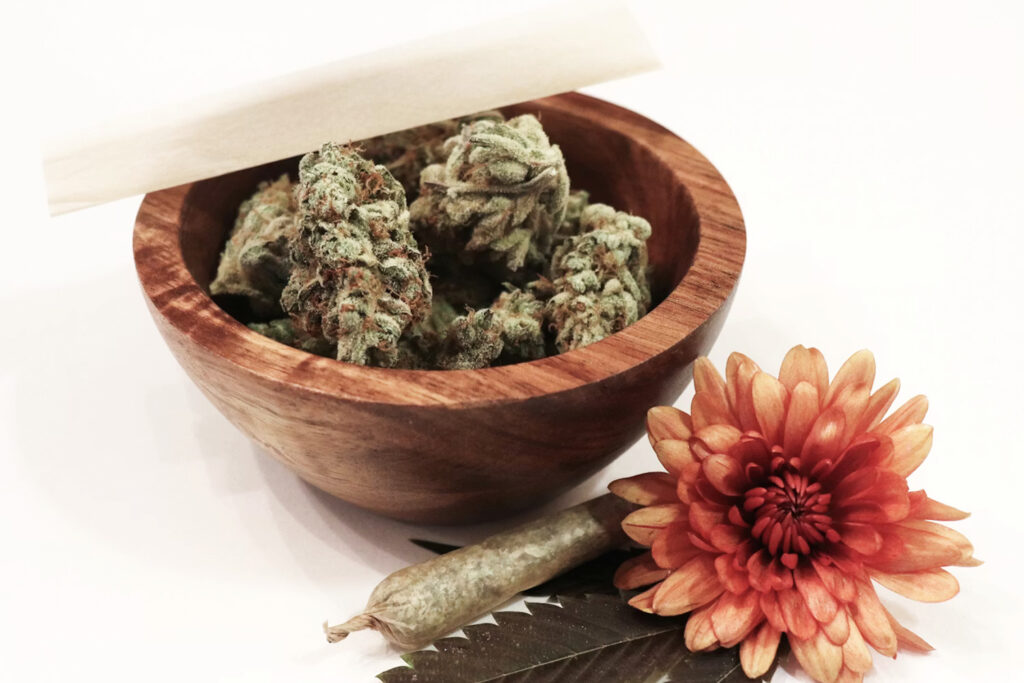

When people say medical cannabis made them feel “relaxed,” it can be surprisingly hard to describe exactly what changed. Looking back at my own experience and the reactions I’ve observed here in Thailand, it never seemed like just one thing — the shift touched physical sensation, the flow of thoughts, and the way emotions registered, all at once. Something different was happening in the body, in the way thinking moved, and in how feelings were received.
At the same time, the word “relaxation” often gets used loosely, with the actual content left vague. This article draws primarily from personal observation, cross-referenced with research and public health sources, to break that state down into three parts: body, thought, and emotion. The goal isn’t to oversell or dismiss the experience — it’s to offer a clearer framework for understanding what’s actually happening.
1: What “Relaxed from Cannabis” Actually Means
Looking back at my own experience and the people I’ve observed here in Thailand, cannabis relaxation doesn’t really feel like “thinking about nothing.” It’s closer to a settled state — where the tension held in the body, the stream of thoughts, and emotional reactivity each quietly step back a level. It’s not euphoria, and it’s not sedation. It’s more like the unnecessary bracing finally stops.
Here I want to define what that state has felt like to me personally, and then describe the patterns I’ve seen repeat across different people in different settings.
How I’d Define Relaxation from Cannabis
The closest definition I’ve found for what cannabis relaxation feels like is “noticing where you were braced, and feeling that ease.” For me personally, it showed up as a loosening in the shoulders and around the breath — not something I consciously initiated, but something that had already happened by the time I noticed it. The mental equivalent was a natural slowing of pace rather than a forced quieting.
Research suggests that cannabis compounds may influence subjective stress perception and physical tension, though the degree of response varies significantly between individuals. (Source: U.S. National Library of Medicine)
Common Patterns I’ve Observed in Others
Among the people I’ve watched over time, the clearest sign of relaxation was a slowing of pace — in movement, in speech, in the rhythm of breath. Not a performance of calm, but a functional settling. Voice tone dropped. Breathing deepened without effort. Research confirms that a subset of cannabis users report subjective relaxation and reduced tension following use, while also noting that responses are not uniform across individuals. (Source: National Institute on Drug Abuse)
2: What Happens in the Body
When cannabis produces what people call relaxation, the body tends to register the change first. Looking at my own experience and the reactions of others I’ve watched here, shifts in muscular tension and sensory perception tended to show up before any noticeable change in thinking or emotion. Two patterns stood out most clearly.
Muscle Tension and Breathing
The physical shift I’ve noticed most often is an easing of held tension in the shoulders, neck, and back — areas where many people carry unconscious bracing without realizing it. At the same time, breathing tends to shift from shallow and quick toward slower and deeper, without any deliberate effort to make it happen.
For me personally, it wasn’t something I consciously controlled. It had already changed by the time I became aware of it. Research has noted that cannabis compounds may be involved in modulating muscle tone and subjective relaxation responses, though individual variation is significant and effects are not guaranteed to present in this way for everyone. (Source: U.S. National Library of Medicine)
Changes in Sensory Perception
Sensory changes can go in either direction. Personally, I’ve experienced both: sounds or textures becoming sharper and more vivid at some times, while at others, stimulation that would normally register as intrusive simply didn’t demand the same attention. Among the people I’ve observed, some became more aware of ambient sound or light, while others seemed to stop registering environmental detail they had been reacting to before.
Research documents perceptual changes following cannabis use, with variability in both direction and intensity across individuals — some experiencing heightened sensitivity, others reporting a dampening of stimulus response. Either pattern can be part of what is subjectively labeled as relaxation. (Source: National Institute on Drug Abuse)
3: What Happens in the Flow of Thoughts
After the body, the next shift I tend to notice — and that I see in others — is in the way thinking moves. The quantity, speed, and direction of thought all seem to be affected. Two aspects show up most consistently.
Why Thinking Feels Quieter
The sensation I’ve had most often is not “no thoughts” but rather the automatic threading of concerns — worry looping forward, regret looping backward — losing momentum on its own. There’s a distance from self-referential mental noise that I didn’t consciously create. Thinking doesn’t stop, but the compulsive quality softens.
Research has suggested that cannabis compounds can influence attentional processes and may reduce the kind of repetitive, self-focused cognition that some describe as mental quieting. Response patterns vary between individuals and are not a guaranteed outcome. (Source: U.S. National Library of Medicine)
Speed, Focus, and the Shift in Attention
In my own experience, thinking didn’t just slow — it also narrowed in a useful way. Mental scatter decreased, and whatever was immediately in front of me became easier to stay with. For some people I’ve observed, a similar effect produced a sense of being organized; for others, the slowing simply felt different rather than productive, depending on context and mood coming in.
Research notes that cannabis use can alter time perception, thought progression, and attentional orientation. These changes can influence concentration and engagement, with effects that depend heavily on dose, individual physiology, and the conditions surrounding use. (Source: National Institute on Drug Abuse)
4: What Happens in the Way Emotions Are Received

Beyond the body and thoughts, the third layer of change involves how emotions are experienced. In my observation, emotions don’t disappear — but the relationship to them changes. Two aspects are most notable.
Distance from Anxiety and Tension
What I’ve felt most often isn’t the removal of anxiety, but a shift in proximity to it — as though I’m registering it from slightly further away, without being pulled into its full current. The same feeling came up in many conversations I’ve had: “I can tell I’m anxious, but I’m not inside it the same way.”
Research has documented changes in subjective anxiety and tension following cannabis use, with some users reporting reduction in perceived anxiety while others experience amplification — the direction and degree depending on factors including dose, individual predisposition, and environment. (Source: U.S. National Library of Medicine)
Observing Emotions Rather Than Reacting to Them
Related to this is a sense that emotions can be watched without immediately acting on them. A feeling arises, and there’s enough space to simply see it rather than immediately judge it or move toward behavior. Personally, this showed up as a slower reaction time to internal states — not emotional numbness, but a kind of pause between impulse and response.
Research has suggested that emotional processing and self-referential cognition can be altered by cannabis use. The nature of this shift depends on individual factors, psychological baseline, and context, making it a variable rather than a predictable outcome. (Source: National Institute on Drug Abuse)
5: Conditions That Make Relaxation More Likely to Emerge
Cannabis relaxation doesn’t come from the compound alone. Looking at my own experience and what I’ve observed over time, the same product used by the same person in different conditions could produce very different results. Several factors seemed to consistently influence whether the relaxed state would emerge at all.
How Physical State and Environment Play a Role
What I’ve found most consistently is that relaxation came through more clearly when the body was already stable and the environment felt safe. Fatigue, overcrowded spaces, and background noise all made it harder for the physical settling to occur. Among the people I’ve watched, those who were in quieter, lower-stimulation environments seemed far more likely to show visible signs of relaxation — breathing shifted, posture eased, pace slowed.
Research points to what is often described as “set and setting” — the psychological state and environmental context surrounding cannabis use — as a significant variable influencing the subjective experience. This is well-documented and not unique to cannabis. (Source: U.S. National Library of Medicine)
The Relationship Between Dose, Timing, and What You Feel
Dose and timing had a clearer impact than I initially expected. In my own experience, smaller amounts — particularly when I wasn’t tired, rushed, or emotionally activated going in — were often enough to produce a calm settling. Larger amounts or poorly timed sessions tended to produce something other than relaxation: more noise, not less.
Research confirms that cannabis effects are highly dose-dependent, with low doses more consistently associated with reported relaxation and higher doses carrying greater risk of anxiety or perceptual disruption. Timing relative to food intake, sleep, and mental state also influences the response. (Source: National Institute on Drug Abuse)
6: Common Misunderstandings About Cannabis Relaxation
Because the word “relaxed” travels so widely in cannabis culture, expectations tend to outrun what the experience actually delivers. Two misunderstandings come up most often — both from people who use cannabis and from those who are curious about trying it.
It Doesn’t Work the Same Way for Everyone
One of the most important things I’ve come to understand is that what produces relaxation for one person may produce discomfort or indifference in another, even in identical conditions. I’ve seen this many times: same product, same setting, completely different outcomes. What felt like settling for me was agitation for someone else.
Research consistently documents high individual variability in cannabis response. Body chemistry, psychological baseline, tolerance, and context all contribute, making it inaccurate to describe cannabis relaxation as a predictable effect. Understanding this upfront tends to reduce both the disappointment of unmet expectations and the confusion of unexpected reactions. (Source: U.S. National Library of Medicine)
Relaxation Is Not the Same as Motivation Loss
The other misunderstanding worth naming is the tendency to conflate relaxation with apathy or low drive. In my experience, true relaxation doesn’t feel like a system shutting down — it feels like unnecessary load being removed. The people I’ve observed who were genuinely relaxed were still present, still engaged in conversation, still responding to what was around them.
Research notes that cannabis use can be followed by states that feel like relaxation in some users and states that resemble fatigue or reduced engagement in others. These are different outcomes. Distinguishing between them matters — both for how people describe the experience and for how they use it. (Source: National Institute on Drug Abuse)
7: How to Make Sense of What Cannabis Relaxation Actually Does
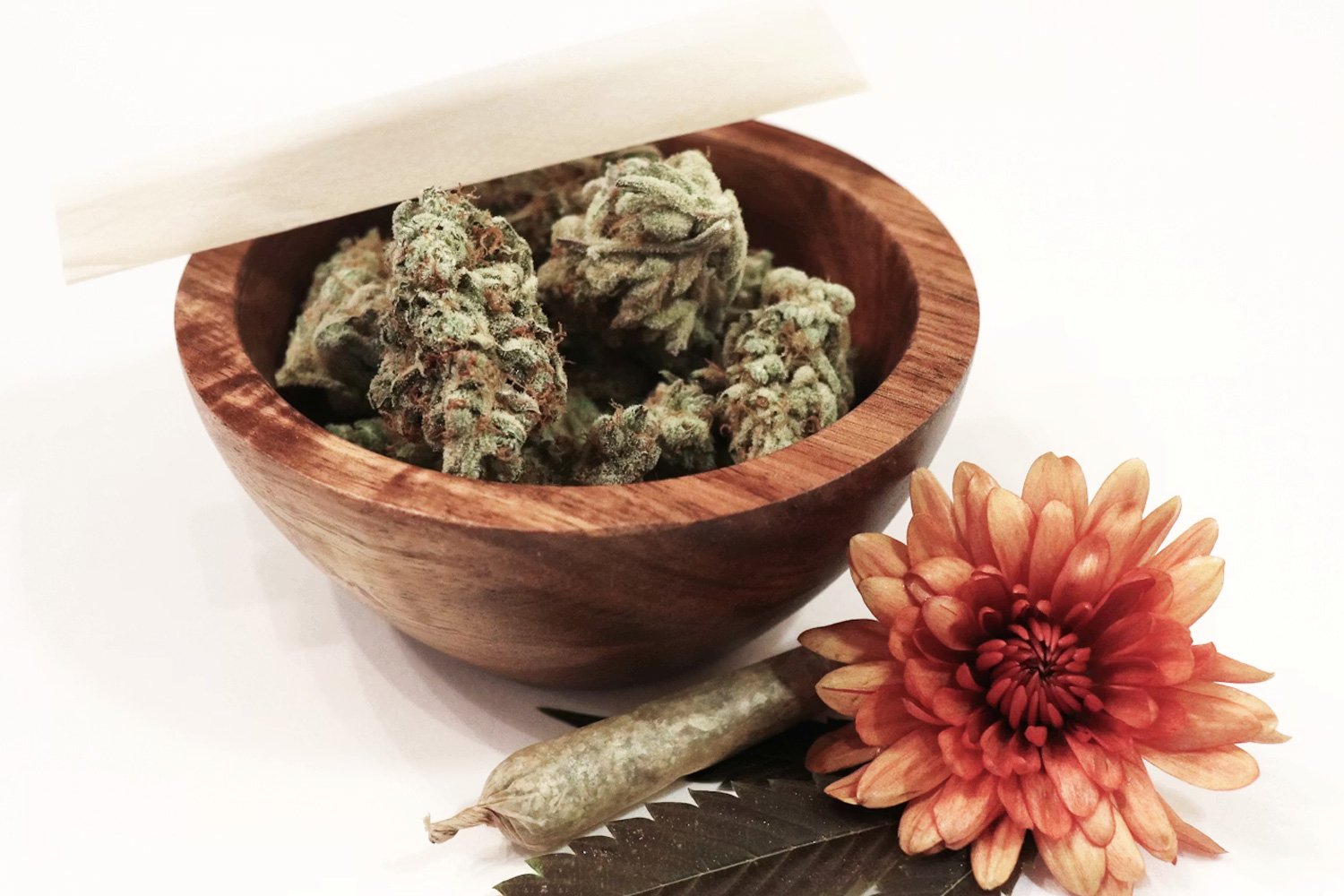
What I keep coming back to is that cannabis relaxation isn’t a single event — it’s a convergence of smaller shifts across different systems, and each one is more observable when you know what you’re looking for. Muscle tension releases. The loop of automatic thought slows. Emotional states feel slightly less urgent, slightly more observable.
At the same time, none of these changes are guaranteed, fixed, or universal. They arise under certain conditions — physical stability, environmental calm, appropriate dose, a reasonably clear mental state going in — and they’re more likely to be absent when those conditions aren’t met. Understanding which layer is shifting, and why, makes it possible to engage with the experience more clearly rather than simply waiting to see what happens.
The word “relaxation” isn’t wrong, but it tends to compress something that’s worth keeping separate. Knowing that the body, thinking, and emotions each have their own version of the shift means you can actually track what’s changing — rather than waiting to be told how you’re supposed to feel.
Note: This article is based on content originally published on the Japanese edition of OG Times .