Is Cannabis in Thailand Safe? Chemical Weed, Health Risks, and How to Protect Yourself
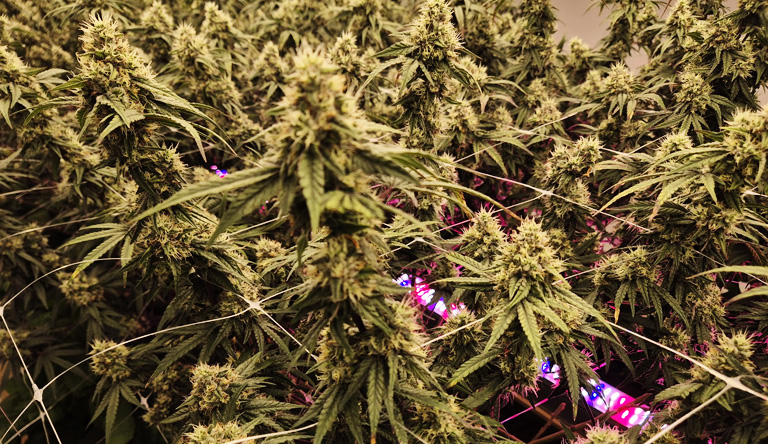

Since Thailand’s cannabis market opened in 2022, the variety and availability of flower across Bangkok dispensaries has expanded faster than the quality controls meant to govern it. Walk into most dispensaries today and you’ll find shelves of visually impressive flower — dense buds, strong aromas, high THC numbers on the label. What those displays don’t tell you is how a significant portion of that flower was grown, and what may still be in it.
The problem isn’t cannabis itself. It’s a market that expanded faster than its regulatory infrastructure, creating conditions where unregistered farms could produce and sell flower without meaningful safety verification. Chemical fertilizers, plant growth regulators (PGRs), and heavy metal contamination from poor soil management have been documented across Thailand’s cannabis supply chain — and the visual quality of the flower gives no reliable indication of whether any of these are present.
The health risk isn’t acute. It’s cumulative. Residual pesticides and heavy metals don’t produce immediate obvious symptoms — they accumulate in tissue over repeated exposure, producing effects that are easy to attribute to other causes until the damage is significant. The inhalation route makes this worse: smoking bypasses the digestive system’s partial filtering capacity and delivers compounds directly into the bloodstream through the lungs.
This guide covers four things:
- Why chemical contamination became so widespread in Thailand’s cannabis market and what the 2025 GACP regulations are trying to fix
- The real health risks of pesticide residues, PGRs, and heavy metals — and why “just a little” is the wrong framework for evaluating exposure
- How to identify contaminated cannabis before you buy, using appearance, smell, physical reaction, and lab documentation as screening criteria
- What “organic” actually means on a Thai cannabis label — and what evidence actually supports a safety claim
Thailand’s cannabis market has genuinely high-quality, safely produced flower available — from farms with documented growing practices, independent lab testing, and GACP certification. The goal of this guide is to give you the tools to find it, and to understand clearly why the gap between the best and worst of what’s available in the current market matters for your health.
1:The Real Health Risks of Chemical Cannabis — Why “Just a Little” Isn’t Safe
One of the most common responses when people learn about chemical contamination in Thai cannabis is: “I only smoke a little, so it probably doesn’t matter.” It’s an understandable reaction — but it misunderstands how chemical exposure actually works in the body. The risk from contaminated cannabis isn’t primarily about a single session. It’s about what accumulates over time, and how directly inhalation delivers those compounds into your system.
How Residual Pesticides and Heavy Metals Accumulate in the Body
Residual pesticides, chemical fertilizers, and heavy metals share a critical characteristic: once absorbed into the body, they are not quickly or easily eliminated. Unlike many organic compounds that metabolize and clear within days, substances like cadmium, lead, and arsenic bind to tissue in the liver, kidneys, and nervous system and remain there.
The accumulation dynamic works against the “just a little” assumption in a specific way. Each exposure adds to the existing load. There is no meaningful threshold below which the body simply discards what it takes in — low-level exposure repeated over days or weeks produces rising internal concentrations that eventually exceed what organ systems can manage without damage. (According to:World Health Organization)
Heavy metals are particularly problematic in this regard:
- Cadmium accumulates primarily in the kidneys and has a biological half-life measured in decades — meaning once it’s in, it stays for years
- Lead affects the nervous system and cognitive function, with documented effects even at low chronic exposure levels
- Arsenic is classified as a Group 1 carcinogen by the International Agency for Research on Cancer, with no established safe threshold for long-term exposure
Cannabis is particularly susceptible to heavy metal uptake because it functions as a hyperaccumulator — a plant that absorbs and concentrates metals from soil at rates higher than most other crops. Research has documented cannabis absorbing cadmium, lead, and arsenic from contaminated growing environments at concentrations that transfer directly to the harvested flower. (According to:National Center for Biotechnology Information)
In Thailand’s current market, where soil quality and growing environment management varies enormously between registered and unregistered farms, this absorption risk is not theoretical. It is a documented characteristic of the plant in an environment where contamination is present.
What Happens When PGR-Treated Cannabis Is Combusted and Inhaled
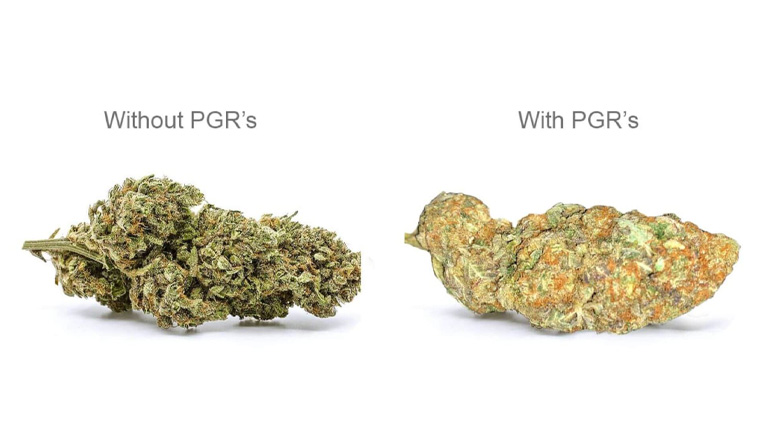
Plant Growth Regulators (PGRs) are chemical compounds used to artificially manipulate plant development — accelerating flowering, increasing bud density, or extending shelf appearance. In legitimate agriculture, some PGRs are used in controlled applications for food crops. In cannabis cultivation, PGRs are used by unregistered growers primarily to produce visually impressive flower in shorter timeframes.
The health concern specific to cannabis is combustion. When PGR-treated flower is smoked, the heat breaks down PGR compounds into byproducts that do not exist in the original chemical. Two of the most concerning:
- Paclobutrazol — one of the most commonly reported PGRs in contaminated cannabis — breaks down under heat to produce compounds with documented carcinogenic potential. Its use is restricted or prohibited in food crops in several countries precisely because of this combustion risk (According to:U.S. Environmental Protection Agency)
- Daminozide (Alar) — another PGR reported in cannabis contexts — produces unsymmetrical dimethylhydrazine (UDMH) when heated, a compound classified as a probable human carcinogen (According to:U.S. Environmental Protection Agency)
Beyond specific PGR compounds, chemical fertilizer residues left in flower at harvest can also generate harmful gases when combusted — including formaldehyde and hydrogen cyanide — which enter the bloodstream directly through the lungs. The inhalation route bypasses the digestive system’s partial filtering capacity entirely. What you inhale goes into your blood within seconds, without the metabolic processing that food undergoes before reaching circulation. (According to:National Center for Biotechnology Information)
This is why the same level of contamination that might represent a manageable risk in a food product represents a more serious risk when smoked. The delivery mechanism amplifies exposure in a way that “just a little” reasoning does not account for.
The Symptoms You Might Not Connect to What You Smoked
One of the most significant practical problems with chemical cannabis exposure is that its effects are rarely immediate or obvious. Unlike an allergic reaction or acute poisoning, the health impacts of accumulated pesticide and heavy metal exposure develop slowly and present as symptoms that are easy to attribute to other causes.
The pattern reported by people with regular exposure to contaminated cannabis includes:
- Persistent throat and chest irritation that doesn’t resolve between sessions — often dismissed as general smoking irritation rather than a response to specific compounds
- Chronic fatigue and reduced energy that develops gradually and is typically attributed to sleep, stress, or lifestyle factors
- Immune system changes — increased frequency of minor illness, slower recovery — that accumulate quietly over weeks or months
- Hormonal disruption — some pesticide compounds interact with endocrine function, producing effects on mood, energy regulation, and reproductive hormones that are difficult to trace to a specific cause
- Cognitive effects — difficulty concentrating, memory fog — that overlap significantly with effects attributed to THC itself, making contamination a difficult variable to isolate
The overlap between “strong cannabis effects” and “chemical exposure symptoms” is part of what makes contamination so difficult for consumers to self-diagnose. Someone who notices unusual chest heaviness or a harsh chemical aftertaste after smoking may assume they’ve simply had a potent experience. In reality, those sensations — particularly a chemical bitterness that lingers, or a distinct throat burn that feels different from normal smoke irritation — are among the more reliable experiential indicators that something beyond THC is present.
The absence of immediate severe symptoms does not indicate safety. The mechanism here is accumulation, not acute response. By the time effects become clearly attributable to chemical exposure rather than other lifestyle factors, meaningful damage may already have occurred. That delayed feedback loop is precisely why the “just a little” assumption is the wrong framework for evaluating risk.
2:The Real Health Risks of Chemical Cannabis — Why “Just a Little” Isn’t Safe
One of the most common responses when people learn about chemical contamination in Thai cannabis is: “I only smoke a little, so it probably doesn’t matter.” It’s an understandable reaction — but it misunderstands how chemical exposure actually works in the body. The risk from contaminated cannabis isn’t primarily about a single session. It’s about what accumulates over time, and how directly inhalation delivers those compounds into your system.
How Residual Pesticides and Heavy Metals Accumulate in the Body
Residual pesticides, chemical fertilizers, and heavy metals share a critical characteristic: once absorbed into the body, they are not quickly or easily eliminated. Unlike many organic compounds that metabolize and clear within days, substances like cadmium, lead, and arsenic bind to tissue in the liver, kidneys, and nervous system and remain there.
The accumulation dynamic works against the “just a little” assumption in a specific way. Each exposure adds to the existing load. There is no meaningful threshold below which the body simply discards what it takes in — low-level exposure repeated over days or weeks produces rising internal concentrations that eventually exceed what organ systems can manage without damage. (According to:World Health Organization)
Heavy metals are particularly problematic in this regard:
- Cadmium accumulates primarily in the kidneys and has a biological half-life measured in decades — meaning once it’s in, it stays for years
- Lead affects the nervous system and cognitive function, with documented effects even at low chronic exposure levels
- Arsenic is classified as a Group 1 carcinogen by the International Agency for Research on Cancer, with no established safe threshold for long-term exposure
Cannabis is particularly susceptible to heavy metal uptake because it functions as a hyperaccumulator — a plant that absorbs and concentrates metals from soil at rates higher than most other crops. Research has documented cannabis absorbing cadmium, lead, and arsenic from contaminated growing environments at concentrations that transfer directly to the harvested flower. (According to:National Center for Biotechnology Information)
In Thailand’s current market, where soil quality and growing environment management varies enormously between registered and unregistered farms, this absorption risk is not theoretical. It is a documented characteristic of the plant in an environment where contamination is present.
What Happens When PGR-Treated Cannabis Is Combusted and Inhaled
Plant Growth Regulators (PGRs) are chemical compounds used to artificially manipulate plant development — accelerating flowering, increasing bud density, or extending shelf appearance. In legitimate agriculture, some PGRs are used in controlled applications for food crops. In cannabis cultivation, PGRs are used by unregistered growers primarily to produce visually impressive flower in shorter timeframes.
The health concern specific to cannabis is combustion. When PGR-treated flower is smoked, the heat breaks down PGR compounds into byproducts that do not exist in the original chemical. Two of the most concerning:
- Paclobutrazol — one of the most commonly reported PGRs in contaminated cannabis — breaks down under heat to produce compounds with documented carcinogenic potential. Its use is restricted or prohibited in food crops in several countries precisely because of this combustion risk (According to:U.S. Environmental Protection Agency)
- Daminozide (Alar) — another PGR reported in cannabis contexts — produces unsymmetrical dimethylhydrazine (UDMH) when heated, a compound classified as a probable human carcinogen (According to:U.S. Environmental Protection Agency)
Beyond specific PGR compounds, chemical fertilizer residues left in flower at harvest can also generate harmful gases when combusted — including formaldehyde and hydrogen cyanide — which enter the bloodstream directly through the lungs. The inhalation route bypasses the digestive system’s partial filtering capacity entirely. What you inhale goes into your blood within seconds, without the metabolic processing that food undergoes before reaching circulation. (According to:National Center for Biotechnology Information)
This is why the same level of contamination that might represent a manageable risk in a food product represents a more serious risk when smoked. The delivery mechanism amplifies exposure in a way that “just a little” reasoning does not account for.
The Symptoms You Might Not Connect to What You Smoked
One of the most significant practical problems with chemical cannabis exposure is that its effects are rarely immediate or obvious. Unlike an allergic reaction or acute poisoning, the health impacts of accumulated pesticide and heavy metal exposure develop slowly and present as symptoms that are easy to attribute to other causes.
The pattern reported by people with regular exposure to contaminated cannabis includes:
- Persistent throat and chest irritation that doesn’t resolve between sessions — often dismissed as general smoking irritation rather than a response to specific compounds
- Chronic fatigue and reduced energy that develops gradually and is typically attributed to sleep, stress, or lifestyle factors
- Immune system changes — increased frequency of minor illness, slower recovery — that accumulate quietly over weeks or months
- Hormonal disruption — some pesticide compounds interact with endocrine function, producing effects on mood, energy regulation, and reproductive hormones that are difficult to trace to a specific cause
- Cognitive effects — difficulty concentrating, memory fog — that overlap significantly with effects attributed to THC itself, making contamination a difficult variable to isolate
The overlap between “strong cannabis effects” and “chemical exposure symptoms” is part of what makes contamination so difficult for consumers to self-diagnose. Someone who notices unusual chest heaviness or a harsh chemical aftertaste after smoking may assume they’ve simply had a potent experience. In reality, those sensations — particularly a chemical bitterness that lingers, or a distinct throat burn that feels different from normal smoke irritation — are among the more reliable experiential indicators that something beyond THC is present.
The absence of immediate severe symptoms does not indicate safety. The mechanism here is accumulation, not acute response. By the time effects become clearly attributable to chemical exposure rather than other lifestyle factors, meaningful damage may already have occurred. That delayed feedback loop is precisely why the “just a little” assumption is the wrong framework for evaluating risk.
3:How to Identify Contaminated Cannabis — Warning Signs Before You Buy
The most reliable protection against chemical cannabis is choosing not to buy it in the first place. That requires being able to recognize the signs before you commit to a purchase — and the good news is that contaminated flower leaves detectable traces across appearance, smell, and physical response that are consistent enough to use as practical screening criteria. None of these signals require lab equipment. They require attention.
Warning Sign 1 — Appearance: What Chemically Grown Flower Actually Looks Like
Visually, PGR-treated and chemically grown cannabis tends to look impressive at first glance — which is precisely the problem. The same chemical intervention that makes flower appear dense, large, and heavily coated is also what signals a compromised growing process. Knowing what to look for flips the visual assessment.
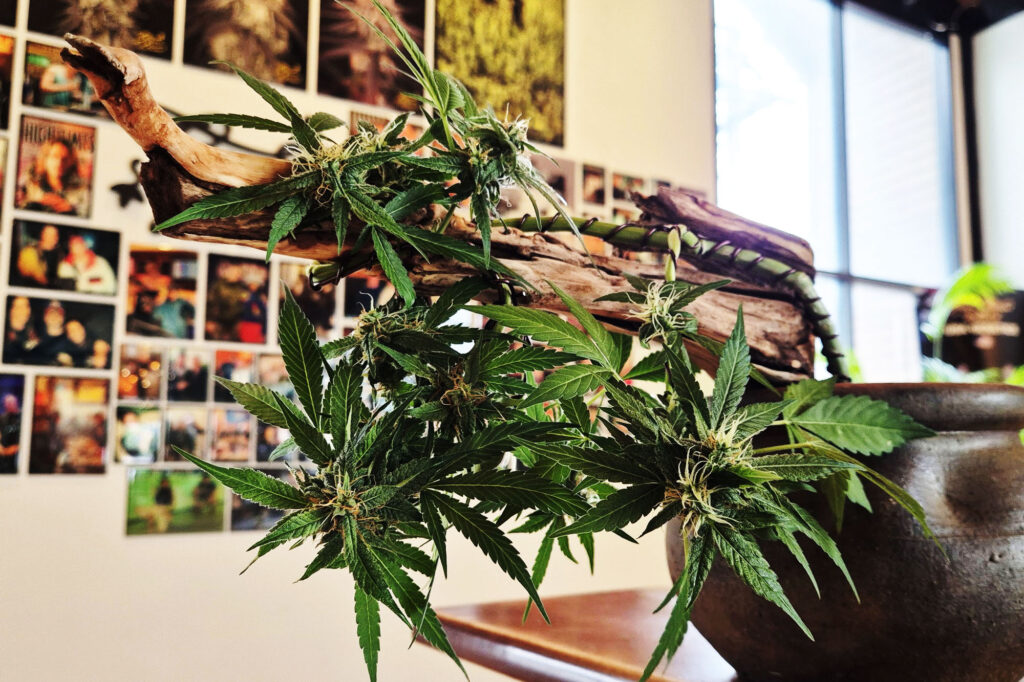
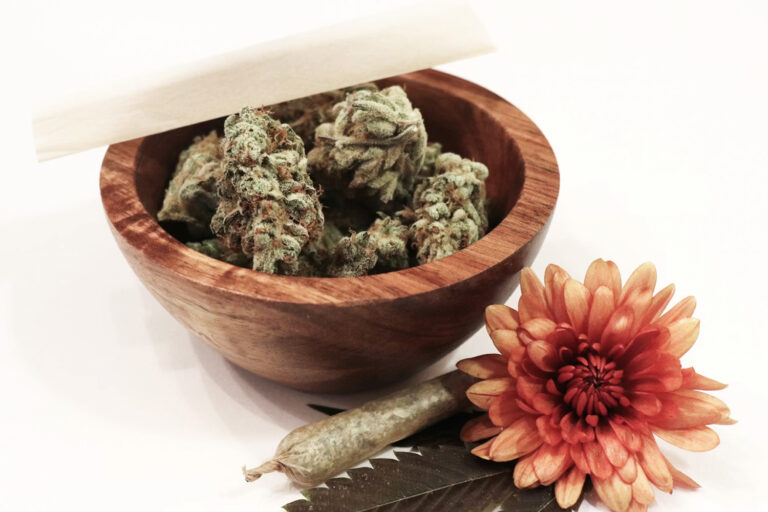
- Abnormally dense, rock-hard buds: Natural cannabis flower has some give when gently pressed. PGR-treated buds are often unusually compact and hard — a result of artificially accelerated cell development rather than natural maturation
- Trichomes that appear glassy or excessively glossy: Healthy trichomes have a frosted, powdery appearance under light. PGR-treated flower often shows an unnatural sheen or glassy coating that looks almost wet despite being dry
- Heavy, waxy texture when handled: If handling the flower leaves an oily or unusually sticky film on your fingers that feels more chemical than resinous, that texture is worth treating as a warning sign
- Unnatural uniformity: Organically grown flower has natural variation in shape, density, and color. Chemically accelerated flower often has a suspiciously uniform, manufactured appearance — consistent across the entire batch in a way that natural growth rarely produces
- Brown or unusual coloring in the interior: Breaking open a bud from a naturally grown plant should reveal a green interior. Discoloration — particularly brown or rust tones throughout rather than just at the stem — can indicate chemical stress during growth
The core principle: visually impressive does not mean high quality. In the current Thai market, flower that looks almost too perfect — oversized, uniform, heavily coated — is more likely, not less likely, to have been chemically assisted. Experienced buyers in Thailand often treat extremely photogenic flower with more caution than less visually striking alternatives from farms with documented growing practices.
Warning Sign 2 — Smell: Natural Terpenes vs. Chemical Odor
Terpenes — the aromatic compounds that give cannabis its characteristic smell — develop naturally during the plant’s growth cycle in response to environment, genetics, and light. Chemically accelerated growing disrupts this process, producing odor profiles that differ from natural flower in detectable ways.
What natural terpene expression actually smells like:
- Complex and layered — citrus, pine, earth, spice, or floral notes that shift slightly as you move the flower around or break it open
- Proportionate in intensity — present and distinctive but not overwhelming; the smell reaches you rather than hitting you
- Consistent between the exterior and the interior of the bud
What chemical odor contamination tends to smell like:
- Artificially sweet or perfume-like intensity: An unnaturally strong, one-dimensional sweetness that doesn’t have the complexity of genuine terpene expression
- A plastic, chemical, or solvent undertone: A sharp note underneath the primary smell that doesn’t belong to any natural cannabis terpene — sometimes described as similar to cleaning products or synthetic fragrance
- “Burnt sugar” or caramelized chemical smell: Particularly in flower that has been through accelerated drying, a scorched sweetness that differs from the natural curing smell of well-processed cannabis
- Smell that fades unusually quickly: Natural terpenes are volatile but persistent. Chemically treated flower sometimes has a strong initial smell that dissipates rapidly once the container is opened — suggesting the aromatic quality is superficial rather than deep in the plant
A useful test where permitted: break a small piece of the flower and smell the interior. Natural flower smells consistent from outside to inside. Chemical contamination often concentrates at the surface, so the interior of the bud will smell noticeably flatter or different from the exterior. (According to:National Library of Medicine)
Warning Sign 3 — Physical Reaction: What Your Body Tells You After Smoking
Even with careful visual and olfactory screening, some contaminated flower passes initial inspection. Your body’s response during and after smoking provides a second layer of assessment — and certain physical reactions are consistent enough indicators of chemical contamination to take seriously as warning signs rather than dismissing as normal smoking effects.
- Harsh, chemical throat burn that differs from normal smoke irritation: Natural cannabis smoke produces warmth and some irritation, particularly at higher temperatures. Chemical contamination produces a distinct sharp burn or acrid sensation that feels qualitatively different — often described as closer to inhaling cleaning product fumes than normal smoke
- Chest heaviness that persists after the session: A lingering pressure or tightness in the chest that doesn’t resolve within a normal timeframe after smoking is one of the more consistent reports associated with PGR-contaminated flower. This differs from the temporary warmth of normal inhalation
- Chemical or metallic aftertaste: A bitter, metallic, or synthetic flavor that remains in the mouth and throat after exhaling — distinct from the natural plant taste that fades quickly — is a reliable indicator that combustion byproducts are present beyond normal cannabis compounds
- Headache onset shortly after smoking: Headaches following cannabis use are not universal with clean flower. Onset within 15–30 minutes of smoking, particularly with a pressure or chemical quality to the pain, is frequently reported with contaminated product
- Nausea or dizziness disproportionate to the amount smoked: While THC can produce these effects at high doses, experiencing them from a small amount of supposedly moderate-potency flower suggests something beyond cannabinoid activity is present
Trust the signal your body sends. If a session produces reactions that feel qualitatively different from your normal experience — particularly throat burn, chest heaviness, or chemical aftertaste — that difference is meaningful information. (According to:U.S. Environmental Protection Agency)
The practical response when these signals appear: stop, note what you bought and where, and do not return to the same product. The absence of a severe immediate reaction does not mean the product is safe for continued use.
Warning Sign 4 — No Lab Results: Why COA Transparency Is Non-Negotiable
The three warning signs above rely on sensory assessment — useful, but not definitive. The only objective verification of cannabis safety is laboratory testing, and the document that records it is the Certificate of Analysis (COA). A COA from an independent, accredited testing facility showing results for pesticides, heavy metals, microbial contamination, and cannabinoid content is the baseline standard for any dispensary making a credible safety claim.
What a complete COA should include:
- Cannabinoid profile — THC, CBD, and other active compounds with percentage by weight
- Pesticide residue panel — testing for the specific agricultural chemicals most commonly associated with contamination, including PGR compounds
- Heavy metal panel — cadmium, lead, arsenic, and mercury at minimum
- Microbial testing — mold, yeast, and bacterial contamination
- Issuing laboratory name, accreditation status, and test date
- Batch or lot number matching the specific product on the shelf
What to watch for at the dispensary level:
- No COA available at all: The clearest signal that safety verification has not been a priority for the supplier or the shop
- THC/CBD results only: A cannabinoid panel alone tells you nothing about pesticide or heavy metal content. A dispensary presenting only potency data as “lab tested” is providing incomplete information
- COA with no issuing laboratory identified: Results without a named, verifiable testing facility cannot be independently confirmed and should be treated with significant skepticism
- Test date significantly older than purchase date: Testing reflects conditions at a specific point in time for a specific batch. A COA that is many months old may not reflect the product currently on the shelf
- Batch number mismatch: Even a legitimate COA provides no assurance if the batch number on the document doesn’t match the product being sold
Reputable dispensaries in Bangkok display COAs proactively — they are part of the value proposition, not something you have to ask for. A shop that hesitates, provides only partial documentation, or presents results without a verifiable laboratory source is asking you to make a health decision based on incomplete information. (According to:U.S. Food and Drug Administration)
The practical standard: before buying from any dispensary, ask to see the COA for the specific product you’re considering. If the shop cannot produce it, or produces documentation that is missing key panels, treat that as a definitive reason to make your purchase elsewhere.
4:Why “Organic” on the Label Means Almost Nothing in Thailand
Walk through any dispensary in Bangkok and you’ll encounter “100% Organic,” “Clean Weed,” and “Natural Grown” on packaging, menu boards, and promotional materials. These labels are everywhere — and they are almost entirely unregulated. In Thailand, there is no legal definition of “organic” cannabis, no official certification body, and no enforceable standard that a grower must meet before applying the term to their product. The word is a marketing choice, not a verified claim.
No Legal Standard, No Official Certification — What “Organic” Actually Means Here
In countries with mature organic certification systems — the USDA Organic standard in the United States, for example, or EU organic regulations in Europe — a product labeled organic has passed third-party verification against defined criteria covering soil management, prohibited substances, and traceability. The certification is issued by an accredited body, it can be revoked, and it carries legal liability for misrepresentation.
None of that infrastructure exists for cannabis in Thailand. The Thai agricultural sector has an organic certification framework for food crops through the Department of Agriculture, but cannabis is not currently covered under a standardized organic certification pathway. This means any grower can describe their product as organic without meeting, documenting, or verifying any specific standard. (According to:Thai Food and Drug Administration)
In practice, the term gets applied in a wide range of ways that have little relationship to what consumers typically understand it to mean:
- “We use organic fertilizer” with no specification of what that means — some growers use organic inputs for part of the growing cycle while relying on chemical fertilizers or PGRs at other stages, particularly during flowering when visual density matters most
- “No pesticides” claims without testing to verify — the absence of a pesticide program does not guarantee the absence of pesticide residue, particularly on farms where neighboring plots use chemical inputs that can cross-contaminate through soil and water
- “Natural growing environment” language that refers to outdoor cultivation without addressing soil quality, water source, or what previous crops were grown in the same ground
- Partial organic practices presented as whole-process organic — a genuinely common pattern in which organic methods are used where they’re low-cost and chemical methods are used where they deliver results, with the entire operation labeled organic based on the former
Reports from Thailand’s food and agricultural monitoring have documented cases where products labeled organic were found to contain pesticide residues or heavy metals at levels inconsistent with organic production claims. Cannabis is not immune to this pattern — it is subject to the same regulatory gaps that affect the broader Thai agricultural market. (According to:Thai Food and Drug Administration)
The label tells you what the grower wants you to believe. It does not tell you what is actually in the flower.
How to Verify What You’re Actually Buying Beyond the Label
If the label cannot be trusted as verification, the question becomes: what can? The answer involves looking past marketing language to the specific evidence that actually supports a safety claim.
Ask for the Certificate of Analysis (COA) before the label conversation starts. As covered in the previous section, a complete COA from an accredited independent laboratory — covering pesticides, heavy metals, and microbial contamination, not just cannabinoid potency — is the only objective evidence of what the product contains. A grower claiming organic production should have no objection to providing this documentation. Resistance or inability to produce a full COA is more informative than any label claim.
Ask specifically about PGR use — by name, not by category. A grower who has genuinely avoided PGRs will know what they are and will answer directly. Vague responses about “natural growth” or “no chemicals” that don’t specifically address paclobutrazol, daminozide, or chlormequat are not the same as a clear confirmation of PGR-free cultivation.
Ask about GACP certification or compliance. Following Thailand’s June 2025 regulatory changes, registered farms are required to operate under GACP (Good Agricultural and Collection Practices) guidelines — an international framework covering soil management, prohibited inputs, harvesting, drying, and storage standards. A farm operating under genuine GACP compliance has documented its growing practices against a defined standard. That documentation is verifiable in a way that an organic label is not.
- Verifiable GACP registration or compliance documentation → meaningful evidence of controlled growing practices
- Complete COA from a named, accredited laboratory → objective evidence of what the product actually contains
- Farm name and location disclosed → allows the supply chain to be traced and cross-referenced
- Batch-specific testing → confirms the documentation applies to the product you’re buying, not a different harvest
- “Organic” label alone, no supporting documentation → marketing language without verification
Dispensaries that source from farms with genuine quality controls tend to lead with that evidence — farm name, GACP status, COA access — rather than with organic labeling. The language that surrounds quality in a well-run dispensary is specific and verifiable: named farms, documented testing, traceable batches. The language that surrounds marketing claims is general and unverifiable: natural, clean, organic, pure.
When you’re standing at a dispensary counter and trying to make a decision, the simplest practical test is this: can the staff tell you the name of the farm, show you a COA that covers pesticide and heavy metal panels, and confirm GACP registration? If yes, the organic label — whether it’s there or not — becomes largely irrelevant. If no, the organic label is the only thing being offered as reassurance, and it isn’t enough.
5:Why Chemical Cannabis Is So Cheap — and What That Price Actually Reflects
A gram of flower that looks visually similar to top-shelf product, priced at half the cost of what a certified farm charges — it’s a common sight across Bangkok dispensaries. The price difference feels like a bargain. It isn’t. It’s a direct reflection of what was skipped in the production process, and those skipped steps are the ones that determine whether the product is safe.
The Economics of PGR Growing: More Harvests, Lower Costs, Higher Risk
The fundamental economics of PGR-assisted cultivation come down to harvest frequency. Under natural growing conditions, cannabis completes a full cycle — from germination through vegetative growth, flowering, and harvest — typically three to four times per year. PGR use compresses the flowering phase artificially, enabling five to six or more harvests annually from the same growing space.
The financial impact of that difference is significant. More harvests per year from the same facility means lower fixed cost per unit — the same rent, equipment, and labor divided across a larger total output. Combined with the elimination of costs associated with quality management, the per-gram production cost drops to a level that legitimate farms simply cannot match.
What gets eliminated in the PGR production model:
- Extended growing cycles: The time required for natural maturation — during which terpene profiles develop and resin quality builds — is cut short. The plant looks finished before it is
- Soil management investment: Healthy, properly maintained growing medium is expensive to develop and maintain. PGR cultivation can extract yield from degraded soil conditions that would be unsuitable for quality natural production
- Flush periods: Responsible growers run a flush cycle before harvest — a period of feeding only clean water — to reduce nutrient and chemical residue in the final flower. PGR operations focused on speed and volume routinely skip this step
- Drying and curing time: Proper post-harvest processing takes weeks. Accelerated drying reduces this timeline dramatically, locking in whatever residues are present rather than allowing them to dissipate
The 2025 regulatory changes added another factor. As Thailand moved toward requiring GACP certification for registered farms, some unregistered operations that chose not to or could not meet registration requirements liquidated their existing inventory rather than investing in compliance. That inventory entered the market at discounted prices, competing directly against certified product on price alone. The dispensary customer had no way to distinguish between the two based on appearance.
(According to:Thai Ministry of Public Health)
What Legitimate Farms Pay for That You Don’t See in the Price
The price of cannabis from a GACP-certified, transparently operated farm reflects a set of real costs that are invisible at the point of sale but directly relevant to what you’re actually consuming.
- Laboratory testing: A complete COA covering cannabinoid profile, pesticide residue, heavy metals, and microbial contamination from an accredited independent laboratory costs money per batch. Farms that test every harvest absorb this cost into their per-gram price
- GACP compliance infrastructure: Meeting and maintaining certification requires documented processes, staff training, facility standards, and periodic audits. These are ongoing operational costs, not one-time investments
- Proper growing medium management: Soil health, water quality, and nutrient programs designed around plant biology rather than yield maximization require more input, more time, and more expertise than chemical shortcut approaches
- Extended cultivation cycles: Allowing plants to mature fully — and running proper flush periods before harvest — means fewer harvests per year from the same facility. Lower annual output per square meter means higher fixed cost per gram
- Drying and curing investment: Controlled environment curing over an appropriate timeframe requires dedicated space, humidity management, and time that fast-turnaround operations don’t allocate
When you pay more at a dispensary that sources from certified farms, the premium is not arbitrary. It reflects documented growing practices, independent safety verification, and the time and investment required to produce flower that has actually been checked against the contaminants that the cheaper alternative has not. The price gap between certified and uncertified product in Thailand’s current market is, in large part, the cost of knowing what you’re buying.
6:Not All Chemicals Are Equal — The Difference Between Safe Nutrients and Harmful PGRs
A necessary clarification before this guide’s conclusions: the term “chemical” covers an enormous range of substances, and the concern this guide addresses is not about chemistry in growing — it’s about specific categories of substances that pose documented health risks when present in flower that is smoked.
Natural-only cultivation is genuinely difficult to execute at consistent quality. Even committed organic growers supplement with mineral compounds — calcium, magnesium, iron — that are technically chemical in nature but pose no health risk at the concentrations found in properly grown cannabis. pH adjustment solutions, used universally to maintain optimal soil and water chemistry, are another example: chemically precise, functionally necessary, and not a health concern in finished flower.
The substances this guide has identified as problematic are a specific and distinct category:
- PGRs such as paclobutrazol and daminozide — compounds that artificially manipulate plant structure and development, produce harmful combustion byproducts, and are restricted or prohibited for food use in multiple jurisdictions (According to:U.S. Environmental Protection Agency)
- Heavy metal contamination from unmanaged soil — not a chemical input but a consequence of growing in contaminated or depleted growing medium without testing or remediation
- Residual pesticide from prohibited or excessive agricultural chemical use — substances that shouldn’t be present in flower at harvest at any meaningful concentration, and whose presence reflects either prohibited use or inadequate flush and processing (According to:World Health Organization)
A grower using scientifically formulated mineral nutrients, pH management, and responsible pest management — with proper flush periods, full drying and curing, and independent testing — is not producing the “chemical cannabis” this guide warns against. The distinction is between inputs that support plant health and are managed out of the final product, and substances that compromise the flower itself and remain present when it is consumed.
Understanding this distinction matters for one practical reason: it allows you to have a more informed conversation with dispensary staff and farm representatives. Asking “is this organic?” gets you a marketing answer. Asking “is this PGR-free, and do you have a COA that includes a pesticide panel?” gets you verifiable information.
7:How to Buy Cannabis Safely in Thailand — The Practical Checklist
Everything covered in this guide reduces to a set of actions you can take at the point of purchase. Safe buying in Thailand’s current market is not complicated — it requires asking specific questions and knowing what adequate answers look like.
Before you buy, work through the following:
- Ask for the COA and check what panels it covers: Cannabinoid potency only is not sufficient. The COA should include pesticide residue testing, heavy metal panel (cadmium, lead, arsenic, mercury at minimum), and microbial contamination results. Confirm the issuing laboratory is named and the test date corresponds to the current batch
- Ask specifically whether PGRs were used: Name the compounds — paclobutrazol, daminozide, chlormequat. A grower who hasn’t used them will answer directly. Vague reassurances about “natural growing” that don’t address the specific question are not confirmation
- Ask about GACP certification or compliance: Registered farms operating under GACP guidelines have documented their growing practices against a verifiable standard. This is a more meaningful quality indicator than any label claim
- Apply the visual and smell checks: Abnormally hard, uniform buds with an unnatural sheen and one-dimensional or chemical-tinged smell warrant caution regardless of what the staff says
- Treat “organic” as a starting point for questions, not an answer: Follow any organic claim with a request for the COA and specific growing practice information. The label alone is unverified
- Note your physical reaction and act on it: Chemical throat burn, chest heaviness, or metallic aftertaste after smoking are reliable indicators that something beyond cannabinoids is present. If these occur, do not continue using the same product
- Buy from dispensaries that lead with documentation: Shops that proactively display COAs, name their farm sources, and can answer specific questions about growing practices are operating transparently. That transparency is itself a quality signal
- Avoid unusually cheap flower without documentation: Price significantly below the standard market range for a given quality tier — without corresponding lab documentation — reflects the economics of unverified production. The discount is not a benefit to you
Thailand’s cannabis market in 2026 contains genuinely excellent, safely produced flower alongside product that has not been grown, tested, or handled to any consistent standard. The gap between the two is not always visible on the surface — it lives in the documentation, the farm practices, and the questions a dispensary can or cannot answer when you ask them directly.
The checklist above won’t guarantee a perfect experience every time. But it will consistently move you toward the part of the market where quality and safety are treated as non-negotiable — and away from the part where they aren’t.
Note: This article is based on content originally published on the Japanese edition of OG Times .