Pairing Cannabis and Black Tea: An Aroma-First Guide to Terpenes and Tea

- For those who want to enjoy the aroma and terpenes of cannabis more deeply
- For those looking for a drink to enjoy alongside cannabis
- For those who love black tea and are curious about pairing its aroma with cannabis
- For those who want to compare the differences in aroma between cannabis strains
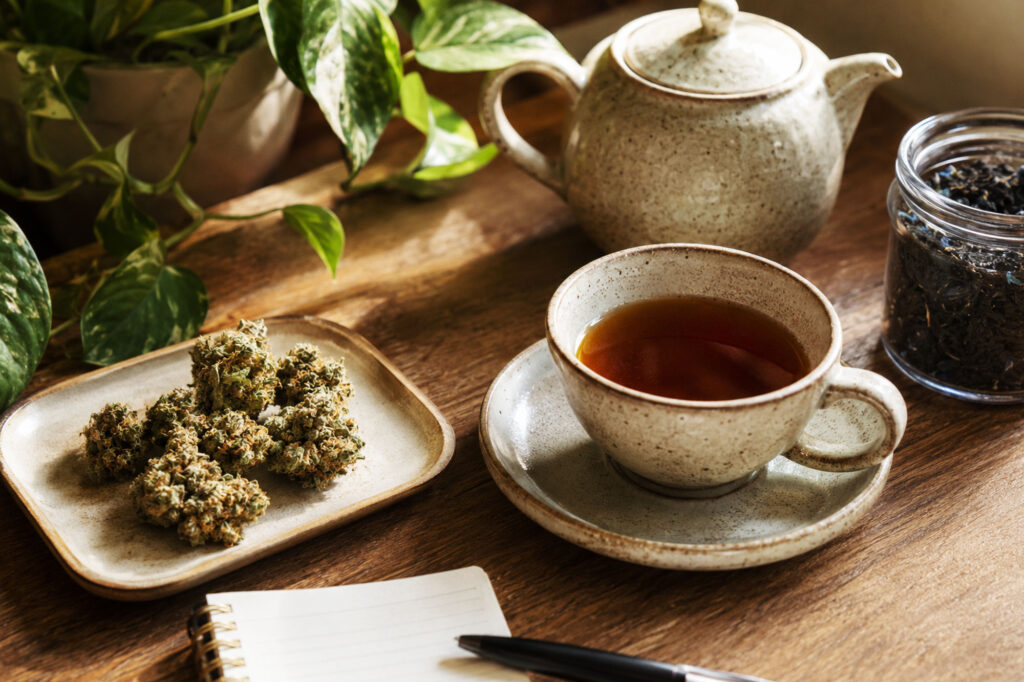
Since my days living in New York, I’ve often had black tea while smoking cannabis. I already loved black tea, so I figured I simply liked the combination. But once I learned that black tea, like cannabis, contains a variety of aromatic compounds, it became a little easier to picture why the two felt like such a good match.
Terpenes are natural aromatic compounds found in cannabis and many other plants. They create each flower’s individual character, from citrus notes like lemon, to fresh scents like pine, to sweet aromas like berry. Cannabis contains not only THC and CBD but also dozens of different terpenes, and its aroma and characteristics vary with their type and concentration.
Of course, there’s no scientifically defined “correct pairing” of cannabis and black tea. Still, both share the trait of containing a variety of plant-derived aromatic compounds that you can enjoy while paying attention to their scent. In fact, aroma is considered one of the important factors in evaluating the quality of black tea, and for cannabis too, volatile compounds such as terpenes have been reported to relate to each strain’s aroma.
In this article, centering on what I actually felt while pairing cannabis and black tea, and drawing on research into terpenes and tea aroma, I’ll explore the fun of enjoying cannabis and black tea together.
1: Why Cannabis and Black Tea Pair Well
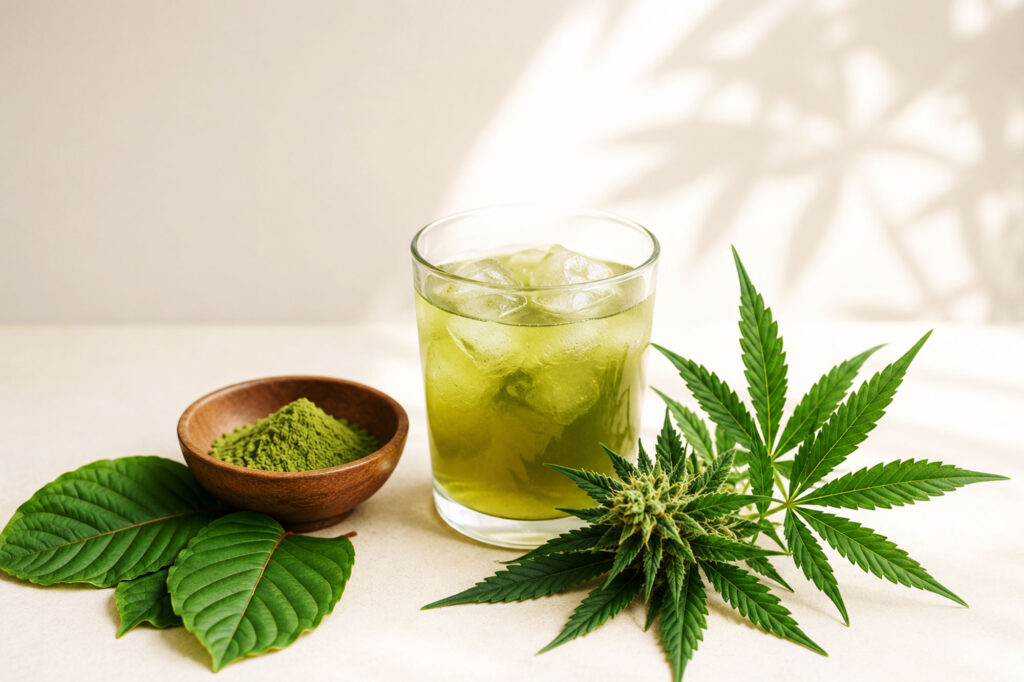
The biggest reason I became interested in pairing cannabis and black tea is that I came to see both, rather than simply “something you consume” or “something you drink,” as plants whose differences in aroma you can enjoy through terpenes.
With cannabis, even the same flower can give very different impressions, such as citrus, berry, floral, earthy, pine, or spice, depending on the terpenes it contains. Black tea is much the same: depending on the type of tea leaf, its origin, and how it’s processed, it has all kinds of character, from floral scents to fruit-like aromas to a honey-like sweetness.
So, in the same spirit as pairing food with wine, I think choosing them by comparing the aroma of cannabis with the aroma of black tea can be one way to enjoy them.
Cannabis Terpenes and the Aroma of Black Tea
When you look into the aroma of cannabis, the word that comes up often is “terpenes.”
Terpenes aren’t unique to cannabis; they’re natural compounds found in a wide range of plants. In cannabis, several terpenes such as myrcene, limonene, linalool, and pinene have been identified, and they’re considered one of the elements that make up each flower’s aroma. In recent years, it’s been reported that not only terpenes but also multiple volatile compounds, such as esters, aldehydes, ketones, and sulfur compounds, relate to the complex aroma of cannabis.
In other words, cannabis and black tea share some aromatic compounds. That said, containing the same compounds doesn’t necessarily mean they’ll pair well.
As my own way of enjoying it, rather than deciding the pairing by terpene names alone, I find it more interesting to choose the tea based on the aroma I actually sense with my own nose.
2: Two Points for Pairing Cannabis and Black Tea
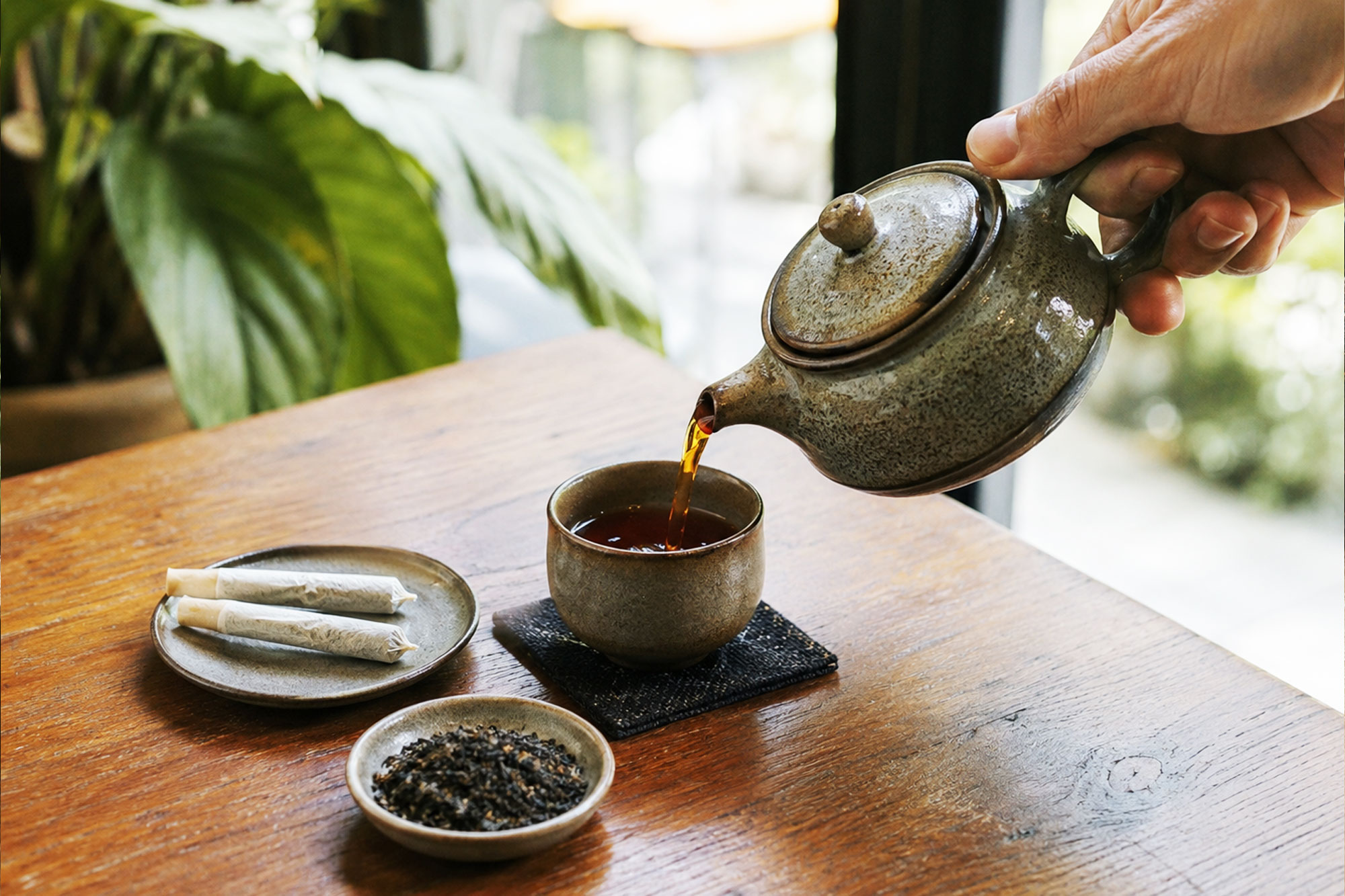
When enjoying cannabis and black tea together, the first thing I focus on isn’t deciding “which tea is the right answer.” How you perceive the aroma of both cannabis and black tea varies from person to person, and even the same strain or tea leaf can give a different impression depending on the day’s condition and temperature.
So I enjoy it with a simple approach: choosing the tea based on the aroma I sense from the cannabis, then checking the pairing as I actually drink it.
Choose Pairings with Similar Aromas
The most straightforward method is to match the aroma direction you sense from the cannabis and the black tea.
For example, for cannabis that evokes fruit like peach or berry, I’ll pick a tea with a fruity quality; for citrus types like lemon or orange, a tea with a citrus aroma. I choose along those lines.
Because pairings with a similar aroma direction make the differences easy to compare, I find this an easy method to try even when enjoying cannabis and black tea together for the first time.
Compare the Same Tea Before and After Smoking Cannabis
What I find especially interesting is the method of tasting the same tea before and after smoking cannabis.
First I drink the tea on its own, checking its aroma, sweetness, astringency, and the aftertaste that lingers. Then I check the aroma of the cannabis, and after actually smoking it, I try the same tea once more. When I try it in this order, in my case I sometimes notice aromas I didn’t catch at first, or conversely find the cannabis aroma coming through more strongly than the tea’s impression.
3: Teas to Pair by Cannabis Aroma Type
The table above summarizes which pairings I’d start with when choosing a tea based on the aroma of the cannabis. This doesn’t mean “this tea suits this aroma best.” Cannabis aroma differs by strain and cultivation method, and black tea’s character changes with origin, tea leaf, and processing.
Please think of it as a reference for choosing a tea, using the aroma you first sense from the cannabis as one clue.
4: Actually Pairing Cannabis and Black Tea
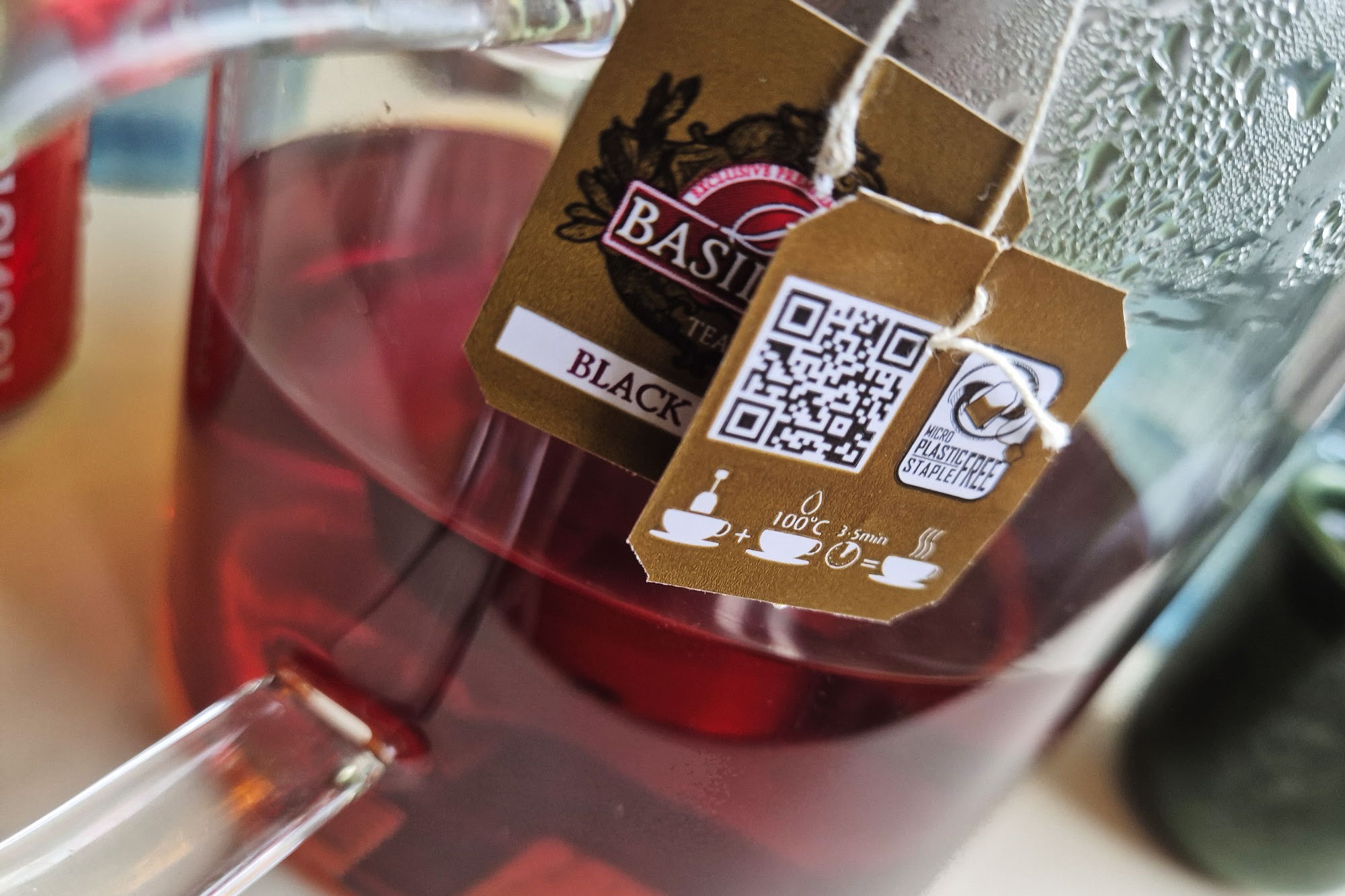
I’ve introduced the aromas of cannabis and black tea so far, but how it actually feels when you pair them is, in part, hard to convey through text alone.
So this time, I prepared a cannabis strain and a black tea with different aroma characteristics and tried, in my own way, to see whether the way I perceive the tea’s aroma and taste differs before and after smoking cannabis.
This is simply a record of my own perceptions, and even the same pairing is felt differently from person to person. So rather than framing it as “this pairing is the right answer,” I’m sharing it as one way to enjoy aroma.
The Cannabis Strain and Black Tea I Tried This Time
This time, as the tea to enjoy alongside cannabis, I chose the black tea from Basilur Tea.
Basilur Tea is a Sri Lankan tea brand, and the black tea I drank this time had a solid, tea-like aroma and body while leaving a relatively clean impression on the palate.
On the cannabis side, I chose “Passion Fruits Z.” As the name suggests, Passion Fruits Z is a strain marked by a sweetness reminiscent of tropical fruit, a refreshing passion-fruit-like tartness, and a bright citrus aroma.
This time, rather than figures like THC, I paired it with the black tea from Basilur Tea based on the fruity aroma I sensed when I actually smelled the flower.
How the Aroma and Taste Changed Before and After Smoking
First, before smoking, I drank the Basilur Tea black tea on its own and checked its aroma, astringency, body, and the aftertaste lingering in my mouth. What I noticed first was a solid, tea-like aroma, a moderate astringency, and a deep, layered body. The scent of the tea leaves lingered even after I’d taken a sip, and it struck me as a black tea with real presence on its own.
After that, once I’d smoked “Passion Fruits Z” and drank the same black tea again, in my case my attention turned less to the astringency I’d felt at first and more to the sweetness deeper in the tea and its softer aroma.
Because Passion Fruits Z has a striking, bright aroma reminiscent of tropical fruit and citrus, layering it over the deep aroma of the black tea made the differences between the two easier to sense, and the combination of Passion Fruits Z’s vivid fruitiness with the body and astringency of Basilur Tea’s black tea felt less like one aroma erasing the other and more like a pairing that’s easy to enjoy while comparing each one’s characteristics.
5: Things to Keep in Mind When Enjoying Cannabis and Black Tea Together
Cannabis and black tea are an interesting pairing from an aroma standpoint, but because black tea contains caffeine, I think it’s best to avoid drinking large amounts based on aroma alone.
Watch Your Caffeine Intake
Black tea contains caffeine, though the amount varies by type and how it’s brewed.
On caffeine, FDA-related materials treat intake of up to around 400 mg per day for healthy adults as a level generally not associated with serious concerns. However, this is not a standard indicating the safety of consuming it together with cannabis.
Perception Varies with Your Condition and Intake
Health Canada, the public body responsible for the Canadian federal government’s health administration, explains that the effects of cannabis relate to multiple factors, including the amount of THC and CBD, the method of use, prior experience, and health condition. It also notes that the amount consumed and the pace of consumption relate to the potential for unwanted effects.
The same goes for pairings with black tea: a combination you once found delicious won’t necessarily feel exactly the same every time.
For that reason, when your condition is different from usual, or when using cannabis leaves you feeling anxious, with a racing heart, or very drowsy, I think it’s better to prioritize staying calm and resting without adding more use, rather than trying a pairing with black tea.
6: Summary | Enjoying Cannabis and Black Tea Through Aroma
Having actually paired cannabis and black tea, what I found most interesting was that paying attention to the aroma of both broadens how you can enjoy them.
Cannabis has a range of aromas depending on the strain, such as fruity, citrus, floral, and earthy. Black tea likewise differs in aroma and taste depending on the type of tea leaf, its origin, and how it’s made.
With the Passion Fruits Z and Basilur Tea black tea I tried this time, I was able to enjoy comparing the vivid fruitiness of Passion Fruits Z with the body and astringency of the black tea.
Of course, there’s no scientifically defined correct pairing of cannabis and black tea. Even with the same cannabis strain or tea, perception changes with the amount used, how it’s brewed, and your condition that day.
If you’re interested in cannabis terpenes and aroma, pairing it with the black tea you usually drink might help you discover a way of enjoying aroma unlike any before.
FAQ
Frequently Asked Questions
Q
Can you enjoy cannabis and black tea together?
You can enjoy cannabis and black tea at the same time. This article presents it not as a way to intensify the effects of cannabis, but as a way to enjoy the differences in the aroma and taste each one has. In my case, I first drink the tea on its own to check its aroma and taste, then after using cannabis I drink a small amount of the same tea again and compare the difference in how it feels.
Q
Is there a black tea that pairs well with cannabis?
There’s no set pairing where “this tea suits this cannabis best.” In my case, I choose the tea based on the aroma I sense from the cannabis. For example, Ceylon tea for fruity types, Earl Grey for citrus types, Darjeeling for floral types, and Assam for earthy/woody types; I find that choosing by aroma direction makes them easier to compare.
Q
Does drinking black tea change the taste of cannabis?
When I actually compared them, the impression I had of the tea’s and the cannabis’s aroma sometimes felt different before and after smoking. That said, I can’t state for certain that the tea changed the taste of the cannabis itself. It’s closer to the sense that putting tea in between can make you notice aromas and tastes you hadn’t been aware of before.
Q
Do cannabis and black tea share any terpenes?
Some shared aromatic compounds, such as linalool and geraniol, have been identified in cannabis and tea leaves. However, the aroma of cannabis and black tea isn’t determined by terpenes alone; it’s created by a combination of multiple volatile compounds. Containing the same aromatic compounds doesn’t necessarily mean they’ll pair well.
Q
When is it best to drink black tea, before or after smoking cannabis?
In my case, before using cannabis I first drink the tea on its own to check its aroma, astringency, sweetness, and aftertaste. Then, after using cannabis, drinking the same tea again makes it easy to compare how it feels before and after. That said, there’s no rule about which timing is better.
Q
Should I watch out for caffeine when enjoying cannabis and black tea together?
Black tea contains caffeine, though the amount varies by type and how it’s brewed. Since how cannabis feels also varies from person to person, in my case I don’t drink cup after cup of tea; I drink small amounts while checking the aroma. If you’re sensitive to caffeine, or if using cannabis leaves you with a racing heart or anxiety, I think it’s better not to force the pairing.
Q
Can beginners enjoy the cannabis and black tea pairing too?
If you’re interested in the aroma of cannabis, the enjoyment of comparing aromas with tea is itself easy to grasp. That said, if you’re not used to cannabis, I think it’s better to prioritize checking the strength of the cannabis you’re using and your own condition before worrying about pairing it with tea. Rather than forcing yourself to search for aroma differences, it’s important to enjoy it based on how you feel.
SOURCES
Sources & References
OG TIMES | A Guide to the Terpenes in Cannabis
Cited as reference information when explaining the types of terpenes in cannabis, their aroma characteristics, and the aromatic compounds that differ from flower to flower in the main text.
Referenced as official information for confirming the growing regions and aroma of Ceylon tea and the characteristics of Sri Lankan black tea in the main text.
UK Tea & Infusions Association
Cited as reference information when confirming the types and aromas of black tea, including Earl Grey, and the characteristics of individual tea leaves in the main text.
Referenced as official information when explaining the aroma and flavor of Darjeeling and Assam and the characteristics of each tea in the main text.
PubMed Medical & Scientific Research Data
Cited as a reference for checking research on terpenes, volatile compounds, and the components that make up aroma found in cannabis and tea leaves in the main text.
U.S. Food and Drug Administration
Cited as a reference for checking official information on caffeine intake, which black tea also contains, and on caffeine consumption in healthy adults in the main text.
Referenced as official information for confirming factors that affect how cannabis feels, such as THC and CBD, the amount used, physical condition, and prior experience, as well as physical reactions during cannabis use in the main text.
Note: This article is based on content originally published on the Japanese edition of OG Times .