Thailand Cannabis Medical Certificate 2026: Do You Need One and How to Get It?

If you visited Bangkok before June 2025 and walked into a dispensary without any paperwork, you probably walked out with flower without anyone asking for anything. That experience is still common — but it no longer reflects what the law requires. Thailand’s regulatory landscape for cannabis changed significantly in 2025, and the medical certificate (Medical Certificate) is now at the center of what separates a legal purchase from an illegal one.
This guide covers three things:
- Why Thailand introduced the medical certificate requirement and what the law actually says
- How to obtain one — which clinics, what documents, what it costs, and how long it takes
- What risks remain even with a certificate, and how to protect yourself both in Thailand and when you return home
The situation on the ground remains complicated. Many dispensaries still sell without checking for a certificate, and enforcement is uneven across different areas. But “you can buy without one” and “you’re legally protected without one” are two very different things — and understanding that distinction is what this guide is for.
1:Why Thailand Now Requires a Medical Certificate for Cannabis
The short answer is that Thailand’s 2022 decriminalization moved faster than anyone anticipated, and the government’s 2025 re-regulation was a direct response to that. Understanding the legal shift — not just that it happened, but why — is the foundation for understanding everything else about buying cannabis in Thailand today.
From Decriminalization in 2022 to Re-Regulation in 2025: A Timeline
In June 2022, Thailand removed cannabis from its narcotics list, becoming the first country in Southeast Asia to effectively decriminalize it. At the time, the move was understood — at least officially — as a medical and economic policy, not a green light for recreational use. A Cannabis Control Bill was intended to accompany the decriminalization and establish clear usage rules, but it stalled in parliament due to political complications.
With no governing framework in place, the market moved on its own. Dispensaries opened at a scale that surprised even the government — estimates at peak put the national total at approximately 20,000 shops. Tourists could walk into dispensaries across Bangkok, Phuket, and Chiang Mai and buy flower without any documentation. Recreational use, while never officially sanctioned, became the de facto reality.
By 2024, the Ministry of Public Health began signaling a course correction. In June 2025, it formally reclassified cannabis flower as a Controlled Herb under Thai health regulations, a classification that carries specific legal requirements for purchase and possession. The accompanying policy direction: cannabis flower is for medical use only, and a physician-issued Medical Certificate is required to buy or possess it legally.
(According to:Thai Ministry of Public Health)
What “Controlled Herb” Classification Actually Means for Buyers
The term “Controlled Herb” is specific to Thai health law and carries real legal weight. Here’s what the reclassification means in practical terms for anyone buying cannabis flower in Thailand:
- With a Medical Certificate → Purchase and possession are legally recognized as medical use
- Without a Medical Certificate → No legal basis to demonstrate medical purpose; possession is treated as a violation in principle
Cannabis flower carries the strictest controls under the new classification. Extracts — oils, rosins, waxes — fall under a separate and in many cases more heavily regulated category that predates the 2025 change. This means the medical certificate requirement applies most directly to the dried flower that most dispensaries sell.
The framework is designed to distinguish medical users from recreational users by requiring documentation that a licensed medical professional has assessed the need. In theory, this creates a clear dividing line. In practice — as covered in detail later in this guide — enforcement has been inconsistent, and many dispensaries continue operating without verifying certificates. That inconsistency does not change your legal exposure. What it changes is the likelihood that you’ll be checked on any given day, in any given location.
(According to:Thai Ministry of Public Health)
Does This Apply to Tourists Too? What Foreign Visitors Need to Know
Yes — the medical certificate requirement applies to foreign nationals in Thailand. There is no tourist exemption, no “foreigner grace period,” and no provision that treats visitors differently from residents under the current regulatory framework.
What a medical certificate provides for a tourist specifically:
- Legal recognition of the purchase as medical in purpose
- Documentation to present if questioned by police or at a checkpoint
- A record that supports your explanation at the airport on departure
- Evidence of legitimate use if you face questions after returning to your home country
Reports since June 2025 indicate that police checks on dispensaries and possession spot-checks have increased in some areas — notably in Phuket and parts of Bangkok. Tourists have been among those stopped. In those situations, the presence or absence of a medical certificate has directly affected how the interaction was handled.
The language barrier compounds this for foreign visitors. A Thai national who can explain their situation fluently is in a different position than a tourist who cannot. A medical certificate removes the need for that explanation — the documentation does the talking.
One practical note on timing: obtaining a certificate requires a clinic visit, which takes time. If you’re arriving in Thailand and planning to visit a dispensary during your trip, factoring in the certificate step before you go — rather than after you’ve already bought — is the approach that minimizes your exposure from day one.
(According to:Thai Ministry of Public Health)
2:How to Get a Cannabis Medical Certificate in Thailand — Step by Step
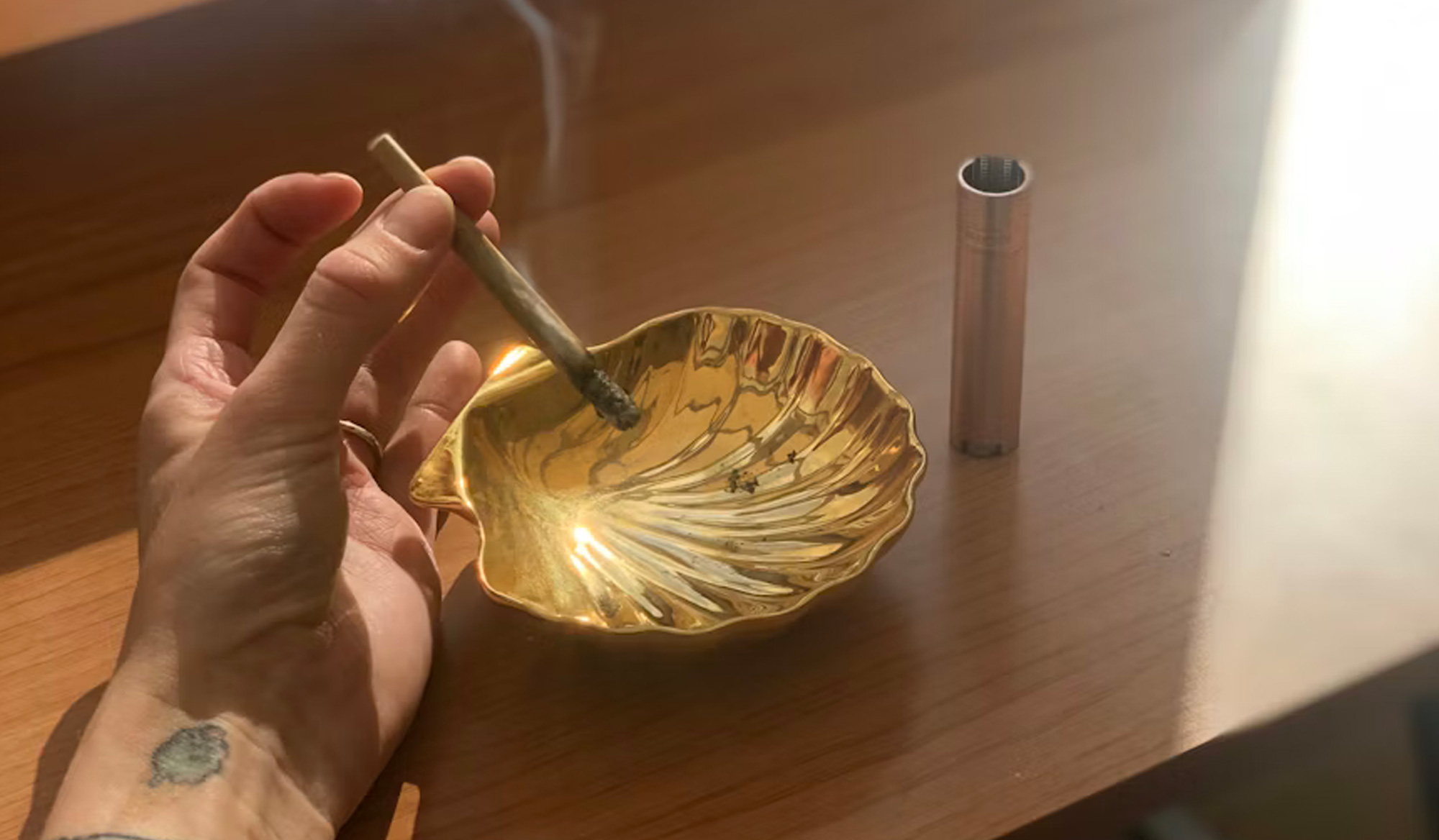
Getting a medical certificate in Thailand is more straightforward than many travelers expect — but only if you go to the right place and understand what the process actually involves. The certificate isn’t a formality you can skip or shortcut. It’s a document issued by a licensed medical professional based on a real consultation. That said, for most people with a qualifying symptom — and the list is broader than you might think — the process takes under an hour and costs a fraction of what you’d spend at a dispensary.
Which Doctors and Clinics Can Issue a Cannabis Medical Certificate?
Not every clinic or medical professional in Thailand is authorized to issue a cannabis Medical Certificate. The certificate must be issued by a healthcare professional registered with the Thai Ministry of Public Health. Authorized issuers include:
- Licensed general practitioners (GPs) at registered medical facilities
- Specialist physicians at private hospitals
- Dentists in specific qualifying circumstances
- Thai Traditional Medicine doctors (Thai Traditional Doctors) registered with the MOPH
In Bangkok and Chiang Mai, Medical Cannabis Clinics and Cannabis Clinics operating within or alongside registered private hospitals are the most accessible option for tourists. Some dispensaries in tourist-heavy areas are co-located with or have formal arrangements with licensed clinics, which allows for a certificate consultation on the same visit.
When selecting a clinic, two things matter most. First, confirm the clinic is registered with the Thai Ministry of Public Health (MOPH) — not just operating with a medical-looking sign. Second, confirm the issuing doctor holds a current license number that will appear on your certificate. A certificate without a verifiable license number and clinic registration is not a valid document under the 2025 framework.
Avoid clinics that offer certificates at unusually low prices with minimal or no consultation. In tourist areas, “certificate shops” that issue documentation without a real medical assessment have been reported. These documents may be rejected at dispensaries and will not protect you in a police interaction.
(According to:Thai Ministry of Public Health)
What to Bring, What It Costs, and How Long It Takes
The consultation process at a registered clinic follows three stages:
- Step 1 — Registration and intake: Bring your passport (original, not a copy). You’ll complete an intake form covering your primary symptoms, medical history, current medications, and any prior treatment. Be specific and honest — the doctor’s assessment is based on what you provide here.
- Step 2 — Medical consultation: The doctor reviews your symptoms, health background, and treatment history to determine whether cannabis is an appropriate option. If approved, the consultation typically results in guidance on form (dry flower, oil, etc.), recommended quantity, and THC/CBD balance suited to your situation.
- Step 3 — Certificate issuance: You receive a Medical Certificate documenting the diagnosis, intended use, recommended quantity, and validity period. Keep the original — this is the document you’ll present at dispensaries and, if necessary, to authorities.
Cost: Fees vary by clinic and location, but a consultation and certificate issuance at a registered clinic typically runs between 300 and 1,000 THB. Clinics in tourist-heavy areas or inside private hospitals may charge toward the higher end of that range. Unusually low fees — below 300 THB — are worth treating with caution, as they may indicate a non-standard process.
Time: For most patients, the full process from registration to receiving the certificate takes 15 to 30 minutes. Clinics with high tourist traffic may have longer waits, so arriving early in the day reduces the chance of a queue.
What to keep: Store the original certificate securely for the duration of your stay. Bring it with you whenever you visit a dispensary, and retain it — along with your dispensary receipt and passport entry stamp — for the return journey home.
What Conditions Qualify? Symptoms That Doctors Typically Approve
Medical cannabis in Thailand is not positioned as a general wellness product — it’s framed as a treatment option for specific symptoms where conventional approaches have been insufficient or only partially effective. The conditions that doctors most commonly approve include:
- Chronic pain — including lower back pain, joint pain, and neuropathic pain
- Pain and appetite loss associated with cancer or serious illness
- Insomnia and persistent sleep disruption
- Epilepsy and seizure disorders
- Symptoms associated with neurodegenerative conditions such as Parkinson’s disease
- Anxiety and stress-related conditions where other treatments have shown limited results
For tourists specifically, the most commonly cited qualifying conditions tend to be chronic sleep issues, long-standing pain, and anxiety-related symptoms. These are conditions that don’t require specialist documentation from a home country — a clear description of your symptom history and what you’ve tried previously is typically sufficient for the doctor to make an assessment.
You do not need to arrive with a diagnosis from your home country’s physician. The Thai doctor will conduct their own assessment. What helps is being able to describe your symptoms specifically — how long you’ve had them, how they affect daily life, and what treatments or approaches you’ve already tried.
One practical note: presenting as someone seeking purely recreational use, or being unable to describe any qualifying symptom, is likely to result in the certificate not being issued. The consultation is a real medical interaction, not a rubber stamp. Approaching it honestly — and with a genuine symptom to discuss — is both the ethical approach and the one most likely to result in a successful outcome.
3:What to Do After You Get Your Certificate — Rules That Still Apply
Receiving your medical certificate is not the end of the process — it’s the beginning of a set of responsibilities that determine whether the document actually protects you. A certificate that has expired, exceeds its stated quantity, or was issued by an unregistered clinic provides no legal protection. Understanding what the certificate does and doesn’t cover is as important as obtaining it in the first place.
Expiry Dates, Quantity Limits, and When You Need to Renew
Every medical certificate issued under Thailand’s 2025 framework includes specific parameters that define the scope of legal use. The three most important are:
- Validity period: Most certificates are issued for a defined period — commonly 30 days from the date of consultation. Use beyond that period is not covered by the certificate.
- Quantity limits: The certificate specifies a recommended quantity, typically framed as an amount appropriate for the stated validity period. Purchasing significantly more than what is documented raises the legal question of whether the purchase is genuinely medical in purpose.
- Form of use: The certificate typically specifies the form — dry flower, oil, or other — that the doctor approved. Purchasing a form not covered by your certificate may not be protected under the same document.
What this means practically:
- Expired certificate → No longer valid as legal documentation of medical purpose
- Purchases significantly exceeding stated quantity → May be questioned as non-medical use
- Long-stay visitors → Continued use beyond the validity period requires a follow-up consultation and renewal
For short-trip travelers, align your certificate’s validity period with your stay dates when scheduling the consultation. Most clinics can accommodate this — simply mention your departure date during registration so the doctor can issue documentation that covers your full itinerary.
(According to:Thai Ministry of Public Health)
Fake Certificates and Unregistered Clinics: How to Spot the Difference
A valid medical certificate under Thailand’s 2025 framework includes specific elements that distinguish it from documentation issued by unregistered or non-compliant sources. Before leaving any clinic with your certificate, verify it contains all of the following:
- The issuing doctor’s full name and MOPH license number
- The clinic’s registered name, address, and contact information
- Your name and passport number
- Specific diagnosis or qualifying condition
- Recommended form, quantity, and THC/CBD guidance
- Validity period with clear start and end dates
- Official clinic stamp or seal
A document missing any of these elements — particularly the doctor’s license number and clinic registration details — is not a valid certificate under the current framework. It will not protect you in a police interaction, and presenting it as genuine documentation could itself constitute a violation.
In tourist areas, operations offering certificates at low cost with minimal consultation time have been reported. The warning signs are consistent: no waiting room, no intake form, no genuine medical questions, and a price well below the 300–1,000 THB range typical of registered clinics. The lower the friction, the higher the risk that what you’re receiving is not compliant documentation.
If you’re unsure whether a clinic is MOPH-registered, ask to see the facility’s registration certificate — legitimate clinics display this. You can also cross-reference the issuing doctor’s name and license number against the MOPH’s publicly accessible registry before or after your visit.
4:What Happens If You Buy Cannabis Without a Medical Certificate?
Thailand’s 2025 re-regulation created a legal requirement that much of the market has not yet caught up with. The gap between what the law says and what dispensaries actually do has created a false sense of security for many buyers — particularly tourists who assume that if a shop is open and willing to sell, the transaction must be acceptable. That assumption carries real risk.
Why Many Dispensaries Still Sell Without Checking — and Why That Doesn’t Protect You
Since June 2025, the majority of Bangkok dispensaries have continued operating without routinely verifying medical certificates. Based on observations and local reporting, several factors explain why:
- Tourist revenue dependency — dispensaries in high-footfall areas are reluctant to add friction to the purchase process
- Enforcement lag — the pace of regulatory change has outrun the capacity of authorities to inspect the large number of remaining shops
- Operational ambiguity — some shop owners are waiting for clearer enforcement signals before changing their processes
The critical distinction: the shop’s willingness to sell without a certificate does not transfer legal protection to the buyer. If a police check occurs after the purchase — on the street, at a checkpoint, or at the airport — the question is whether you, the buyer, can demonstrate medical purpose. The dispensary’s behavior at point of sale is not relevant to that question.
Reports of spot checks on tourists have increased in specific areas since the re-regulation. Phuket in particular has seen documented cases of tourists being stopped and questioned about possession. In those interactions, the presence or absence of a certificate has directly determined the outcome.
Fines, Confiscation, and Legal Risks: What the Law Actually Says
The penalties associated with cannabis violations in Thailand vary significantly depending on the nature of the violation. Current enforcement risk areas include:
- Smoking in public spaces (Public Nuisance): Fines of up to 25,000 THB; in serious cases, detention is possible
- Possession of quantities suggesting commercial intent: Large amounts can trigger suspicion of distribution, leading to confiscation and potential detention
- THC concentration violations (extracts, illegal rosins): Subject to significant fines under separate regulations
- Purchasing from unregistered shops: Buyers may be subject to questioning even if the shop itself is the primary target
- Presenting a fraudulent certificate: Treated as a serious criminal matter with potential fines and prosecution
Possession of flower without a certificate alone is unlikely to result in immediate arrest in most circumstances currently observed. However, the combination of no certificate, a tourist profile, a public location, and any amount beyond personal use quantity creates a compounding risk that is difficult to predict or manage once you’re in the middle of it.
Practical Safety Rules for Travelers Who Want to Minimize Risk
- Get the certificate before you buy: Registered clinics in Bangkok issue same-day certificates; factor this into your first day rather than your last
- Keep quantities minimal: The more you carry, the more questions it invites — buy only what aligns with your certificate’s stated quantity
- Avoid extracts, rosins, and unidentified edibles: These fall under separate and more heavily enforced regulations
- Smoke in designated or private spaces only: Hotel balconies and smoking areas reduce public nuisance exposure; street use is high-risk
- Buy from registered dispensaries with verifiable reviews: Shops with an established online presence and consistent customer documentation are lower risk than walk-in spots with no information trail
5:Using Your Medical Certificate Safely in Thailand — and After You Return Home
The medical certificate’s usefulness doesn’t end at the dispensary counter. For tourists especially, the document serves as a record of legitimate use that extends beyond Thailand’s borders — and knowing how to store, present, and supplement it determines how much protection it actually provides.
How to Store and Present Your Certificate in Thailand
Treat your medical certificate the way you treat your passport — carry it whenever you have cannabis in your possession, store it securely when you don’t, and never leave it at your accommodation when you’re out.
Practical storage and presentation guidance:
- Carry the original document at all times when in possession of cannabis — a photo on your phone is a backup, not a substitute
- Keep it separate from your cannabis so both can be produced independently if requested
- If stopped and questioned, present the certificate calmly alongside your passport — the combination of valid ID and medical documentation is the clearest way to establish legitimate purpose
- Retain your dispensary receipt as a supporting document showing date, quantity, and registered shop name
Do not attempt to use a certificate issued in your name to cover a purchase made for someone else. The certificate documents individual medical use — quantities purchased should reflect what a single person with your stated condition would use within the validity period.
What to Keep for the Trip Home: Documents That Protect You at the Border
Cannabis flower cannot legally be taken out of Thailand — this is not a grey area. Do not carry any cannabis across any border, including on departure from Thailand. The medical certificate does not authorize export or import, and possession of cannabis at an international checkpoint is a serious matter regardless of documentation.
What the certificate and supporting documents do provide is a record of lawful in-country use — relevant if you are subject to drug testing after returning home. The documentation package to retain after your trip:
- Medical certificate (original)
- Dispensary receipts showing purchase date and registered shop details
- Passport with Thai entry and exit stamps confirming your dates in-country
If you are questioned about cannabis use after returning to your home country, this documentation establishes that use occurred legally in Thailand during a specific period. The combination of a medical certificate, a registered dispensary receipt, and dated travel records is the clearest available evidence of lawful use in a jurisdiction where it was permitted.
Retain these documents for a reasonable period after your return — not indefinitely, but long enough to cover any period during which a question about the trip could realistically arise.
6:The Right Way to Think About Cannabis and Medical Certificates in Thailand
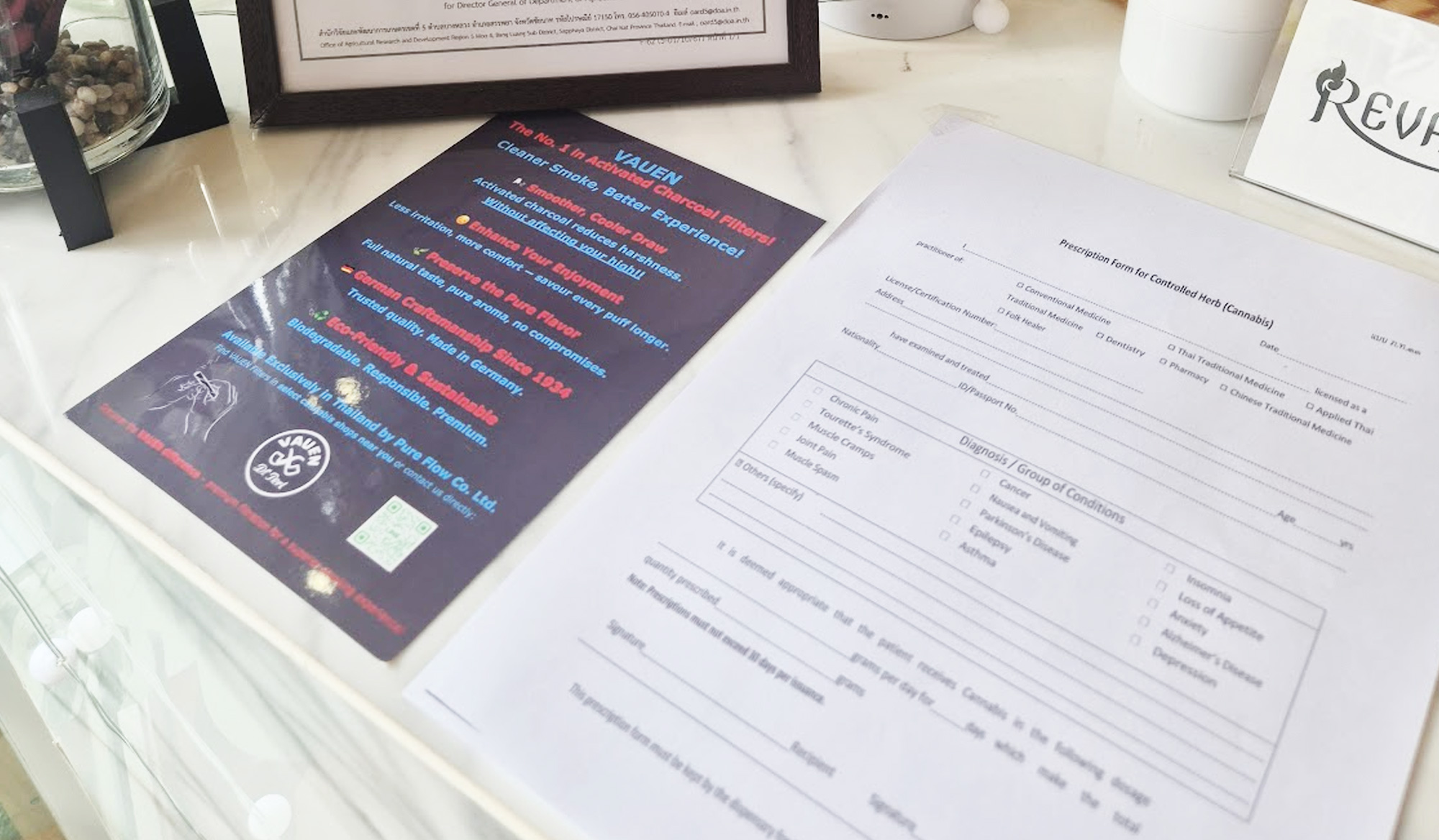
Thailand in 2026 sits in a position that is genuinely unusual: a country with a legal medical cannabis framework, a market that largely operates outside that framework, and enforcement that is neither consistent nor absent. For a tourist trying to navigate this, the temptation is to use the gap between law and practice as a guide — if no one is checking, why go through the effort?
The answer is that the gap is not stable. Enforcement patterns have shifted since June 2025 and will continue to shift. A dispensary that sold to you without asking for documentation today is not a guarantee of how the next shop, the next street, or the next checkpoint will operate tomorrow. The certificate is what keeps you covered when the environment around you changes — and it will change.
The practical takeaway is straightforward. A certificate from a registered clinic costs between 300 and 1,000 THB and takes under an hour to obtain. That cost and time, measured against the alternative of navigating a police interaction without documentation in a country where you don’t speak the language, is not a difficult calculation.
Transparency is the consistent theme across every part of this guide: transparent documentation from a registered clinic, transparent purchases from shops with verifiable records, transparent quantities that match your stated medical need. Each of those elements individually reduces risk. Together, they represent the closest thing to a genuinely protected experience that the current Thai framework makes available to foreign visitors.
Approach the process honestly, prepare before you arrive rather than after, and keep your documentation for the full duration of your trip. That’s the right way to engage with what Thailand’s medical cannabis system actually offers — and the right way to protect yourself within it.
Note: This article is based on content originally published on the Japanese edition of OG Times .