Bangkok Cannabis Prices in 2026: How Much Does Weed Cost at Thai Dispensaries?

Since Thailand decriminalized cannabis in 2022, Bangkok has seen an explosion of dispensaries — and with that, a wide and often confusing range of prices. Walk down Sukhumvit on any given night and you’ll find shops selling flower for 250 baht per gram sitting just a few doors down from boutique dispensaries charging 800 baht or more for what appears to be a similar product. So what’s actually going on?
This guide breaks down cannabis prices in Bangkok by quality tier, growing method, and neighborhood, drawing on real dispensary menus and current market information. Whether you’re trying to figure out what a fair price looks like, why two shops in the same area charge so differently, or how Thailand’s June 2025 regulatory changes have affected what you’ll pay — this is your reference before you walk through the door.
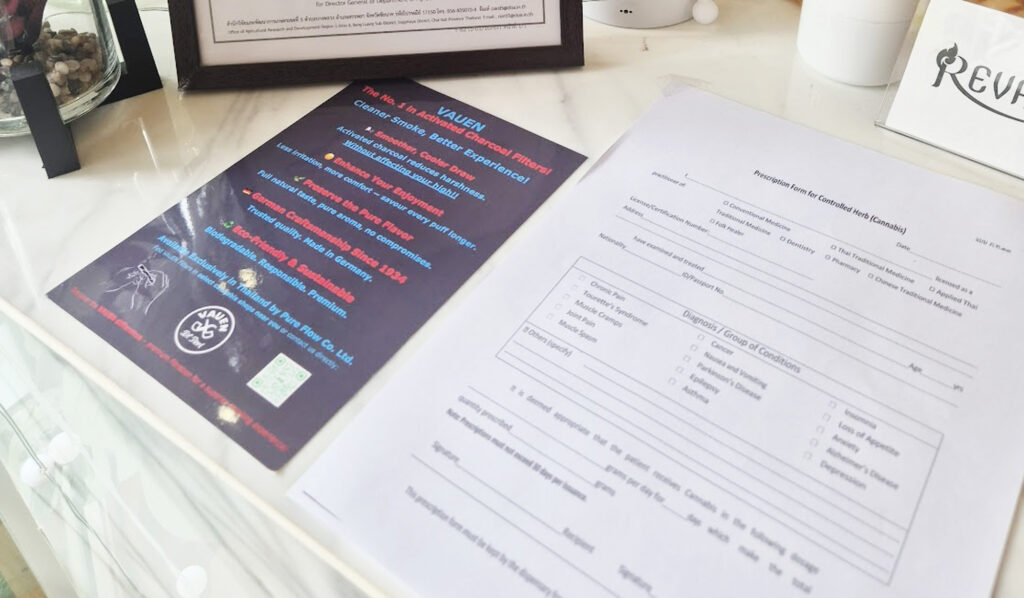
One important note: As of June 2025, purchasing cannabis flower in Thailand requires a medical certificate issued by a licensed physician. If you’re planning a visit, make sure you’ve reviewed the latest regulations before reading on.
It’s also worth knowing that a significant portion of cannabis sold in Thailand is grown using chemical fertilizers that may be harmful to your health. Throughout this guide, we flag what to watch for and how to reduce that risk.
1:How Much Does Weed Cost in Bangkok? Price Ranges by Quality Tier
The honest answer is: it depends — and the range is wider than most people expect. Bangkok dispensary prices for cannabis flower run anywhere from 250 baht to over 800 baht per gram, depending on quality, growing method, strain, and where the shop is located. Rather than a single “going rate,” Bangkok has a tiered market with distinct price bands that each reflect different growing costs, quality standards, and retail experiences.
Understanding which tier you’re buying in — and why — is the most useful framework you can bring into any dispensary.
Average Price Per Gram at Bangkok Dispensaries — A Quick Reference
The table below summarizes the three main price tiers you’ll encounter across Bangkok dispensaries, based on current market data.
| Quality Tier | Growing Method | Price Range | What to Expect |
|---|---|---|---|
| Budget | Outdoor | 250–400 THB / g | Sun-grown using natural conditions. Lower production costs mean lower shelf prices. Quality can vary batch to batch, but represents solid value for cost-conscious buyers. |
| Mid-Range | Indoor | 450–650 THB / g | Temperature, humidity, and lighting are fully controlled. More consistent density, aroma, and appearance. The most widely available tier across Bangkok dispensaries. |
| Top Shelf | Premium Indoor / Certified Farms | 800+ THB / g | Lab-tested, high-THC strains and rare genetics. Price reflects quality, scarcity, and brand reputation. Often sourced from GACP-certified farms. |
These ranges reflect what you’ll realistically see on dispensary menus across Bangkok as of 2026. Keep in mind that the mid-range indoor tier is by far the most common — if you’re visiting a typical Bangkok dispensary, the majority of the menu will likely fall in the 450–650 baht band.
Tourist Areas (Sukhumvit) vs. Local Neighborhoods: How Much More Will You Pay?
Your location in Bangkok will meaningfully affect what you pay — sometimes by 100 to 200 baht per gram for comparable quality. Here’s how the two main contexts break down.
In tourist-heavy areas like Sukhumvit and Nana, prices typically range from 400–700 baht per gram. This isn’t simply markup for markup’s sake. Dispensaries in these neighborhoods invest heavily in the full retail experience: English-speaking staff, well-lit interiors with scent displays, proximity to BTS stations, and menus designed to help first-time buyers navigate confidently. For a traveler who doesn’t know what they’re looking for, that environment itself has real value. The trade-off is that you’re paying for the experience as much as the flower.
In local neighborhoods and areas like Khao San Road, you can find flower priced at 200–400 baht per gram. Shops here tend to have less brand investment and lower overhead — costs that don’t get passed on to the customer. That said, menu transparency and staff explanation quality varies significantly from shop to shop. If you’re heading somewhere less touristy for the first time, doing some research in advance is worth the effort.
The key takeaway: price differences between areas aren’t automatically a sign that one shop is ripping you off. Access, staff knowledge, and menu transparency are all part of what you’re paying for — and knowing that helps you choose the right shop for your situation, not just the cheapest one.
Pre-Rolls vs. Buying Loose Flower: Which Gives You Better Value?
Beyond buying flower by the gram, Bangkok dispensaries typically offer two other common formats: pre-rolls (ready-made joints) and bulk purchases. Each has a different value proposition depending on what you need.
| Format | Price Range | What You’re Getting | Best For |
|---|---|---|---|
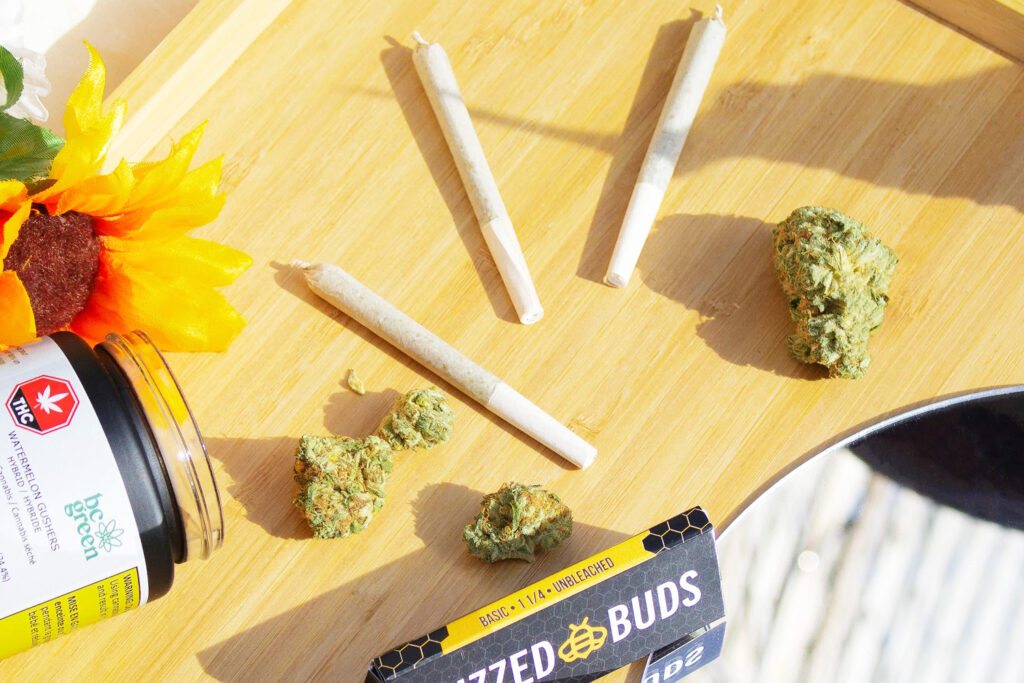
| Pre-Roll (Joint) | 150–400 THB / unit | A ready-to-smoke joint. Price varies by strain — top-shelf strains can push the price higher. On a per-gram basis, pre-rolls tend to be more expensive than buying loose flower. | Travelers without equipment, or anyone who wants to try a small amount without committing to a full gram purchase. |
| Bulk Purchase | Discount varies by shop | Buying 3.5g, 7g, or more at once often unlocks a lower per-gram price. However, post-June 2025 regulations may include purchase quantity limits — always confirm with staff before assuming bulk pricing applies. | Longer-stay visitors who’ve found a strain they enjoy and want to stock up. |
Pre-rolls offer convenience at a premium, while bulk buying can reduce your per-gram cost — but only if quantity limits under current regulations allow it. When in doubt, ask the staff directly what the best value option is for your situation. A good dispensary will tell you honestly.
(According to:How Much Does Weed Cost in Bangkok? – Wonderland Bangkok)
2:Why Do Cannabis Prices Vary So Much Between Bangkok Dispensaries?
Once you’ve visited a few dispensaries in Bangkok, you’ll notice that the same quality tier of flower can be priced very differently depending on where you shop. The gap isn’t random — and it’s not always about one shop being better or worse than another. Two main factors drive most of the price variation: growing method and brand strategy. Understanding both will help you read any dispensary menu with much more confidence.
How Your Growing Method (Indoor, Outdoor, Greenhouse) Drives the Price Tag
The single most reliable indicator of where a product sits on the price spectrum is how it was grown. Dispensary menus in Bangkok typically label flower as “Indoor,” “Outdoor,” or “Greenhouse” — and those labels carry real pricing implications.
| Growing Method | Price Range | What It Means | Key Consideration |
|---|---|---|---|
| Outdoor | 250–400 THB / g | Grown using sunlight and natural conditions. Lower production costs translate directly into lower shelf prices. | Good value for cost-conscious buyers. Quality can vary more between batches compared to controlled environments. |
| Indoor | 450–650 THB / g | Temperature, humidity, and lighting are fully artificial. Higher equipment and energy costs push prices up — but so does consistency. | More predictable density, aroma, and appearance batch to batch. The most widely stocked tier in Bangkok. |
| Greenhouse | 350–550 THB / g | A hybrid approach — natural light supplemented by environmental controls. Lower overhead than full indoor, with more consistency than outdoor. | Often represents the best balance of quality and price for buyers who want more than outdoor but don’t need full top-shelf. |
When you’re scanning a dispensary menu, looking for the growing method label is one of the quickest ways to understand whether a price is reasonable for what’s being offered. “Indoor” at 400 baht and “Indoor” at 650 baht are a very different conversation — but “Outdoor” at 400 baht and “Indoor” at 400 baht are worth questioning in different ways.
It’s also worth repeating: a notable share of cannabis sold in Thailand is grown using chemical fertilizers that can be harmful to your health. Growing method alone doesn’t tell you everything about what’s in the product — which is why sourcing transparency and lab testing matter.
Why Brand Dispensaries Cost More: Location, Lab Testing & the Experience Factor
Even within the same growing method tier, prices can differ by 100 to 200 baht or more per gram between shops. That gap isn’t always about the flower itself — it’s about what the shop has built around it. Three factors account for most of the difference.
The in-store experience is the most visible cost. Brand dispensaries in areas like Phrom Phong and Asok invest heavily in trained staff, English and Japanese-language support, scent display cases, clean interiors, and menus detailed enough for first-time buyers to feel comfortable. For a traveler who doesn’t know their strains or what questions to ask, that guided environment reduces friction and anxiety in a way that has genuine value. That value gets priced in.
Quality certification is the second factor. Shops that source from GACP-certified farms — where GACP (Good Agricultural and Collection Practices) is an international standard covering hygiene, traceability, and quality control — or commission independent third-party lab testing carry those verification costs in their prices. A dispensary displaying actual lab result reports is communicating something real about traceability and product integrity.
Location costs are the third and most straightforward factor. Dispensaries along Sukhumvit or inside commercial buildings near BTS stations pay significantly higher rent than shops in quieter local neighborhoods. Those operating costs are reflected in shelf prices — not as a penalty to customers, but as an unavoidable part of running a high-footfall retail location in central Bangkok.
The right takeaway isn’t that brand dispensaries are overcharging. It’s that price reflects what a shop has invested in beyond the flower itself — and deciding how much that investment is worth to you is a legitimate part of choosing where to buy.
3:Does the Strain Really Affect How Much You Pay for Cannabis in Thailand?
Quality tier and growing method set the broad pricing range — but within any given tier, the strain can still move the needle by hundreds of baht per gram. Understanding why certain strains command a premium is one of the more useful pieces of knowledge you can bring into a dispensary.
3 Reasons Popular Strains Command Premium Prices
| Factor | What It Means | Price Impact |
|---|---|---|
| Cultivation Difficulty & Yield | Some strains require advanced growing techniques or produce smaller yields. Lower harvest volumes per crop drive up the per-gram cost. Imported genetics also add seed procurement costs. | Growing difficulty, low yield, and seed sourcing costs all push prices up. |
| Supply & Demand | Globally recognized strains — Gorilla Glue, OG Kush, Gelato, Wedding Cake — attract strong demand in Bangkok as well. When supply is limited relative to demand, prices rise. | Popular strains with limited availability tend to command higher prices. |
| Brand & Farm Association | Strains tied to specific farms, limited collaborations, or exclusive genetics carry a scarcity premium. When a dispensary leads with farm branding, that story gets priced into the product. | Limited releases, farm brand value, and rarity drive premium pricing. |
When scanning a dispensary menu, you’ll often notice that two products in the same “Indoor” tier carry noticeably different prices. The strain name — and the story behind it — is almost always the explanation. Recognizing which factors are driving the gap helps you decide whether the premium is worth it for what you’re looking for.
Does Higher THC% Mean a Higher Price — and Should It?
Dispensary menus often feature THC percentages prominently — “THC 28%,” “THC 32%” — and it’s easy to assume that higher numbers automatically mean higher prices and better effects. The reality is more nuanced, and understanding it will save you from paying a premium for a number rather than an experience.
THC concentration is one indicator of potency — but the overall character of cannabis comes from the full spectrum of compounds: cannabinoids, terpenes, and flavonoids working together. A product with a moderate THC percentage but a rich terpene profile can deliver a more complex, satisfying experience than a high-THC product with minimal aromatic character. Chasing the highest THC number isn’t always the best purchasing strategy.
Lab testing methodology also matters. The same “THC 28%” claim from a dispensary with independently verified Certificates of Analysis and one without carries very different weight. The number is only as reliable as the process that produced it.
A more useful framework: look at strain rarity, terpene profile, farm certification, and lab testing transparency as a combined picture — not THC alone. These factors together are what actually determine the experience you’ll have.
4:How Bangkok Cannabis Prices Have Shifted Since Legalization in 2022
Bangkok’s cannabis market in 2026 looks nothing like it did at the moment of legalization. In roughly three years, the city went from having no legal dispensaries to nearly being overrun with them — and then watched a significant portion of that market shut down almost overnight following a major regulatory reversal. To make sense of current prices, it helps to understand what the market went through to get here.
What Happened When Thousands of Dispensaries Flooded the Bangkok Market
In June 2022, Thailand became the first country in Southeast Asia to effectively decriminalize cannabis. The response from entrepreneurs was immediate and dramatic. Dispensaries opened across Bangkok at a pace that was difficult to track — at peak, estimates put the national total at approximately 20,000 shops operating simultaneously.
That wave of new entrants had a predictable effect on pricing. In the months immediately following legalization, supply struggled to keep up with demand, particularly for premium and imported strains. Prices held high at the top end of the market, with some top-shelf products commanding significant premiums simply due to scarcity.
As new farms came online and more operators entered the retail space, supply expanded and price competition intensified across the market. Dispensaries began differentiating in different directions: some invested in branding, interior design, and staff training to justify higher prices; others dropped prices to compete on volume. The result was the wide pricing spread that became characteristic of Bangkok — where the same quality tier could look very different on a menu depending on which street you were standing on.
Thai cultivation also matured quickly during this period. Indoor growing techniques spread rapidly among domestic producers, and access to high-quality genetics improved. The old assumption that Thai-grown cannabis meant budget-tier flower gave way to a new reality where domestic farms were producing genuine top-shelf product. That shift expanded the viable price range at the upper end of the market and gave buyers more options at every tier.
(According to:How Much Does Weed Cost in Bangkok? – Wonderland Bangkok)
How Thailand’s June 2025 Re-Regulation Changed Cannabis Pricing
In June 2025, the Thai government reclassified cannabis flower as a controlled substance, restricting legal sales to medical purposes only and requiring a physician-issued medical certificate for purchase. The dispensaries that had operated openly as recreational retail shops were forced to restructure, and many closed entirely.
The pricing impact of that shift has played out in several ways.
Supply contraction reduced downward price pressure. During the peak competition years, the sheer number of shops kept prices competitive. With fewer shops remaining, that competitive pressure has eased, and surviving dispensaries have had less incentive to undercut on price. In some areas, prices have stabilized or moved upward compared to the most competitive period of the open market.
Demand has also contracted. The medical certificate requirement added a meaningful friction point for casual buyers and tourists. Obtaining a certificate requires visiting a clinic, paying a consultation fee, and navigating a process that wasn’t necessary before June 2025. That additional step has reduced impulse and first-time purchasing.
The current price benchmarks across quality tiers reflect this post-regulation environment:
| Quality Tier | Price Range | Growing Method |
|---|---|---|
| Budget | 250–400 THB / g | Outdoor |
| Mid-Range | 450–650 THB / g | Indoor |
| Top Shelf | 800+ THB / g | Premium Indoor / Certified Farms |
These figures represent a reasonable reference point as of 2026, but the post-regulation market remains fluid. Further policy changes, shifts in enforcement, and ongoing consolidation among remaining operators all have the potential to move prices in either direction. Treat these numbers as a starting point — and confirm current pricing directly with dispensaries.
5:What Tourists Must Know Before Buying Cannabis in Bangkok (Post-2026 Rules)
The Bangkok cannabis market that exists in 2026 operates under fundamentally different rules than what many travelers may have read about or experienced on previous visits. Understanding those changes before you arrive — not after you’re standing at a dispensary counter — is what separates a smooth experience from an expensive or legally complicated one.
How to Spot Overpriced Dispensaries in Tourist Zones — Red Flags to Watch
In high-footfall tourist areas like Sukhumvit, it’s common to find dispensaries charging 100 to 200 baht more per gram than shops offering comparable quality in local neighborhoods. Some of that premium is legitimate. But not every price gap reflects genuine value. Here’s what to watch for.
No growing method listed on the menu is one of the clearest warning signs. Trustworthy dispensaries consistently label their flower as “Indoor,” “Outdoor,” or “Greenhouse.” When that information is missing, you have no reliable basis for evaluating whether the price is reasonable.
No strain name, THC percentage, or lab documentation is a related concern. Shops that display actual lab result reports — including Certificates of Analysis from independent testing facilities — are making a verifiable claim about their product. Shops that offer only vague quality descriptors without supporting data are asking you to take their word for it.
“Starter packs” or “tourist sets” priced as bundles can obscure the per-gram cost. These formats aren’t inherently problematic, but calculating the per-gram equivalent before buying will quickly tell you whether the bundle represents value or just convenient packaging at a markup.
The most reliable filter is simple: check whether the shop has a visible price menu and whether staff can explain the product clearly when asked. Dispensaries that invest in transparent pricing and knowledgeable staff tend to be the ones that also invest in product quality.
Medical Certificates Are Now Required: What That Means for Your Buying Cost
Since June 2025, purchasing cannabis flower legally in Thailand requires a medical certificate issued by a licensed physician. This applies to tourists as well as residents. The “just walk in and buy” model that characterized Bangkok dispensaries during the 2022–2025 period no longer applies under current regulations.
The certificate itself costs money. Obtaining one requires a clinic visit in Thailand, a consultation fee, and time. That cost needs to be factored into your total budget — the price on the dispensary shelf is not your all-in cost.
Time is also a factor. If you’re in Bangkok for a short trip, scheduling a clinic visit, completing the consultation, and receiving documentation takes planning. Building that step into your itinerary before you land is the more reliable approach.
Travelers who visited Thailand before June 2025 should not assume that what was possible then remains possible now. “It worked last time” is not a safe assumption when the legal framework has materially changed. Checking current requirements through up-to-date sources before your trip is strongly recommended.
6:The Right Way to Think About Cannabis Prices in Thailand
After walking through price tiers, growing methods, strain premiums, market history, and post-regulation changes, one thing becomes clear: there is no single “correct” price for cannabis in Bangkok. The market doesn’t work that way, and trying to find one number to anchor to will lead you astray more often than it will help you.
What does work is understanding the layers behind any given price tag. A gram priced at 600 baht in a Sukhumvit dispensary and a gram priced at 350 baht in a local neighborhood shop are not necessarily telling you that one is overcharging and one is fair. They may be reflecting entirely different growing methods, certification standards, retail overhead structures, and levels of staff expertise. The question worth asking isn’t “is this cheap or expensive” — it’s “what is this price actually made up of.”
Growing method is your most reliable starting point. Outdoor, greenhouse, and indoor each carry different production costs, and those costs have a logical relationship to shelf price. When a price seems out of step with the growing method, that’s worth questioning.
Transparency is a signal. Dispensaries that display strain names, growing methods, THC percentages, and lab documentation are telling you something about how they operate. That information reflects a level of accountability that tends to extend to pricing as well.
The total cost of buying has changed since June 2025. The medical certificate requirement means the price on the menu is no longer your all-in cost. Factoring in clinic fees and the time involved gives you a more accurate picture of what you’re actually spending.
The market is still moving. Regulatory changes, ongoing consolidation among dispensaries, and potential further policy shifts mean that price benchmarks from even a few months ago may not fully reflect current conditions. Treat published figures as a reference range — not a fixed reality — and confirm directly with dispensaries before you visit.
Ultimately, the Bangkok cannabis market rewards buyers who do a small amount of preparation. Knowing what growing methods mean, recognizing what transparent menus look like, and understanding the current regulatory context puts you in a position to make decisions based on actual value — rather than guessing whether a number on a menu board is reasonable or not.
Note: This article is based on content originally published on the Japanese edition of OG Times .