Medical Cannabis in Thailand 2026: A Complete Guide for First-Time Visitors

Some travelers assume that because cannabis is legal in Thailand, using it is straightforward and unrestricted. From spending time on the ground in Bangkok and Pattaya, I’d push back on that assumption. Legal status and safe use are not the same thing. Understanding the framework, choosing where and how you purchase, and knowing your own physical state all matter in ways that “it’s legal” doesn’t capture.
This guide covers what first-time cannabis users in Thailand genuinely need to know — not just the legal status, but how the system actually works in practice, what to check before buying, where you can and can’t use it, and how to have a stable first experience.
Key Sections in This Guide
1: Is Medical Cannabis Actually Legal in Thailand?
The short answer is: yes, with conditions. The more useful answer is that the legal framework has changed multiple times since 2022, and the gap between official policy and what you encounter at street level is real. Understanding both sides of that gap is more useful than relying on a simple yes/no.
Current Legal Status and Regulatory Direction
Thailand’s cannabis regulations have undergone staged revisions since 2022. The Ministry of Public Health is the primary authority announcing policy changes.
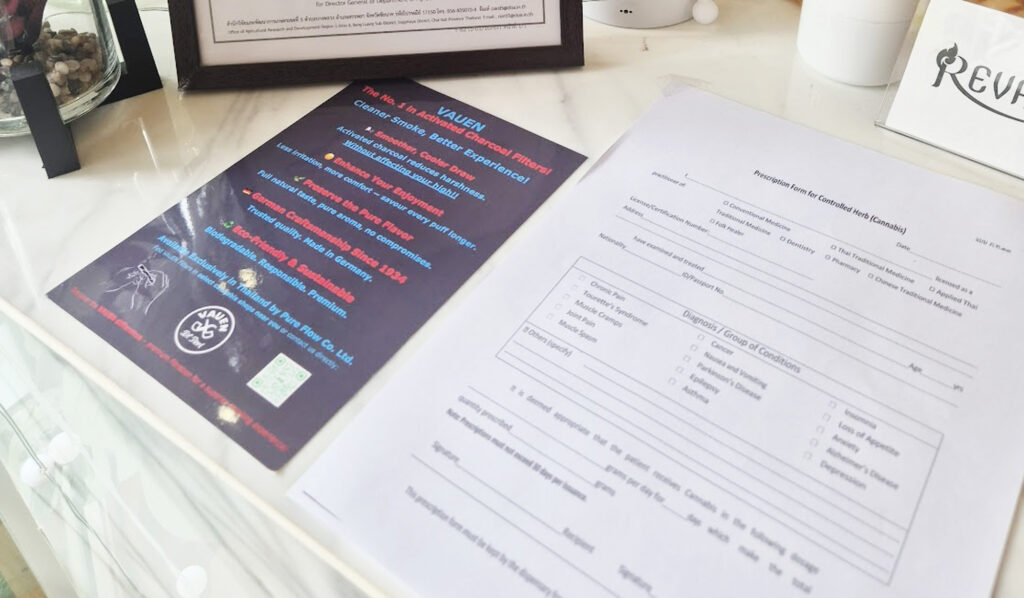
The key shift since mid-2025: cannabis is officially classified under a medical-use framework. In practical terms, this means purchase is technically supposed to be linked to a medical purpose — but the on-the-ground implementation is handled at the dispensary level, not at a government checkpoint. Most dispensaries fulfill this requirement through in-store consultation documents or consent forms.
For visitors, the working reality is: licensed dispensaries exist, they operate openly, and they sell to adults. The details of how that fits into the regulatory framework are managed by the shop, not by you — but being aware of the framework still matters.
(Source: Ministry of Public Health Thailand)
How Thailand’s Policy Shifted After 2022
The 2022 removal of cannabis from Thailand’s narcotic drug list was a significant policy change. It opened the market and created the dispensary scene that exists today. The follow-up regulatory adjustments — particularly the 2025 regulations repositioning cannabis within a medical framework — represent the government pulling back some of the open recreational framing while keeping the medical and economic structure intact.
From what I observed locally, the word “legal” circulates widely among tourists without the context of what that legal framework actually requires. Understanding that the system exists, and that dispensaries operate within it, is more useful than either assuming total freedom or assuming hidden risk.
2: Why Did Thailand Legalize Cannabis?
Thailand’s policy shift wasn’t driven by a single factor. The official framing has included medical applications, economic development, and tourism industry considerations — all three are visible in how the market developed after 2022.
Medical, Economic, and Tourism Background
The regulatory change aligned with an existing tradition of cannabis in Thai traditional medicine, an economic interest in building a legal cannabis industry, and the tourism sector’s awareness that international visitors represented significant demand. These three currents shaped a policy outcome that was notably more open than most neighboring countries.
(Source: Ministry of Public Health Thailand)
From local observation, the medical and economic framing was real — not purely decorative. The 2025 regulatory adjustment reflects the government’s ongoing effort to keep the industry within a medical framework rather than allowing it to drift toward fully recreational positioning.
Traditional Cannabis Use in Thai Medicine and Culture
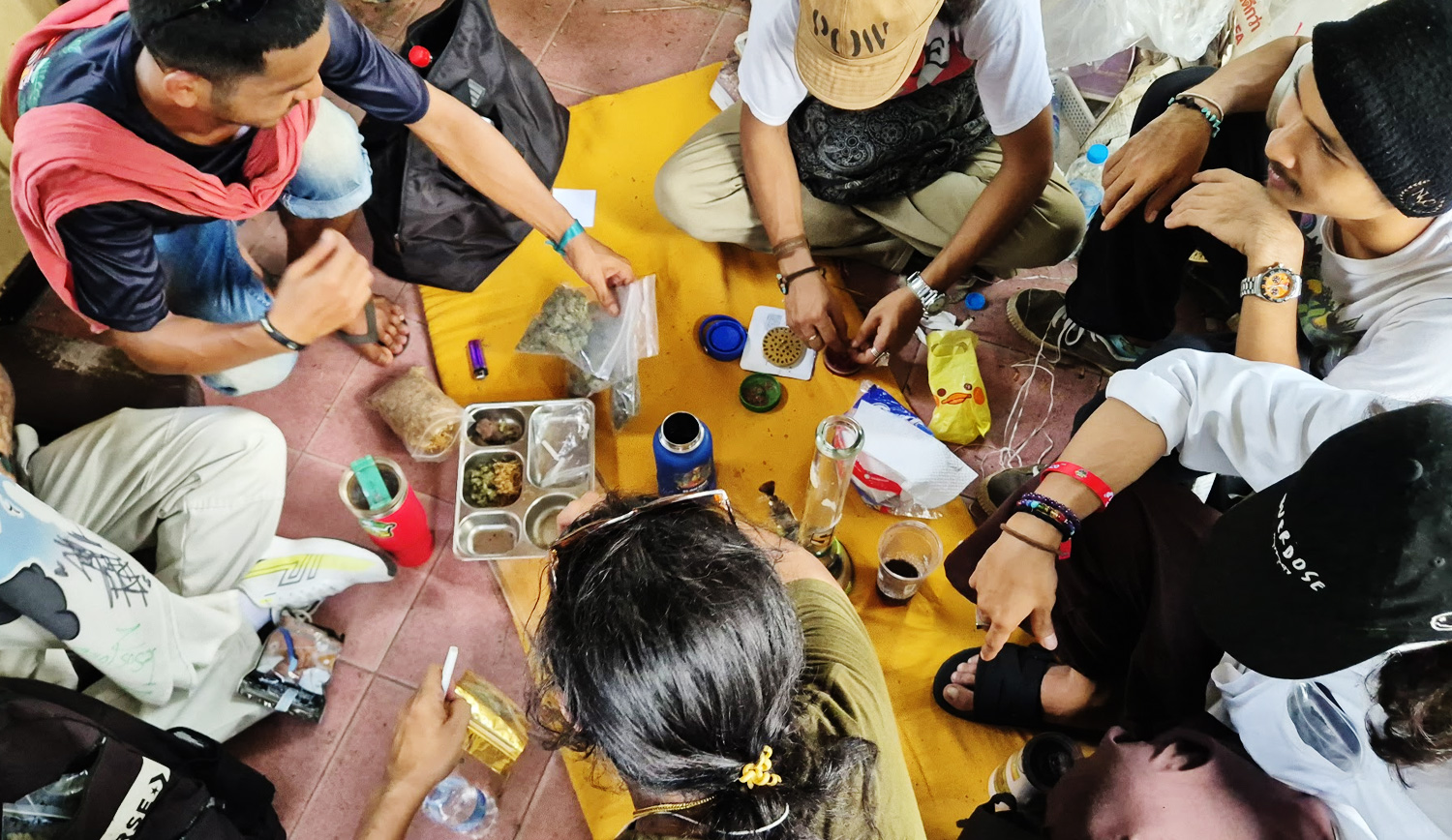
Cannabis has a documented history within Thai traditional medicine — as an ingredient in formulations for pain, sleep, and digestive conditions. This historical context was part of the official framing of the 2022 policy shift. The legalization was not presented as a trend adoption but as a return to a practice with cultural roots.
Understanding this matters for visitors because it explains why the current framework is medical-use oriented rather than recreational. The policy follows a line from traditional medicine through modern regulation — and that line shapes how dispensaries operate and how purchases are officially framed.
Public Exhibitions and Events After Legalization
Following the regulatory changes, cannabis-related exhibitions, trade events, and competitions became part of Thailand’s public landscape — including the Budtender Cup and similar events in Pattaya. These activities indicate that the policy shift generated genuine industry development, not just retail expansion. From local observation, the quality of product and cultivation knowledge in the market improved alongside the growth in event activity.
3: Medical vs Recreational Cannabis in Thailand — What the Distinction Actually Means
The terms “medical” and “recreational” appear frequently in discussions about Thailand’s cannabis market. In practice, the distinction is less clean than either label suggests. From what I observed locally, understanding how the system operates in practice matters more than how it’s labeled.
Are They Actually Different at the Point of Sale?
At the regulatory level, cannabis is framed as medical-use. At the point of sale, most dispensaries serve a customer base that includes both people with specific medical purposes (sleep, pain management, anxiety) and people who are visiting Thailand and want to try cannabis as part of their travel experience. The system handles both through the same in-store consultation or consent process.
The practical difference from a visitor’s perspective: you’re not entering a system where you need to prove a medical condition. You are entering a system where the purchase is formally associated with a medical framework, and the dispensary manages the paperwork. Knowing this avoids both overcautious avoidance and careless assumptions.
THC, CBD, and Understanding What You’re Buying
| Component | Effect | What It Means for Buyers |
|---|---|---|
| THC (Tetrahydrocannabinol) | Primary psychoactive compound — produces the “high,” affects perception, time sense, appetite | Higher THC = stronger effect. Many Thai dispensary strains exceed 20% THC. Beginners should start with less. |
| CBD (Cannabidiol) | Non-psychoactive — associated with relaxation, anti-anxiety, pain modulation without intoxication | Higher CBD often moderates THC intensity. Good for beginners wanting a calmer experience. |
| Terpenes | Aromatic compounds that influence effect direction — energizing, sedating, mood-lifting | Describe what you’re looking for to dispensary staff; terpene profile shapes the experience significantly. |
| THC:CBD Ratio | The balance between psychoactive and non-psychoactive components | A 1:1 ratio produces a milder, more manageable effect than high-THC, low-CBD options. |
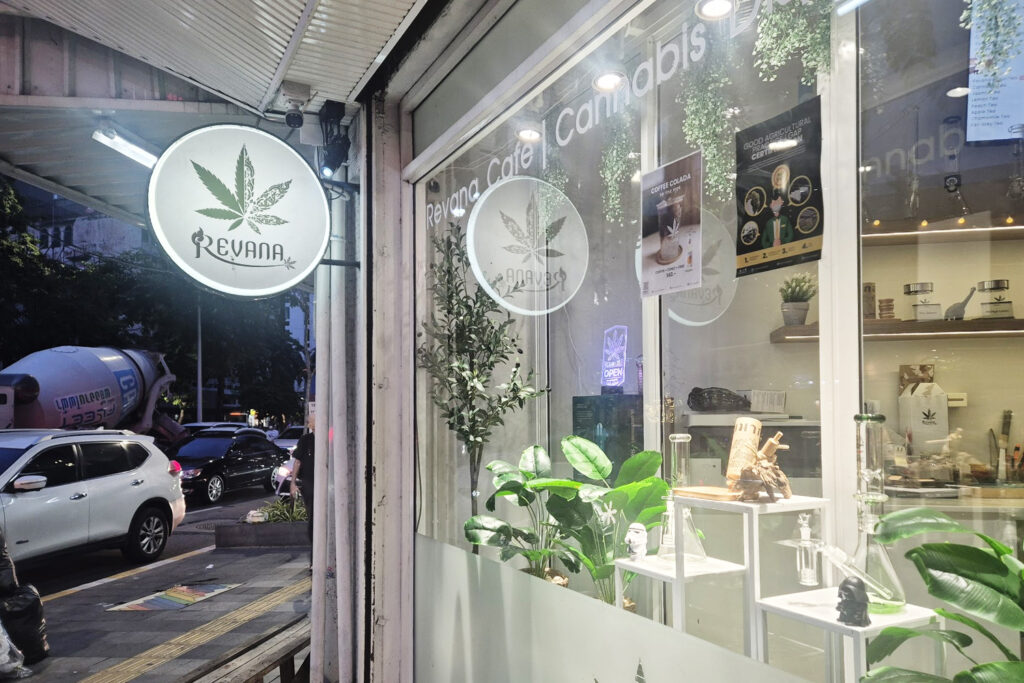
Understanding these basics before visiting a dispensary means you can have a real conversation with staff about what you want rather than just pointing at what looks interesting. Staff at reputable dispensaries — like the ones covered in our Bangkok and Pattaya guides — are practiced at explaining these differences to first-time visitors.
4: Is Cannabis in Thailand Safe? The Quality Problem You Need to Know About
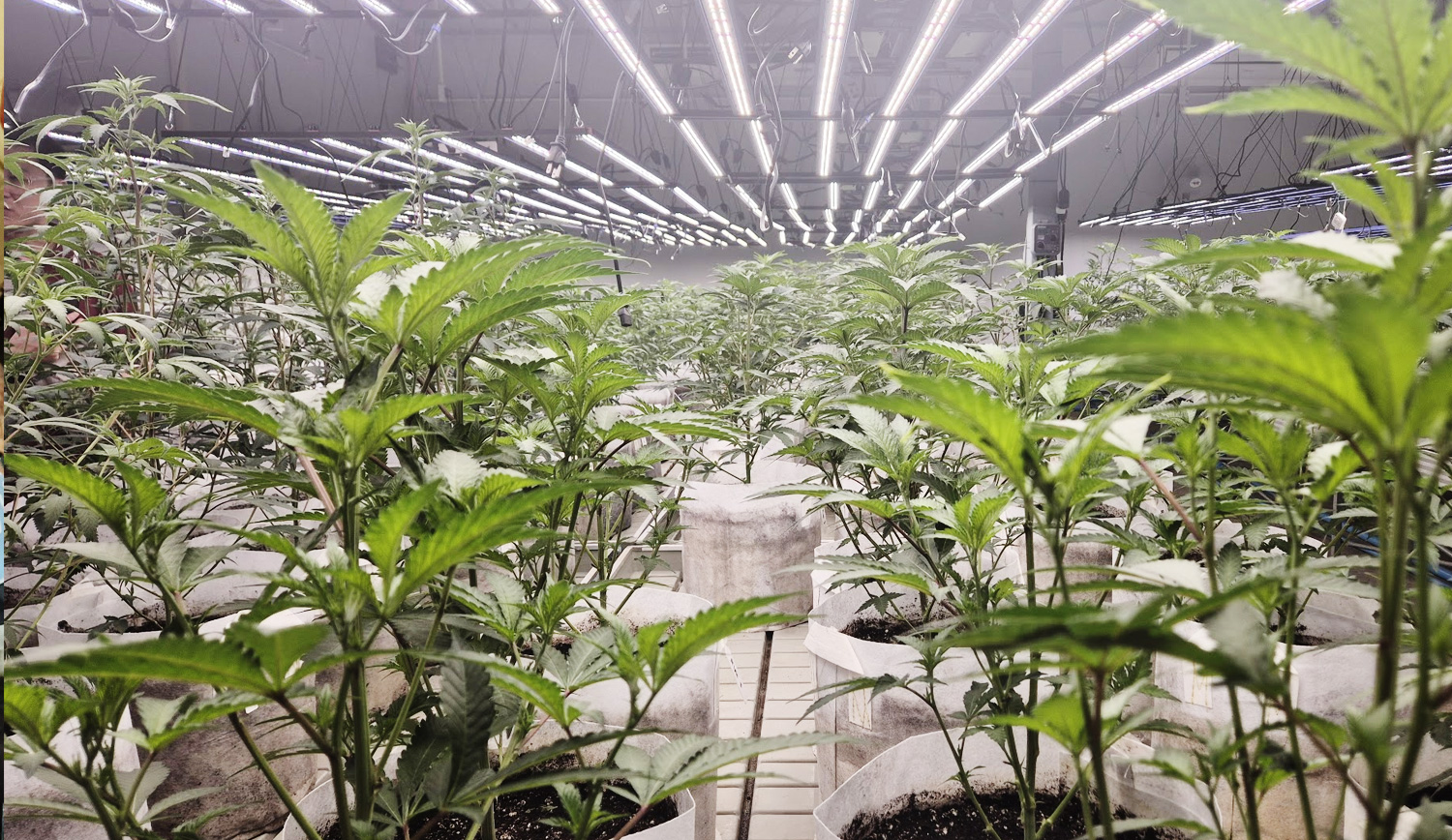
Legal status does not guarantee product safety. This is one of the most important things to understand before buying cannabis in Thailand, and it’s a point that gets lost in the “it’s legal here” framing. Being legal and being safe are separate questions.
The Quality Problem in Thailand’s Cannabis Market
After rapid market expansion following 2022, Thailand’s cannabis market developed unevenly. A portion of products in circulation — particularly from lower-end or less transparent operations — have been reported to contain residual pesticides, chemical fertilizers, mold, or other contaminants that pose genuine health risks.
From local observation, the difference between a reliable dispensary and an unreliable one is real and visible. It’s not just about high-end vs budget pricing — it’s about whether the operation can tell you where the product came from and how it was tested.
(Source: World Health Organization (WHO))
Why Low-Quality Products Circulate
The market grew faster than regulatory enforcement could cover. Some sellers entered the market with product that doesn’t meet the standards a licensed, transparent operation would apply. The legal framework creates the possibility for good operations to thrive — it doesn’t automatically exclude bad product.
The practical consequence for buyers: you need to know what to check, not just where dispensaries are located.
What Identifies a Trustworthy Operation
| What to Look For | What It Indicates |
|---|---|
| COA (Certificate of Analysis) available on request | Product has been lab-tested for potency and contaminants |
| Staff can explain strain origin and cultivation method | Knowledge of the supply chain — not just shelf placement |
| Flower stored in sealed, labeled containers | Proper handling that preserves quality and prevents contamination |
| Clear pricing displayed before you ask | Transparent operation — not adjusting prices based on perceived tourist status |
| Staff answers questions specifically, not vaguely | Actual product knowledge vs. general sales talk |
5: How to Buy Medical Cannabis Safely in Thailand

The purchase process at a Thai dispensary is simpler than it might seem, but knowing what to do makes the difference between a confident first visit and a confusing one. The key is knowing what to check before you commit to anything.
What to Check Before Purchasing
- Is the price clearly displayed, or does it change when you ask?
- Can the staff explain where the flower was grown?
- Is there a COA (Certificate of Analysis) available?
- Does the strain description match what you’re looking for — effect direction, THC/CBD balance?
- Are products stored properly — sealed containers, not sitting open?
From local observation, visitors who asked these questions — even roughly — had consistently better experiences than those who just pointed at what looked good. The question itself signals that you’re paying attention, and it draws out information that changes how you evaluate options.
How Reliable Dispensaries Present Information
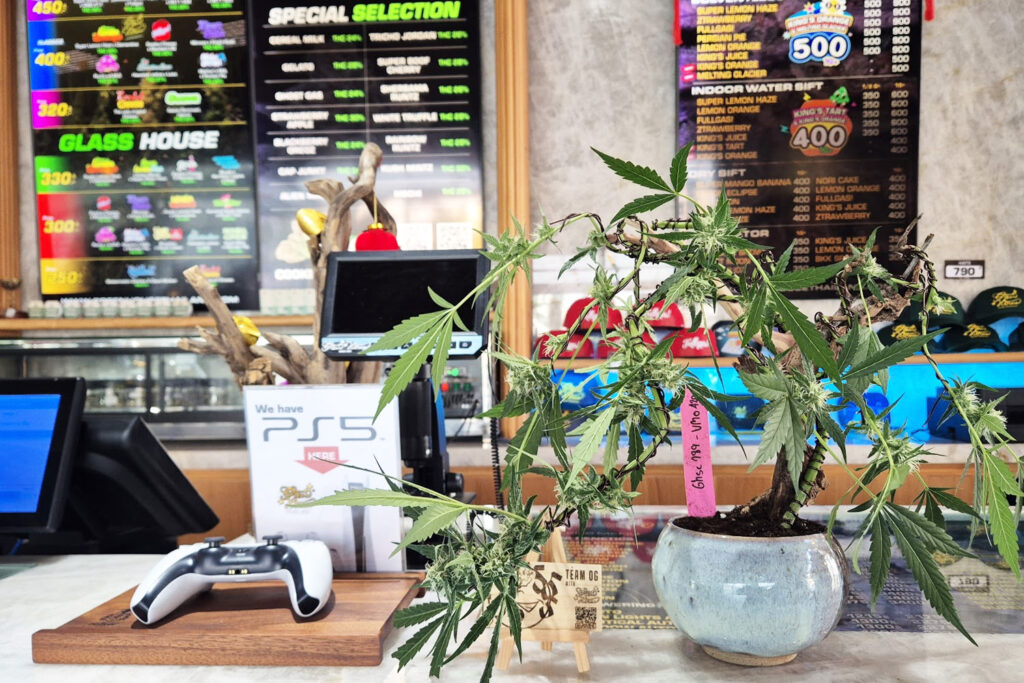
At well-run operations, information flows without you having to extract it. Staff describe strains by effect direction (uplifting, calming, sleep-focused) and cannabinoid profile, not just by brand names. Products are stored in sealed containers with labels. When asked about origin, they can name the farm or growing region. This transparency isn’t universal — which is exactly why it functions as a signal.
Smoking On-Site: What’s Common in Practice
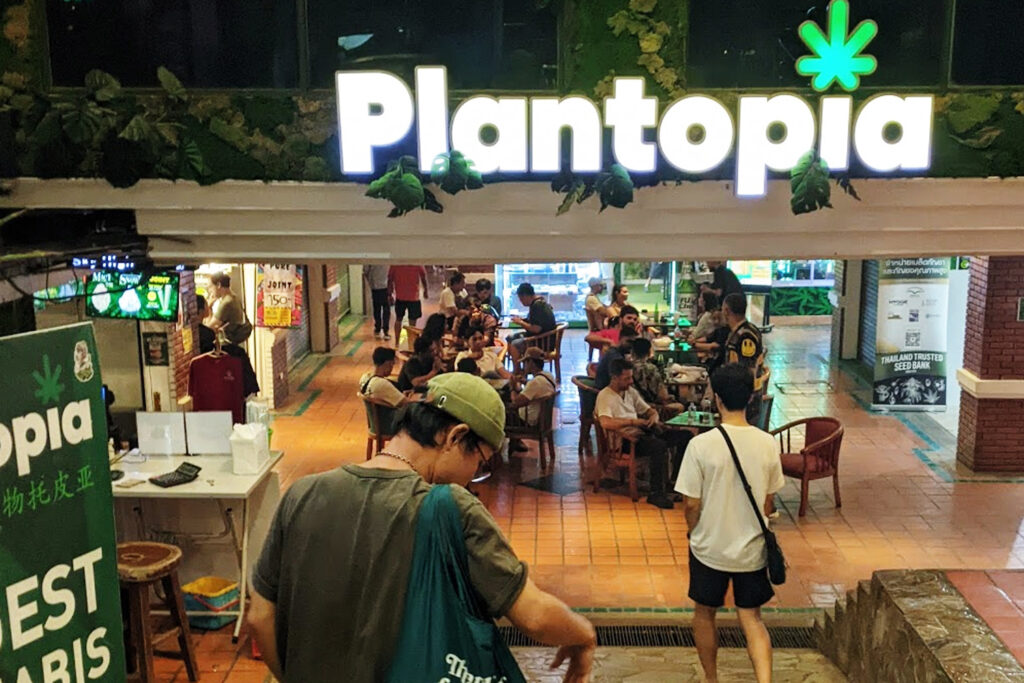
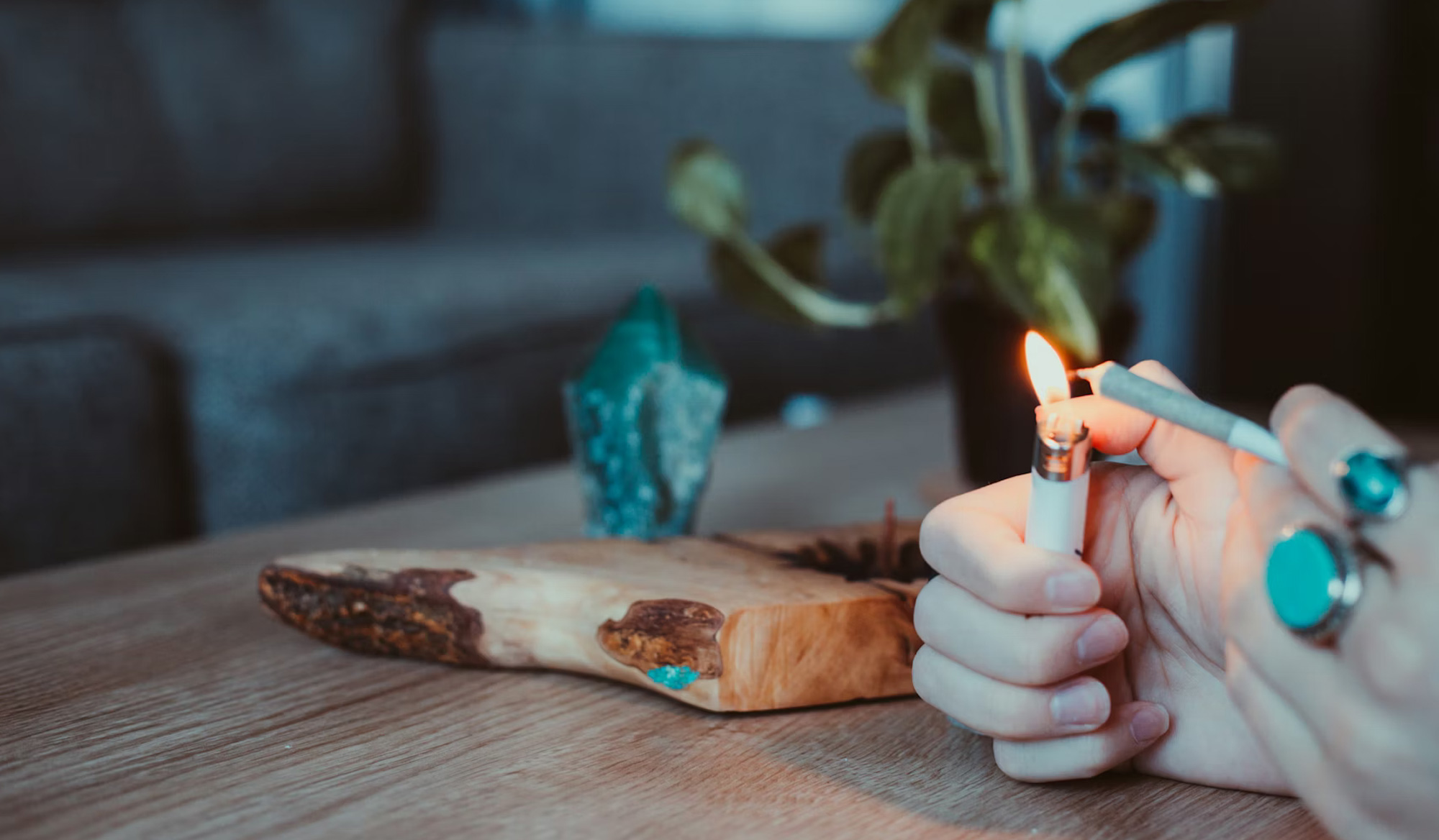
Some dispensaries have in-store lounges or outdoor smoking areas — these are lounge-format operations where purchasing and on-site use are both part of the service. Others are sales-only, with product intended for off-site use. Knowing which type you’re entering before you arrive makes the logistics straightforward. From the shops covered in this guide’s companion articles, ReLeaf Medical Dispensary (Ekkamai) and several Pattaya locations have in-store spaces; most Khaosan and Chinatown shops do not.
6: Where Can You Actually Smoke Cannabis in Thailand?
This is where the gap between “it’s legal” and “it’s unrestricted” is most visible. Cannabis can be purchased legally — but where you use it is still subject to real constraints, and getting this wrong is the most common source of trouble for visitors.
Public Use Rules and Legal Risks
There is no specific law in Thailand that directly criminalizes cannabis use in outdoor public spaces. However, causing a nuisance through smoke or smell in a public area falls under public nuisance regulations — and these are enforceable. Streets, parks, public transport areas, shopping mall entrances, and crowded outdoor spaces should be avoided.
(Source: Royal Thai Government)
From personal experience: using cannabis while walking, in crowded areas, or with strangers nearby creates an uncomfortable baseline that works against a good experience even independent of legal risk. A calm, private environment produces a more stable experience than the most convenient outdoor location.
Practical Location Options
| Location Type | Practical Notes |
|---|---|
| Dispensary in-store lounge | Most reliable option — purpose-built space, staff present, legal framework covered. Confirm availability before visiting. |
| Cannabis-friendly hotel balcony | Works well if the hotel permits it — confirm specifically before assuming. Many hotels prohibit in-room and balcony use. |
| Hotel outdoor smoking area | Some properties designate outdoor smoking areas where cannabis is tolerated. Verify with front desk. |
| Private accommodation (condo, Airbnb) | Generally the most flexible — check the specific property’s rules. Sealed windows reduce odor issues. |
| Public parks, streets, beaches | Legally ambiguous and practically uncomfortable. Not recommended for first-time users. |
Hotel Policies and What to Check
Most Bangkok and Pattaya hotels prohibit indoor smoking generally, which extends to cannabis. Some properties are 420-friendly by policy — look for this specifically when booking, or contact the property before arrival. Checking in without knowing the policy and discovering you have nowhere to use what you bought is the most avoidable friction point in the whole experience.
7: Safety and Preparation for First-Time Users
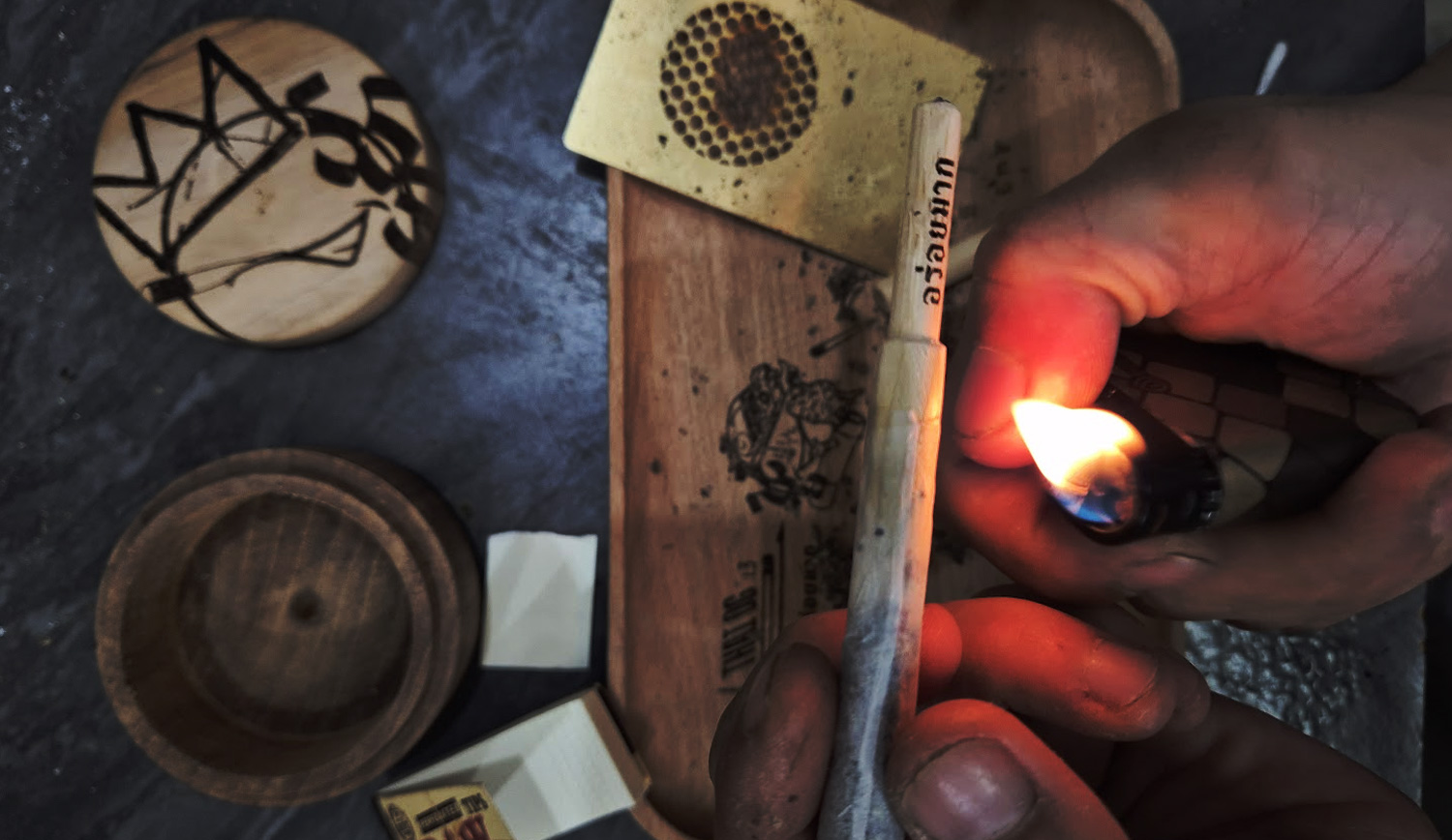
From observing how first-time visitors experience cannabis in Thailand, the pattern is clear: how you prepare matters more than how strong the product is. People who take their time, manage their environment, and stay physically comfortable tend to have stable experiences. People who rush, underestimate potency, or ignore their physical state tend to have difficult ones.
Dosage and Pace — Start Slower Than You Think
Thai cannabis strains commonly run 18–25% THC, with some premium selections higher. If your previous experience was with weaker product, or if this is genuinely your first time, this gap is real and consequential.
The reliable approach:
- 1–2 puffs to start, then stop and wait 15–20 minutes
- Effects from smoked cannabis typically peak within 10–30 minutes
- Do not add more before the first dose has fully expressed itself
- If using edibles: effects take 60–120 minutes and last significantly longer
(Source: National Institute on Drug Abuse (NIDA))
The most common cause of an overwhelming first experience is adding more before the first amount has taken full effect. Waiting is the single most effective protective measure.
Physical Condition and Environment Matter
From personal observation: being hungry, dehydrated, or sleep-deprived noticeably amplifies cannabis effects. Eating a light meal and drinking water before using creates a more predictable baseline. Noisy, crowded, or unfamiliar environments amplify minor discomfort into anxiety — a calm, familiar space produces consistently more stable experiences.
(Source: World Health Organization (WHO))
What Causes Anxiety or “Bad Trips” — and How to Avoid Them
| Common Cause | Practical Prevention |
|---|---|
| Too much, too fast | 1–2 puffs max to start; wait fully before adding more |
| High THC strain with no CBD balance | Ask for balanced strains (moderate THC, higher CBD) for first use |
| Empty stomach or dehydration | Light meal and water before using |
| Unfamiliar, crowded, or noisy environment | Use in a calm, private location with people you trust |
| Anxiety about the experience itself | Know what to expect; effects are temporary and will pass |
| Being alone in an unfamiliar city | Have someone nearby or reachable; stay in a familiar space |
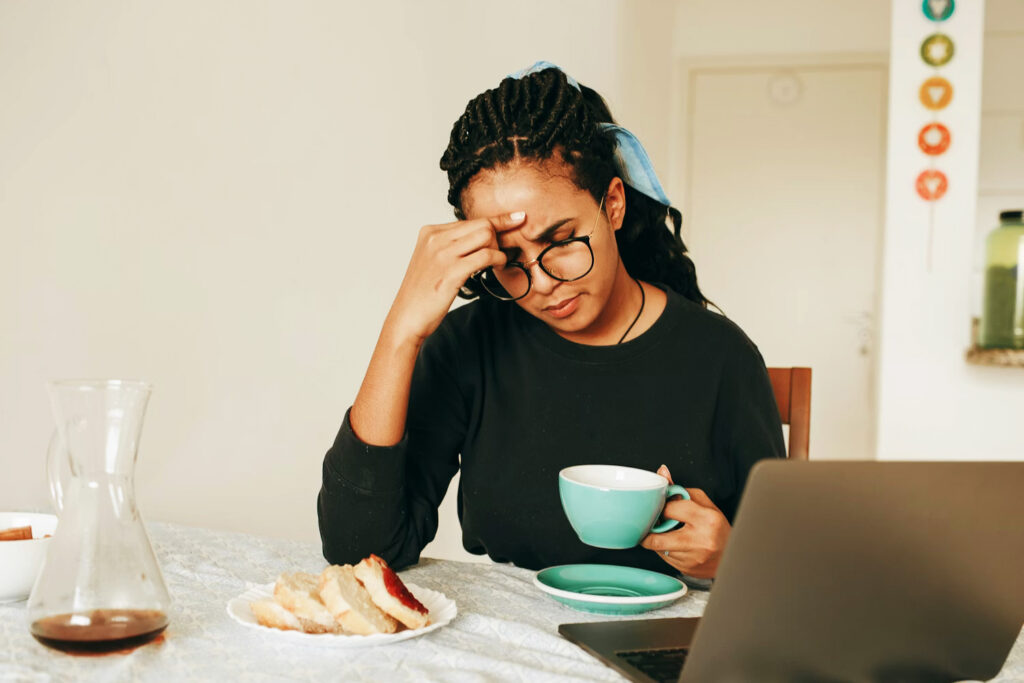
If anxiety does begin: lying down, slow breathing, cold water, and a snack (particularly something sweet or starchy) all help. The discomfort is temporary — it will pass, and knowing this in advance reduces how severely it’s experienced.
8: Do You Need a Medical Certificate in Thailand?
This question comes up frequently, and the answer involves a distinction between the regulatory framework and how it plays out in practice.
The Regulatory Framework
Since the 2025 regulatory changes, Thailand’s official position is that cannabis is for medical use, which technically requires a prescription or consultation document from a licensed medical practitioner (doctor, pharmacist, or Thai traditional medicine practitioner).
(Source: Ministry of Public Health Thailand)
How It Works in Practice
Most dispensaries handle this requirement on-site. The typical approach is a brief in-store consultation, a digital consent form, or a simple document linking the purchase to a stated medical purpose (sleep difficulty, pain, anxiety, etc.). This process takes a few minutes and is part of the purchase flow at most licensed operations — not an obstacle you navigate separately before arriving.
You will not need to visit a clinic or obtain a document in advance as a standard visitor. If you want to obtain a formal medical certificate independently — which can provide additional clarity and a documented paper trail — guidance on how to do so is available in the article below.
9: Key Takeaways — What a Stable First Experience in Thailand Looks Like
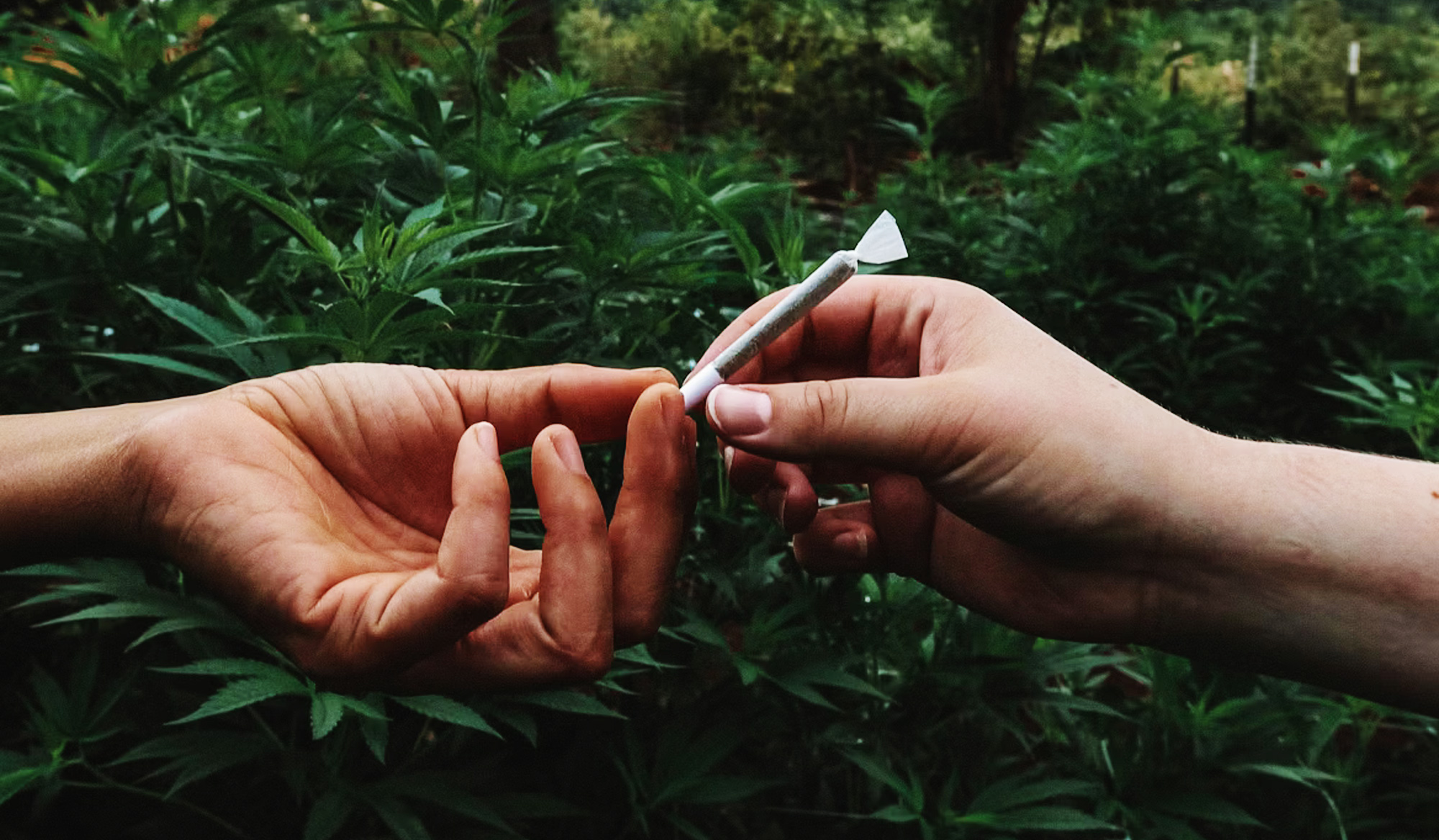
From observing how first-time visitors navigate cannabis in Thailand, three elements consistently appear in stable experiences: preparation, low starting dose, and a controlled environment. Rushing any of these is where most difficult experiences originate.
Thailand has a legal and functioning cannabis market. That’s genuinely good news for visitors. But the legal framework doesn’t do the preparation work for you — it just means the market exists to buy from. How you approach the purchase, the environment, and the experience itself determines the outcome.
| Area | What to Do |
|---|---|
| Buying | Use a licensed dispensary. Ask about strain origin, COA availability, and THC/CBD balance. Don’t buy from street vendors. |
| Product selection | For first use: ask for balanced strains (moderate THC, meaningful CBD). Describe what you want — calm, sleep, mild social high — and let staff help. |
| Dosage | 1–2 puffs to start. Wait fully before adding more. Edibles take much longer — don’t treat slow onset as a signal to take more. |
| Environment | Private, calm, familiar space. Have water and a light snack available. Be with someone you trust or reachable by phone. |
| Physical prep | Eat a light meal before. Stay hydrated. Don’t use when sleep-deprived, stressed, or in a bad headspace. |
| Location | Use in-store lounge, a 420-friendly hotel, or private accommodation. Not on the street, beach, or in public spaces. |
| Airport and travel | Do not bring any cannabis product to any airport. Cannot be carried on domestic or international flights. Dispose of everything before departure. |
From my perspective: the people who have stable first experiences aren’t necessarily more experienced or more knowledgeable — they’re the ones who took their time, asked questions, and treated the first use as a beginning rather than a test of how much they could handle. That approach, more than any specific product choice, is what produces a good outcome.
Note: This article is based on content originally published on the Japanese edition of OG Times .