How Inhalation Technique Changes the Cannabis Experience: Deep Breathing, Slow Draws, and Fast Hits Compared
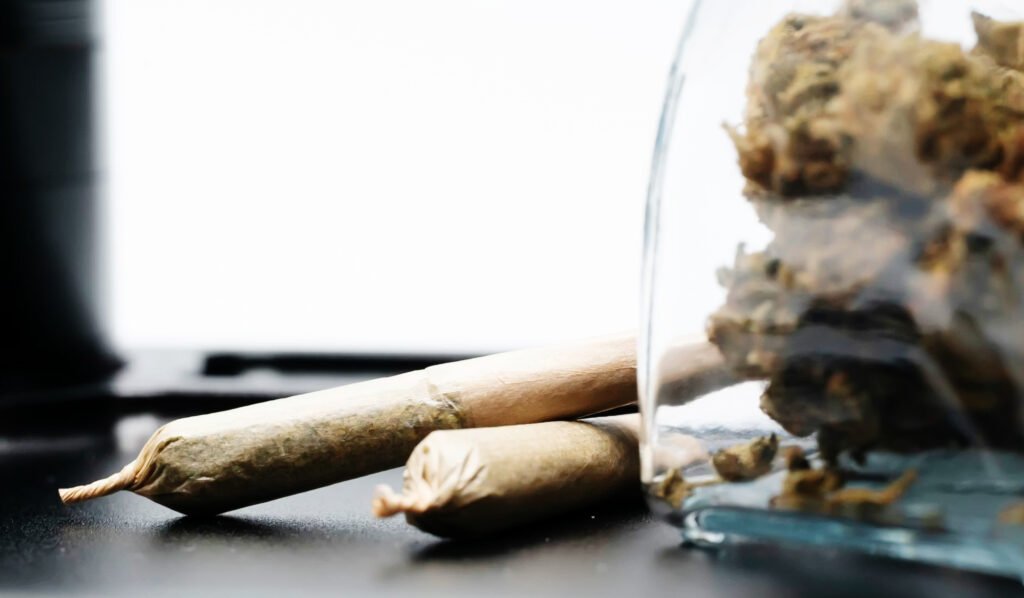

The same cannabis product can produce noticeably different experiences depending on how it’s inhaled. From observing users across Bangkok and Pattaya’s dispensary scene — and from direct personal experience — the difference between a slow, deliberate draw and a fast, deep hit isn’t subtle. Inhalation depth, speed, and breathing rhythm all affect how much THC reaches the bloodstream and how quickly, which directly shapes the onset, intensity, and character of the experience.
Research has indicated that inhalation method affects the rate and quantity of THC absorption through the lungs, and that these differences produce measurable variation in blood THC levels and subjective experience. (Source: National Library of Medicine (NLM))
This guide works through three inhalation approaches — deep breath-style draws, slow steady draws, and fast large hits — and what each tends to produce in practice.
1: Why How You Inhale Changes What You Feel
The lung is where absorption happens, and the efficiency of that absorption depends on how much vapor makes contact with the alveolar surface, for how long, and at what rate. Different inhalation techniques produce different conditions across all three variables.
Absorption Rate and Lung Contact Time
Deeper, slower inhalation allows more vapor to reach the alveolar surface — the gas-exchange region of the lung where THC passes into the bloodstream. Faster inhalation moves vapor through the respiratory tract more quickly, which may reduce contact time at the deepest absorption zones.
Research has indicated that the quantity of THC entering the bloodstream is influenced by the depth and pacing of inhalation, with deeper draws associated with more rapid rises in blood THC concentration. (Source: National Institutes of Health (NIH))
From personal experience: the same product drawn slowly and held briefly produces a different onset than the same product taken in one large, fast breath. The difference in onset speed and initial intensity is real and consistent across sessions.
How Breathing Rhythm Affects the Relaxation Response
Separate from the pharmacological dimension, the breathing pattern itself shapes the physiological state during inhalation. Slow, measured breathing activates the parasympathetic nervous system — the rest-and-recovery state — which lowers heart rate and reduces muscle tension. This means the physiological context receiving THC is already oriented toward calm when a slow inhalation technique is used.
Fast or forceful breathing, by contrast, activates a mild stress response — which creates a different baseline for the incoming pharmacological effect.
Research has indicated that breathing pace directly influences autonomic nervous system state, and that slow breathing supports parasympathetic dominance and reduced physiological arousal. (Source: American Psychological Association Research Team)
Individual Variation Across Inhalation Sessions
The same inhalation technique produces different results on different days for the same person. Physical state — fatigue, hunger, stress, hydration — all shift how THC is absorbed and metabolized. From observation: the person who reports “it hit harder today than yesterday” on the same product and same technique is almost always in a different physical state than the prior session.
Research has indicated that mental and physical state at time of use significantly influences subjective cannabis experience, with individual variation remaining a consistent and substantial factor. (Source: National Institutes of Health (NIH))
2: Deep Breath-Style Inhalation — Characteristics and Effects
Deep breath-style inhalation — filling the lungs more completely than in normal breathing — produces specific effects that distinguish it from either slow shallow draws or fast large hits.
Why Relaxation Tends to be More Pronounced
From personal experience and observation: when users deliberately inhale in a way that resembles a deep, relaxing breath — expanding the chest and filling the lungs more fully — the resulting experience tends toward physical calm and reduced tension. The deep breathing pattern itself contributes to this through its parasympathetic effects, and the more complete lung filling means more THC reaches the deeper absorptive zones simultaneously.
The combination — parasympathetic activation from slow breathing plus THC from deeper absorption — produces a response that leans toward body relaxation and reduced mental agitation. From observation: people who describe wanting to “calm down” or “release tension” tend to gravitate toward this inhalation style when they find what works for them.
Flavor and Terpene Perception
Deep, slow inhalation allows vapor to move through the mouth and nasal passages more gradually, which gives volatile aromatic compounds — terpenes — more time to interact with olfactory and gustatory receptors. From personal experience: flavor and aroma are considerably more distinct when inhaling slowly than when inhaling quickly. The same strain can taste like “just smoke” when inhaled fast and reveal distinct fruit, pine, or earth notes when inhaled deliberately.
Research has indicated that terpene perception is sensitive to the rate and character of vapor delivery, and that slower exposure allows more complete olfactory engagement. (Source: National Library of Medicine (NLM))
The Coughing Risk from Deep Inhalation
The practical limitation of deep breath-style inhalation: drawing vapor into a fully expanded lung means more vapor reaches the lower respiratory tract — which can trigger a cough reflex, particularly with combusted cannabis at higher temperatures. From observation: “I tried to inhale deeply and immediately coughed” is one of the most common first-time reports.
Research has indicated that deeper inhalation increases the interaction of smoke particles with the lower respiratory tract, which can produce more pronounced cough responses. (Source: National Institutes of Health (NIH))
The practical approach: a deep draw doesn’t require maximal lung capacity. A moderately full inhale — deeper than casual breathing but not straining — provides most of the absorption benefit without the cough risk.
3: Slow Steady Draws — The Most Controllable Approach
Slow, consistent inhalation at a moderate rate and volume is the most widely recommended approach for first-time or inexperienced users across the dispensary contexts I’ve observed in Thailand — and the recommendation is well-founded.
Why Steady Pacing Produces a More Gradual Onset
When inhalation pace is slow and consistent, vapor enters the lung at a rate that allows absorption to develop gradually rather than rapidly. The blood THC concentration rises at a measured pace, which produces an onset that is both more predictable and more manageable than faster techniques.
From personal experience: the difference between a slow steady draw and a large fast hit is less about the total amount absorbed and more about the rate at which it enters circulation. The slow draw spreads the absorption over time; the fast hit concentrates it.
Research has indicated that slower inhalation rates are associated with more gradual rises in blood cannabinoid levels, with corresponding differences in onset character. (Source: American Psychological Association)
Why First-Time Users Can Control Their Experience More Easily
From dispensary observation in Thailand: the instruction “take a slow draw, wait a few minutes, and see how you feel” is the most commonly given guidance for first-time visitors. The logic is straightforward — when onset is gradual, there’s time to notice the effect building before it becomes fully expressed.
With slow, steady inhalation: the first signs of effect arrive gently enough that the person has an opportunity to assess “this is enough” or “I could take a bit more” before the experience is fully underway. With fast, large hits: the effect is often fully expressed before any assessment is possible.
Noticing Subtle Changes
The gradual onset of slow inhalation also means that the subtle early changes in the experience — slight shift in mood, minor physical relaxation, early perceptual change — are more detectable. From personal experience: slow draws allow the experience to be observed rather than simply arrived at. The difference between the start and the peak is visible rather than telescoped. For anyone who wants to understand their own response pattern, this observability is genuinely useful.
4: Fast Large Hits — Strong Onset and Higher Risk
Fast, large inhalation — drawing quickly and taking in more volume than a slow steady draw — produces the most rapid and intense onset. From observation: this technique is most commonly used by experienced users who are familiar with their own response to cannabis and seeking a specific, more immediate effect.
Rapid THC Uptake and Onset Intensity
A large, fast inhalation delivers a significant quantity of vapor to the lung rapidly, producing a correspondingly rapid rise in blood THC levels. The onset is fast and the initial intensity is higher than equivalent slow draws at the same dose.
Research has indicated that inhalation volume and speed correlate with blood THC concentration rise rates, and that rapid large draws produce sharper onset curves than gradual inhalation. (Source: National Library of Medicine (NLM))
From observation: experienced users who prefer this technique often describe it as “immediate” or “direct” — the effect arrives before the session fully ends, which some find preferable to the delayed revelation of slower techniques.
Physiological Risks — Coughing, Heart Rate, and Overwhelm
The risks associated with fast large hits are real and more common at this inhalation intensity:
- Cough response from rapid large vapor volume reaching the lower respiratory tract
- Temporary heart rate elevation, more pronounced than with slower techniques
- Onset that’s too rapid to allow dose adjustment — the full effect arrives before stopping is possible
- Increased likelihood of anxiety or overwhelm for users who aren’t calibrated to the intensity
From observation: most difficult first experiences involving smoked cannabis involve either this technique or edibles — both characterized by onset that outpaces the user’s ability to monitor and adjust.
Why Experienced Users Choose This Technique
From listening to experienced users in Bangkok and Pattaya: the primary reasons for preferring fast large hits are the immediacy of onset and the perception that it makes strain-specific effects more directly accessible. Flavor characteristics that take time to develop with slow draws hit more directly with larger hits.
The caveat: this technique requires knowing your own response well. In unfamiliar physical states, with unfamiliar products, or in less comfortable settings, the rapid onset provides no buffer — what arrives is what you get, without opportunity to moderate it.
5: Comparing the Three Approaches

| Technique | Onset Speed | Intensity | Flavor Perception | Control | Best Suited For |
|---|---|---|---|---|---|
| Deep breath-style | Moderate-fast | Moderate-strong | High — slow vapor delivery enhances aroma | Moderate — cough risk reduces predictability | Relaxation focus, terpene exploration, calm settings |
| Slow steady draw | Gradual | Moderate and manageable | Good | High — gradual onset allows assessment and adjustment | First-time users, dose management, any setting |
| Fast large hit | Rapid | Strong, immediate | Direct but less nuanced | Low — onset precedes assessment window | Experienced users in familiar states and settings |
(Source: National Institutes of Health (NIH))
Which Technique for Which Purpose
- First-time use or first use of a new strain: slow steady draw, starting with small volume
- Relaxation and physical tension release: deep breath-style at moderate volume
- Flavor and terpene exploration: slow deep draw with attention to aroma on the exhale
- Experienced users seeking immediate effect: fast large hit, with familiar product in familiar state
- Anxiety-prone users or uncertain conditions: slow steady draw only — avoid fast techniques
Managing Anxiety Risk Across Techniques
From dispensary observation: the single clearest predictor of uncomfortable cannabis experiences related to inhalation technique is fast, large volume hits in people who aren’t calibrated to the product or their own state. The rapid onset provides no adjustment window, and the intensity arrives before there’s an opportunity to reassess.
For anyone concerned about anxiety: slow steady draws are the appropriate starting point regardless of experience level with cannabis elsewhere. Thai dispensary products vary in potency, and the gap between “manageable” and “overwhelming” is often narrower than expected with unfamiliar products.
6: Finding Your Own Technique Through Observation

There is no universally correct inhalation technique. From observation across many users in Bangkok and Pattaya: what works best is highly individual — shaped by physical constitution, tolerance, the specific product, the setting, and the purpose of the session.
What’s consistent: starting with less control (slow, small, gradual) and building toward more is always safer than starting at full intensity and discovering the result was too much.
Practical approach for building toward your own technique:
- Start with slow, moderate-volume draws regardless of prior experience with cannabis
- Wait at least 10–15 minutes between the first draw and any subsequent draws to assess the onset
- Note what the onset felt like — was it too gradual, too rapid, or well-paced? Adjust the next session accordingly
- Log product, technique, and outcome — not as data collection, but as a way to build an accurate picture of your own response patterns
- Physical state is a variable in every session: rested and fed versus tired and hungry will produce different responses to identical technique
The goal isn’t finding a single correct technique and using it forever — it’s developing enough observational data about your own responses to make informed adjustments based on what you want to experience and what conditions you’re in.
Research has indicated that self-monitoring and dose adjustment based on observed responses are important components of cannabis safety, particularly for less experienced users. (Source: National Institutes of Health (NIH))
Note: This article is based on content originally published on the Japanese edition of OG Times .