CBD Legality and Safety Explained: A Global Guide to THC Thresholds and Regulatory Differences

CBD has become a global topic, yet discussions about its legality and safety often appear fragmented. When researching CBD, questions such as how it is regulated overseas, how safe it is considered to be, and why policies differ between countries frequently arise.
Based on regulatory documents, international reports, and field observations, it becomes clear that CBD is not discussed under a single global standard. Legal status and safety evaluations are shaped by each country’s regulatory structure and policy decisions.
CBD, known as cannabidiol, is one of the plant-derived compounds found in cannabis and is primarily extracted from hemp. Unlike THC, the component responsible for psychoactive effects, CBD has been reported not to produce the so-called “high.” In recent years, it has been increasingly used for purposes such as relaxation and maintaining daily balance. However, evaluations and regulatory treatment vary depending on the country or region, so it is important to understand both the characteristics of the compound and the legal framework that governs it.
This article organizes CBD legality and safety from a global perspective. The objective is not to reach a simplified conclusion, but to clarify the structural differences behind how CBD is evaluated worldwide.
1: Why Organize CBD Legality and Safety Using a Global Framework
When discussing CBD legality and safety, relying on information from a single country can overlook important assumptions. International cases and regulatory reports show that CBD is interpreted within different legal and policy frameworks.
By organizing the topic globally, it becomes easier to understand why legal thresholds differ and why safety evaluations are not identical. As a result, each country’s regulatory logic can be understood in relative terms.
This approach avoids reducing CBD to a simple legal/illegal or safe/unsafe label. Instead, it positions CBD within specific regulatory structures.
Why CBD Is Treated Differently Across Countries
English
CBD is treated differently due to variations in legal structures, historical drug policies, and approaches to THC regulation. In some regions, legality is determined by THC content thresholds. In others, the origin of the plant material or extraction method becomes decisive.
International reports state that CBD itself has been evaluated separately from broader cannabis control systems. However, national regulations are designed according to each government’s policy priorities.
(Reference: World Health Organization)
From a structural perspective, the relationship between CBD and THC, as well as the source of the material, often determines regulatory classification rather than the isolated compound alone.
Scope and Assumptions of This Article
This article organizes CBD legality and safety using international reports, regulatory documents, and research summaries. It does not provide legal advice or medical judgment.
The discussion focuses on structural differences in regulation, THC threshold models, and safety evaluations. As noted in international assessments, CBD has been evaluated as having a low potential for abuse or dependence under general use conditions.
(Reference: World Health Organization)
The purpose is to provide a structural understanding rather than a definitive conclusion.
2: How CBD Legality Is Defined Around the World

CBD legality is not governed by a single global standard. Each country defines legality according to its own regulatory structure and policy decisions. In practice, explanations such as “CBD is legal” always depend on national conditions and definitions.
From reviewing international systems and field observations, legality is often determined not by CBD alone, but by how THC is regulated and how the source material is defined.
Understanding legality therefore requires examining regulatory structure rather than relying on country names alone.
Common CBD Benchmarks in Europe and North America
In Europe and North America, legality is often defined through numerical THC content thresholds. Some jurisdictions allow distribution if products are derived from industrial hemp and contain THC below a specified percentage such as 0.2% or 0.3%.
In this framework, CBD itself is not regulated independently. Instead, legality depends on whether THC remains below the permitted level.
International reports have indicated that CBD has been evaluated as having a low potential for abuse or dependence under general conditions. However, regulatory design remains a national policy decision.
(Reference: World Health Organization)
From a structural standpoint, these regions tend to adopt a model that manages cannabis-related products through measurable limits rather than blanket prohibition.
How CBD Policies Differ Across Asian Countries
Across Asian countries, CBD policy approaches vary significantly. Some jurisdictions adopt THC threshold systems similar to Western models. Others regulate CBD more strictly regardless of THC concentration.
International reports indicate that the scientific evaluation of CBD is often separated from broader national drug policies. However, regulatory outcomes reflect historical, social, and political contexts.
(Reference: World Health Organization)
Field observations show that even identical CBD products may face different distribution rules and labeling standards once crossing borders. In several cases, policy interpretation plays a stronger role than numerical thresholds in determining legality.
How Thailand’s Approach Differs
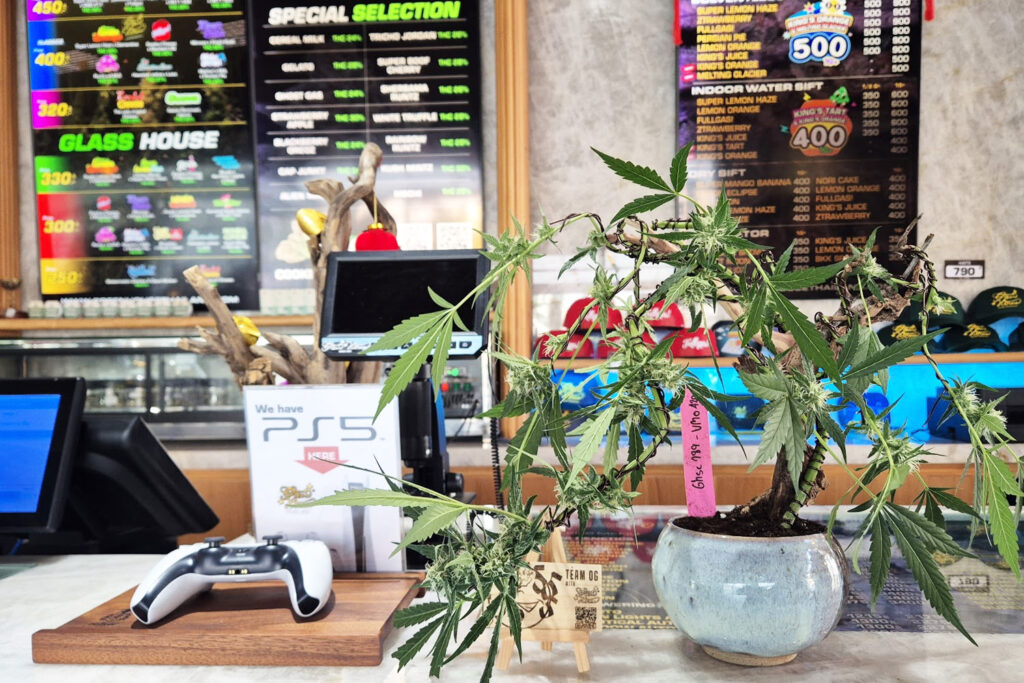
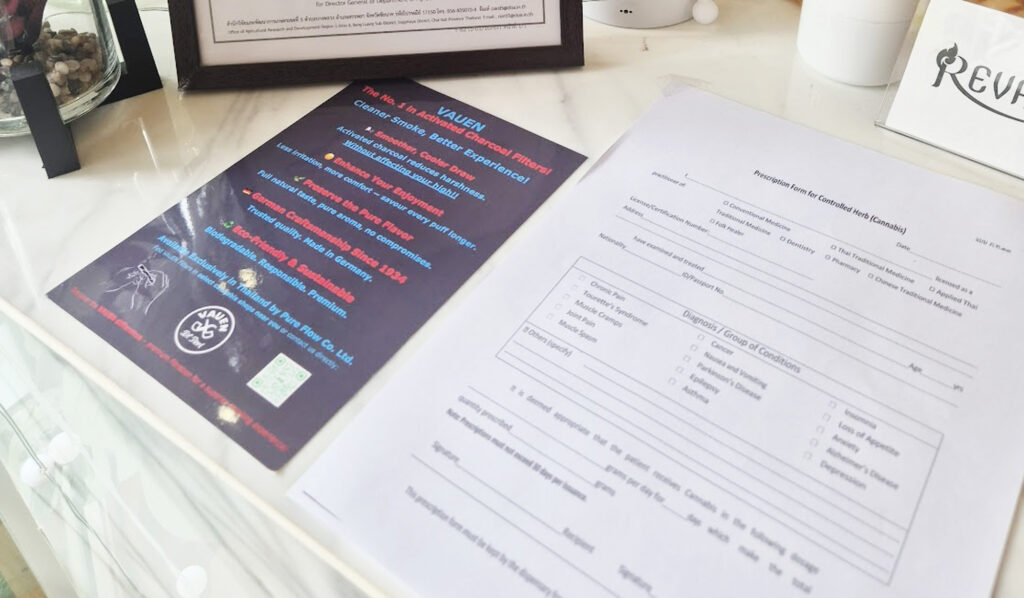
Thailand has undergone regulatory changes regarding cannabis-related components in recent years. Field observations indicate that CBD distribution is influenced by ongoing policy adjustments.
Official announcements from Thai health authorities describe regulatory standards for cannabis-derived substances.
(Reference: Thai Ministry of Public Health)
However, regulatory frameworks may be subject to revision. As a result, legal interpretation can change depending on timing and updated regulatory conditions.
From observation, Thailand appears to combine elements of numerical THC management with policy-based oversight, reflecting a transitional regulatory structure.
3: How CBD Safety Is Evaluated
CBD safety has been discussed in international reports and research publications. At the same time, interpretations of safety can vary depending on dosage, product quality, and conditions of use.
From reviewing field observations and regulatory documents, it becomes clear that safety is not a simple yes-or-no issue. Safety must be understood within the specific conditions under which evaluation takes place.
International assessments indicate that CBD has been evaluated as having a low potential for abuse or dependence under general use conditions. However, regulatory authorities may issue separate guidelines or precautions.
(Reference: World Health Organization)
For this reason, discussions about CBD safety require distinguishing between the scientific evaluation of the compound and regulatory or usage conditions.
Perspectives From International Organizations and Research Reports
International reports state that CBD has been evaluated as having a low potential for abuse or dependence under general conditions.
(Reference: World Health Organization)
Research publications describe CBD as relatively safe in many reviewed contexts. At the same time, they note that dosage, individual physiology, and concurrent substance use may influence outcomes.
(Reference: U.S. National Library of Medicine)
These evaluations are presented within defined research conditions rather than as universal guarantees.
The Concept of THC Thresholds
When discussing CBD safety and legality, the concept of THC thresholds frequently appears. This model allows distribution if THC content remains below a defined percentage.
Regulatory documents and research summaries explain that these numerical limits vary by country or region.
(Reference: U.S. National Library of Medicine)
From a structural perspective, whether a jurisdiction defines and enforces a THC threshold is a major dividing point in regulatory models.
Understanding this concept clarifies how different legal systems approach safety and compliance.
Discussions About Side Effects and Risks
Research publications have reported side effects such as drowsiness, diarrhea, and changes in appetite. These findings indicate that responses may vary depending on dosage and individual differences.
(Reference: U.S. National Library of Medicine)
Some reports also mention potential interactions with medications, particularly in relation to metabolic processes.
(Reference: U.S. Food and Drug Administration)
These discussions emphasize that safety evaluations depend on context rather than isolated compound characteristics.
My On-the-Ground Impression of CBD Safety
From field observations, CBD appears to be used more as a daily support component rather than for strong psychoactive effects. In many cases, it is incorporated quietly into lifestyle routines.
At the same time, when expectations are set too high or immediate effects are assumed, reactions such as “it does not work” may arise.
From this perspective, perceived safety may be influenced not only by intensity of effect but also by user expectations.
Additionally, product quality and labeling transparency influence safety discussions. Scientific evaluation of CBD as a compound does not automatically guarantee consistent product standards in the marketplace.
For that reason, distinguishing between compound-level research findings and product-level quality management is essential.
4: Why Legal vs. Illegal Decisions Differ by Country

Even when the compound is the same, legal classification can differ depending on the country. Field observations and regulatory reviews show that this difference cannot be explained solely by scientific evaluation of CBD.
Legal decisions are shaped by regulatory design, historical background, and policy models. In many cases, multiple structural factors overlap in determining whether a product is considered legal or restricted.
This section organizes those differences from the perspectives of source material and testing standards.
Differences in Source Material
In some jurisdictions, the legality of CBD depends on which part of the plant it is extracted from and whether it is derived from industrial hemp. Certain regulatory frameworks permit CBD only when sourced from specific plant materials.
Official regulatory documents explain that legal assessment may consider not only the compound itself but also the origin of the raw material and the extraction process.
(Reference: Official Government Documentation)
From a structural perspective, the safety evaluation of CBD as a compound and the legal classification of cannabis as a plant are treated as separate regulatory axes. This separation contributes to international differences in legal outcomes.
Differences in Testing Standards and Labeling Standards
Legal decisions may also depend on testing methodologies and labeling standards. Threshold definitions such as “non-detectable” THC can vary depending on analytical sensitivity and measurement criteria.
Research materials note that differences in testing methods and detection limits may influence interpretation of results.
(Reference: U.S. National Library of Medicine)
From a regulatory standpoint, identical numerical descriptions can lead to different legal interpretations if underlying testing conditions differ. This variation contributes to international differences in classification and enforcement.
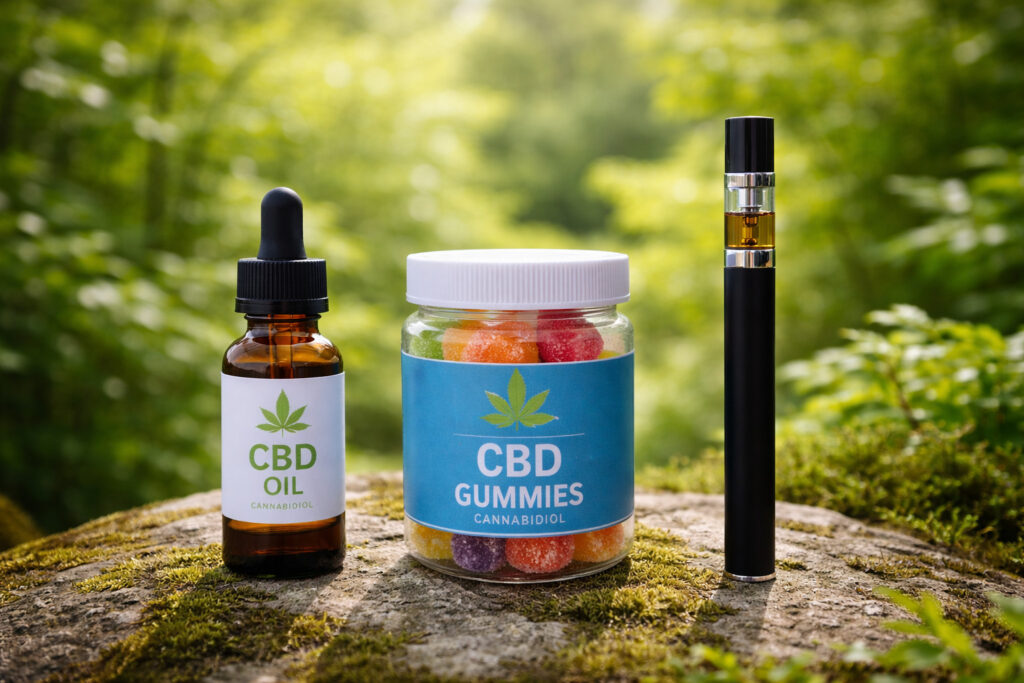
5: What’s the Difference Between CBD Oil, Gummies, and Vapes?
CBD products are available in multiple forms, including oils, gummies, and vapes. Field observations suggest that discussions are less focused on which form is superior and more on whether a format fits individual lifestyle and purpose.
While legality and safety are often discussed in terms of chemical composition, actual user experience may be influenced by product format. For this reason, understanding differences in intake methods is relevant alongside regulatory considerations.
The distinction between these products lies not in the compound itself but in how it is delivered to the body.
Differences by Route of Intake
CBD oil is commonly taken sublingually or orally. Gummies are ingested as edible products and pass through digestive absorption. Vapes are inhaled and absorbed through the lungs.
Research summaries indicate that absorption speed and blood concentration patterns may differ depending on the route of intake.
(Reference: U.S. National Library of Medicine)
From a structural standpoint, differences in absorption pathways may influence the timing and duration of perceived effects.
Differences by Route of Intake
CBD oil is commonly taken sublingually or orally. Gummies are ingested as edible products and pass through digestive absorption. Vapes are inhaled and absorbed through the lungs.
Research summaries indicate that absorption speed and blood concentration patterns may differ depending on the route of intake.
(Reference: U.S. National Library of Medicine)
From a structural standpoint, differences in absorption pathways may influence the timing and duration of perceived effects.
6: What to Check When Choosing CBD Products
Understanding legality and safety does not automatically make product selection straightforward. Field observations show that discussions about CBD as a compound are often mixed with questions about product-level quality control.
The evaluation of CBD as a substance and the reliability of products on the market are not identical. For this reason, it is necessary to separate regulatory understanding from product selection criteria.
This section organizes key points from the perspectives of labeling transparency, pricing, and individual suitability.
Ingredient Labels and Third-Party Testing
One of the first elements to review is ingredient labeling and whether third-party testing has been conducted. Regulatory discussions emphasize the importance of accuracy in declared content and transparency in disclosure.
(Reference: U.S. Food and Drug Administration)
From a structural perspective, it is necessary to verify not only THC presence or absence, but also CBD content levels, testing methods, and disclosure of test results.
Consistency between labeling and actual content is relevant to both safety evaluation and regulatory compliance.
How to Think About What Fits You
Ultimately, product choice should align with lifestyle and intended use context. Understanding differences in product formats and concentration levels supports practical selection.
From field observation, selection based solely on intensity or speed of perceived effect may overlook long-term suitability.
A structured approach considers sustainability of use, environment of consumption, and individual routines rather than focusing exclusively on immediate sensation.
7: How CBD Can Be Organized From a Global Perspective
CBD legality and safety cannot be reduced to a simple binary conclusion. Reviews of regulatory structures, field observations, and international reports show that multiple factors intersect in shaping evaluation.
These factors include regulatory design, source material definitions, THC threshold models, testing standards, and distribution pathways. When viewed globally, CBD is not uniformly categorized as either safe or unsafe. Instead, its evaluation depends on the regulatory framework and specific conditions under which it is assessed.
From this perspective, it is necessary to examine labeling transparency, third-party testing, THC standards, and policy context together rather than isolating a single element.
Regulatory systems and research discussions may continue to evolve. For that reason, ongoing review of updated information remains essential for maintaining a balanced understanding.
Note: This article is based on content originally published on the Japanese edition of OG Times .