Why Cannabis Makes You Hungry: THC, Appetite, and the Science Behind the Munchies


One of the most consistently reported effects of cannabis use is a sudden, often intense desire to eat — even when you’re not physically hungry. From time spent in dispensaries and talking with users across Bangkok and Pattaya, this comes up constantly, particularly from first-time visitors who weren’t expecting the intensity of it.
The appetite shift isn’t simply a psychological craving or a loss of willpower. There are mechanisms behind it — involving cannabinoid receptors, reward circuitry, and sensory processing — and understanding those mechanisms makes the experience considerably easier to navigate. This article works through why it happens, what shapes how strongly it shows up, and how to approach it without either suppressing it anxiously or being caught off guard by it.
1: What “The Munchies” Actually Are — and How They Differ from Normal Hunger
Most people who use cannabis describe a sudden urge to eat something — not necessarily because they’re physically hungry, but because food becomes unusually appealing. From observation across multiple dispensary settings in Thailand, this comes up from first-timers and regular users alike, with first-timers often expressing surprise at how specific and intense the craving feels.
The term “munchies” refers to the increased appetite and food-seeking behavior that commonly follows cannabis use. What distinguishes it from ordinary hunger is that it tends to present as heightened interest in eating rather than as a physiological signal of energy deficit.
“Munchies” describes the state of intensified appetite — or more precisely, intensified interest in eating — that follows cannabis use. Unlike conventional hunger driven by low blood sugar or an empty stomach, the munchies often appear as heightened engagement with flavor, texture, and smell: food becomes more interesting rather than urgently needed. People commonly report wanting to eat even when they’ve recently finished a meal, or finding themselves drawn specifically to intensely sweet or salty foods.
(Source: National Library of Medicine (NLM))
From personal experience: the distinction between “I’m hungry” and “I want to taste something” matters practically. Recognizing which one you’re experiencing makes it easier to decide whether to eat — and how much.
The Pattern People Describe — “I Wasn’t Hungry a Moment Ago”
The most common phrase I hear in dispensary settings is some version of: “I wasn’t hungry at all just now, and suddenly I can’t stop thinking about food.” This shift from indifference to preoccupation happens quickly and feels qualitatively different from gradually building hunger. The focus tends to land on specific foods — usually something sweet or intensely flavored — rather than the general desire to eat that accompanies ordinary hunger.
Appetite as Sensory Interest, Not Physical Need
The appetite change often presents not as stomach-based hunger but as a heightened interest in taste, texture, and smell — the sensory dimensions of eating rather than its caloric function. People describe wanting “just something to put in their mouth,” or finding a particular flavor suddenly irresistible, without the usual physical signals of hunger accompanying that desire.
From personal experience: the same food eaten during cannabis use often tastes noticeably more interesting than it does otherwise — more distinct flavor, more satisfying texture. This perceptual enhancement of the eating experience is part of what makes stopping difficult, separate from appetite itself.
How the Effect Varies Across Individual Experiences
The appetite effect is not uniform. Some people experience strong food preoccupation every time; others notice only a mild increase in interest; some report little change. From observation, the variation is real — making “cannabis always makes you eat more” an overstatement. Strain, dosage, individual physiology, and pre-existing hunger level all shape how the effect expresses itself. Treating this as a tendency rather than a guarantee helps maintain a more accurate relationship with your own responses.
2: The Mechanisms Behind THC’s Effect on Appetite
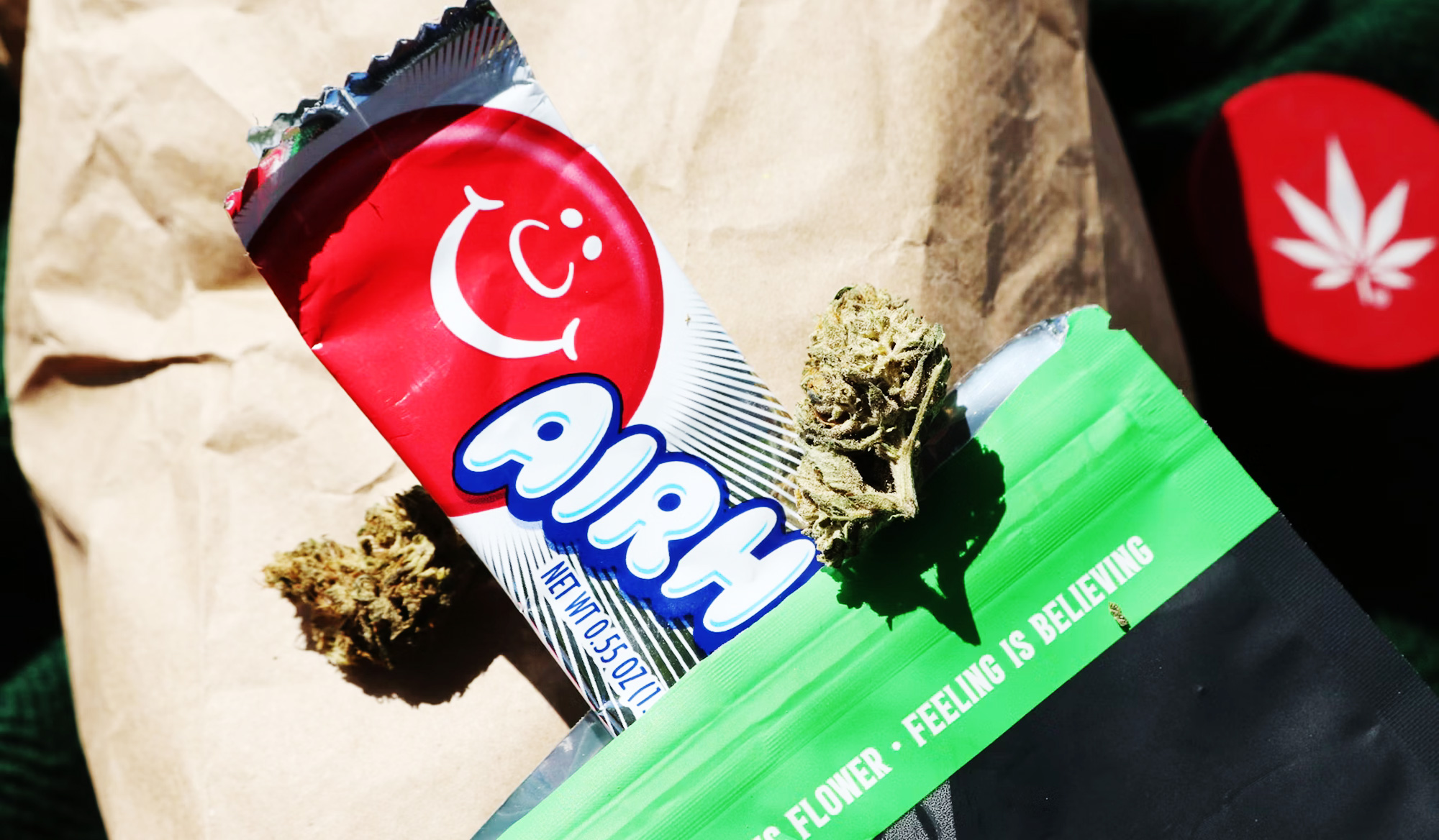
The appetite shift that follows cannabis use is not random — it connects to specific systems in the brain and body. THC acts on mechanisms that are already involved in appetite regulation, temporarily shifting the balance in ways that favor eating. Understanding what’s actually happening makes the experience less surprising and more navigable.
Cannabinoid Receptors and Feeding Behavior
THC binds to cannabinoid receptors (CB1 receptors) that are distributed throughout the brain, including in regions that regulate appetite and energy balance. These receptors are part of the endocannabinoid system — a signaling network the body uses naturally for functions including hunger regulation. When THC activates these receptors in appetite-related regions, it may temporarily reduce the inhibitory signals that normally moderate food-seeking behavior. The result, for many people, is a state where the internal brake on eating feels loosened. (Source: National Library of Medicine (NLM))
The Reward System and Why Eating Becomes More Appealing
Beyond appetite regulation, THC has been reported to interact with the brain’s reward circuitry — the dopamine-driven system that generates feelings of pleasure and motivation. When this system is activated, behaviors associated with reward (including eating) become more attractive. This explains why food during cannabis use can feel actively pleasurable rather than simply satisfying: the reward response to eating is amplified. (Source: National Institutes of Health (NIH))
From observation in Thailand’s dispensary context, the people who describe food as “tasting better” or “more satisfying” than usual are likely experiencing this reward-circuit effect alongside the appetite-regulation shift — two different mechanisms reinforcing each other.
Why Flavor and Smell Feel Stronger
A third dimension is sensory: THC appears to influence how the brain processes smell and taste signals, making flavors more vivid and aromas more noticeable. This is why sweet, salty, or strongly flavored foods become particularly attractive — they’re more perceptually present than they would be otherwise. (Source: National Library of Medicine (NLM))
From personal experience: the same snack eaten sober versus during cannabis use can feel like genuinely different food — not because the food changed, but because the sensory processing around it did. This enhancement of the eating experience itself is a significant contributor to why people eat more than intended.
3: Why Overeating Tends to Happen More When You’ve Used Too Much
A consistent pattern in what I hear from users: eating too much correlates more strongly with using too much than with the munchies in general. Small amounts of cannabis tend to produce mild appetite enhancement; larger amounts tend to produce a combination of intensified appetite and impaired judgment that makes stopping much harder. These are different problems with different origins.
Satiety Signals That Become Harder to Read
Some research suggests that THC may interfere with the normal experience of feeling full — not by eliminating satiety signals but by making them harder to register clearly. The natural “I’ve had enough” signal that usually stops eating becomes less authoritative, creating a state where eating continues past the point where it would normally stop. (Source: National Library of Medicine (NLM))
From personal observation: this tends to be noticeably more pronounced at higher doses. At moderate use, most people can still track whether they’re genuinely hungry — the satiety signal is softer but present. At higher doses, it becomes much harder to notice.
Judgment and Self-Monitoring at Higher Doses
Separate from appetite specifically, cannabis at higher doses affects executive function — the cognitive processes involved in self-monitoring, planning, and restraint. This includes the ability to evaluate “how much have I eaten” and “do I actually want more.” When this capacity is temporarily reduced, eating decisions become less deliberate. People describe finishing something and immediately reaching for more without quite registering the transition.
From observation: the post-session “I ate a lot more than I intended to” report is almost always from sessions where the dose was higher than usual, not from sessions at the person’s normal level.
A Personal Example of What This Feels Like
From my own experience: on a night when the effect came on strongly, I found myself eating well past the point I normally would — not from hunger, and not from particularly wanting more, but because the stopping point simply never registered clearly. Looking back, the food wasn’t more appealing than usual — the mechanism that would have ended the eating session had gone quiet. That distinction, between wanting food and losing the ability to stop, is useful to hold onto when thinking about how to approach this.
4: What Research Shows About Cannabis and Appetite
Cannabis and appetite have been a research focus for decades — partly because the appetite-stimulating effect is well-known, and partly because it has genuine clinical applications. The research picture is more nuanced than “cannabis increases appetite” suggests.
Studies Reporting Appetite Increase
Multiple studies involving healthy adults have found that THC consumption is associated with increased appetite and food intake. The proposed mechanism — CB1 receptor activation in appetite-regulating brain regions — is supported by both animal model research and human trials. In these contexts, study participants reported feeling hungrier and ate more following THC administration compared to placebo. (Source: National Library of Medicine (NLM))
This aligns with what I’ve observed directly: most people who use cannabis, across varying levels of experience and different strains, notice some degree of increased food interest. The effect is real and common.
The Medical Application — When Appetite Stimulation Is the Goal
In clinical medicine, the appetite-stimulating properties of cannabis have been applied as a treatment goal rather than a side effect. In contexts involving cancer treatment side effects, HIV-associated wasting, or chronic illness-related appetite loss, cannabis-based medications have been studied and used to support food intake and weight stabilization. (Source: National Institutes of Health (NIH))
From conversations with dispensary staff in Thailand who serve customers with specific medical purposes: appetite stimulation is among the most commonly cited therapeutic reasons for use, particularly by people dealing with treatment-related nausea or chronic low appetite. In these cases, the munchies are the intended effect.
Why Research Results Aren’t Uniform
Not every study finds the same degree of appetite increase, and some find minimal effect in certain populations. The variability connects to factors including THC:CBD ratio, dosage level, frequency of use, individual physiology, and psychological state at time of use. High-CBD, lower-THC formulations tend to produce less pronounced appetite stimulation than high-THC options.
From observation: people who say “cannabis doesn’t really make me hungry” are usually regular users at moderate doses — tolerance and dosage both appear to moderate the effect significantly. First-time or infrequent users at meaningful THC levels almost universally notice some appetite change.
5: What Conditions Make the Effect Stronger or Milder
The appetite effect doesn’t operate at a fixed intensity — it varies based on conditions that are largely within your control. From observation and experience, the same person using the same amount in different circumstances can have noticeably different appetite responses.
Hunger Level, Sleep Deprivation, and Stress
Starting from a state of existing hunger, sleep deprivation, or stress appears to amplify the appetite response significantly. Research on appetite regulation more broadly suggests that these baseline states affect eating behavior — when THC is added on top, the combined effect can be considerably stronger than either alone. (Source: National Institutes of Health (NIH))
From personal experience: days when I skipped a meal before using, or was already tired and depleted, produced noticeably more intense food preoccupation than sessions where I was rested and had eaten normally. Managing these baseline conditions is one of the more reliable ways to influence the appetite effect.
Dose and the Speed of Onset
The relationship between dose and appetite intensity is not perfectly linear, but the general pattern holds: higher doses and faster-onset experiences (from smoking or vaping) tend to produce stronger appetite effects than lower doses or slower-onset methods. When the effect rises quickly and strongly, the appetite response tends to be more pronounced and harder to manage.
From observation: people who develop sudden strong food cravings they struggle to regulate are almost always experiencing a dose at or above the upper end of their comfort range — not a moderate, familiar level of use.
Evening Use and Why It Tends to Produce More Eating
Evening cannabis use is particularly associated with excess eating. Multiple factors converge: the relaxed end-of-day state makes eating feel natural; the sensory enhancement of flavors is more noticeable when you’re winding down; and the ambiguity about whether you’re actually hungry (post-dinner is a common use time) makes it harder to assess your actual need for food.
From personal experience: evening use has produced more “I ate more than I meant to” outcomes than any other timing. Shifting to slightly earlier in the evening, or planning specifically what I’ll eat before using, reduces this significantly.
6: How to Approach the Appetite Effect Without Fighting It
Cannabis-related appetite increase is manageable — but the approach matters. From both experience and observation, trying to suppress it through willpower alone tends to produce more preoccupation with food, not less. The more effective approach is understanding the conditions that shape it and adjusting those conditions.
Why “Don’t Eat” as a Strategy Usually Fails
From personal observation and broader conversation: the harder someone tries not to eat during cannabis use, the more mental space food tends to occupy. This is consistent with what research on dietary restriction suggests more broadly — rigid prohibition increases attention to the prohibited thing. (Source: National Institutes of Health (NIH))
A more practical frame: accepting that some appetite increase is a normal, physiologically driven response — and deciding in advance what you’ll eat rather than trying to eat nothing — produces better outcomes than willpower-based suppression.
Adjusting Dose and Timing Instead of Fighting the Response
The most effective levers are dose and timing, not willpower at the moment of appetite. From personal experience:
- Using at a lower dose reliably produces a milder appetite effect than using at a higher one
- Avoiding use when already hungry reduces the baseline that the cannabis effect builds on
- Using slightly earlier in the evening — rather than right before bed — makes the appetite window easier to manage
- Having something specific to eat ready in advance reduces the “I’ll just have one more” dynamic
These adjustments work on the conditions that shape the appetite response rather than on the response itself once it’s active.
Three Practical Points That Changed How I Approach This
- Don’t use on an empty stomach — the appetite effect on top of existing hunger is significantly harder to manage
- Start with a small amount and observe — the dose-appetite relationship is real, and smaller amounts give you more room
- Decide what you’ll eat before using, not after — post-use decision-making about food is less reliable than pre-use decision-making
These aren’t about restriction — they’re about setting up conditions where your own judgment remains more available. The appetite effect doesn’t need to be eliminated; it needs to be anticipated and worked with rather than resisted in the moment.
7: Can You Control the Cannabis Appetite Effect?
“Can I stop myself from getting the munchies?” is a common question. The honest answer is: partially, and through conditions rather than willpower.
Why Complete Suppression Is Unrealistic
The appetite effect of cannabis operates through neural and hormonal mechanisms that aren’t directly accessible to conscious decision-making. THC’s action on CB1 receptors in appetite-regulating brain regions doesn’t turn off because you decide it should. Research consistently indicates that the neurological basis of this response is real and automatic at the point of activation. (Source: National Library of Medicine (NLM))
From observation: people who set out to “just not eat anything” during a cannabis session are fighting against a response that’s already been initiated at a level below conscious control. The effort itself creates preoccupation. Working with this reality rather than against it is more effective.
Finding Your Own Range Through Observation
The more useful project than suppression is developing an accurate map of your own response — understanding what dose level, what conditions, and what timing produce manageable versus overwhelming appetite effects for you specifically. From observation, people who navigate the cannabis appetite effect most successfully are those who have clear, experience-based knowledge of their own patterns.
This map develops through observation across multiple experiences — not from a single session, and not from applying someone else’s experience to yourself. What works at one dose doesn’t necessarily work at another; what’s manageable when rested may not be when tired. Holding the model loosely and updating it based on actual experience is the most reliable approach.
“Knowing and Using” as the Better Frame
From personal perspective: the most significant shift in my relationship with the cannabis appetite effect wasn’t developing better willpower — it was understanding what was happening well enough to stop interpreting it as a problem. When the appetite increase shows up, it’s a recognizable, temporary, physiologically driven response. It doesn’t need to be prevented or feared. It needs to be anticipated and approached with a bit of practical structure — which is considerably more achievable than fighting it in the moment.
8: Key Takeaways — Why Cannabis Makes You Hungry and How to Work With It

Cannabis-related appetite increase is one of the most common and consistent effects users report — from Bangkok dispensary regulars to first-time visitors in Thailand. It’s not purely psychological, and it’s not simply weak willpower. It reflects the action of THC on appetite-regulating brain regions, reward circuitry, and sensory processing systems — mechanisms that operate below the level of conscious control once activated.
Research confirms the pattern while also showing that it’s not uniform: dose, strain composition, individual physiology, and contextual conditions all shape how strongly the effect shows up.
The practical approach is not suppression but anticipation. Understanding that the effect is more pronounced at higher doses, in states of existing hunger or depletion, and during evening use gives you real leverage over the conditions. Deciding in advance what you’ll eat, adjusting dose, and managing baseline physical state all work better than in-the-moment willpower once the appetite response is active.
Cannabis and appetite are something to observe and work with — not a problem to eliminate. Knowing the mechanism makes the experience less surprising and more navigable, which is the most useful thing understanding can do for any aspect of cannabis use.
Note: This article is based on content originally published on the Japanese edition of OG Times .