Creating a Ganja Bonsai for 420 at Green House in Nuanchan, Bangkok
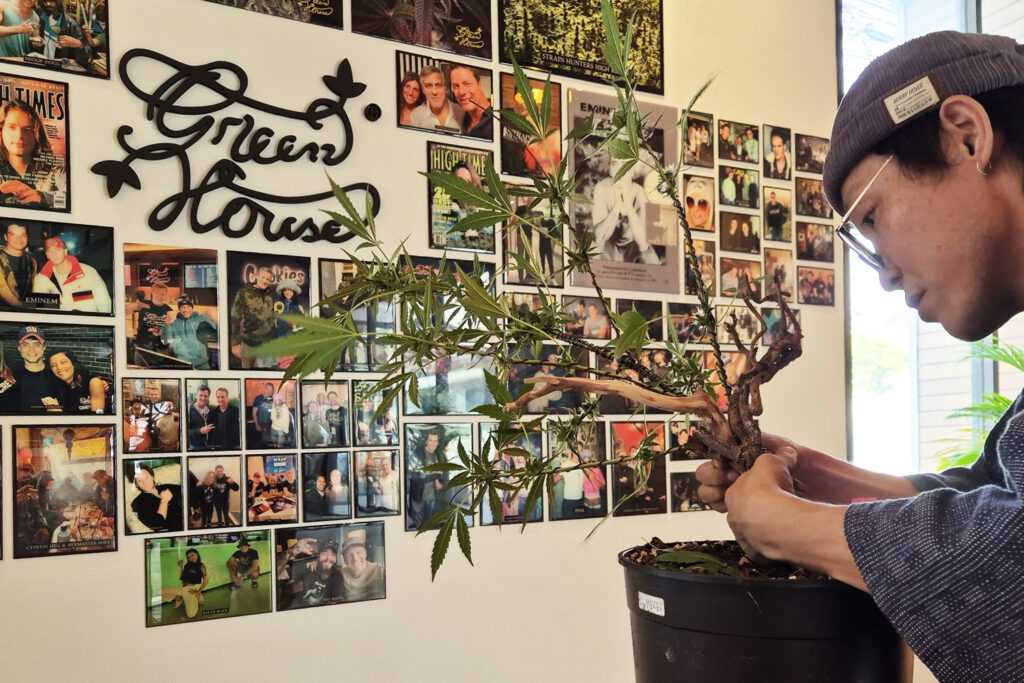

About a year and a half has passed since I started making ganja bonsai. The story of how it began is written in a separate article, so I would recommend reading that first.
From when I first started making ganja bonsai, I always wanted to create a piece together with Green House one day — but I had no real connection to them, so it felt more like a distant hope than an actual plan.
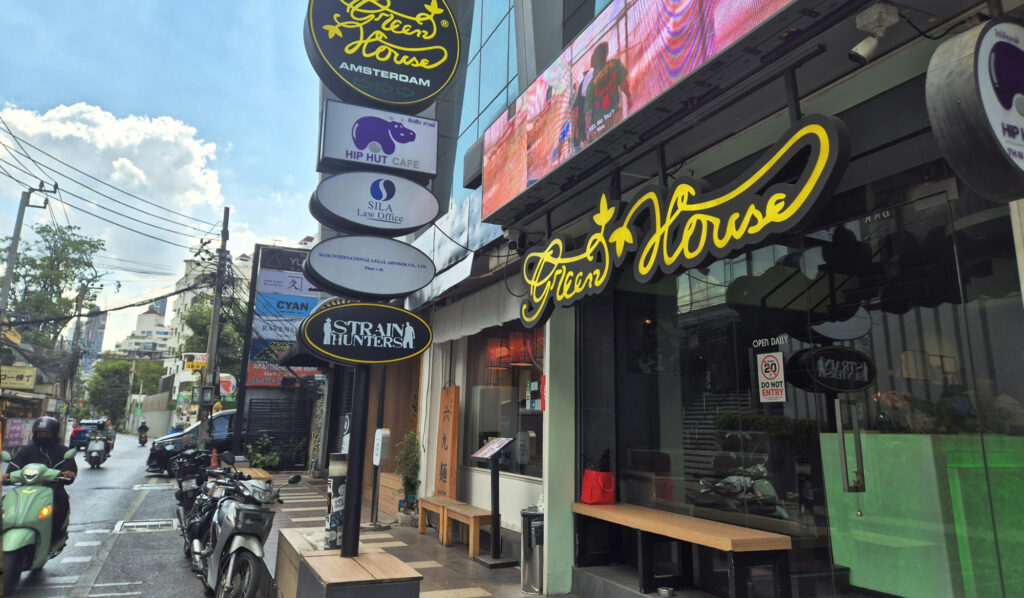
After moving from Pattaya to Bangkok, opportunities to exhibit my ganja bonsai started to increase, and I began meeting people in the cannabis scene that I never would have crossed paths with in Pattaya. At some point, I heard that Arjan Roskam, the founder of Green House, and Dust, one of the key figures who has shaped the brand, would be visiting the Green House location in Khaosan for the store’s first anniversary. I used that moment. I had made a ganja bonsai from a seedling purchased at Green House, so I brought it as a gift and handed it over in person.
On a bit of an impulse, I asked Dust: “Would it be alright if I exhibited my ganja bonsai at Green House?” He said, “That’s fine with me — let me just check with Arjan Roskam real quick,” and walked over to show him the bonsai I had made. A short conversation followed. About a minute later, Dust came back: “OK — let’s swap Instagram and stay in touch.” After a few exchanges, what had felt impossible became real. I exhibited at the Thong Lo location a few times, and now — timed to coincide with April 20 — I had the opportunity to exhibit at the Nuanchan location, which had always been the one I wanted most.
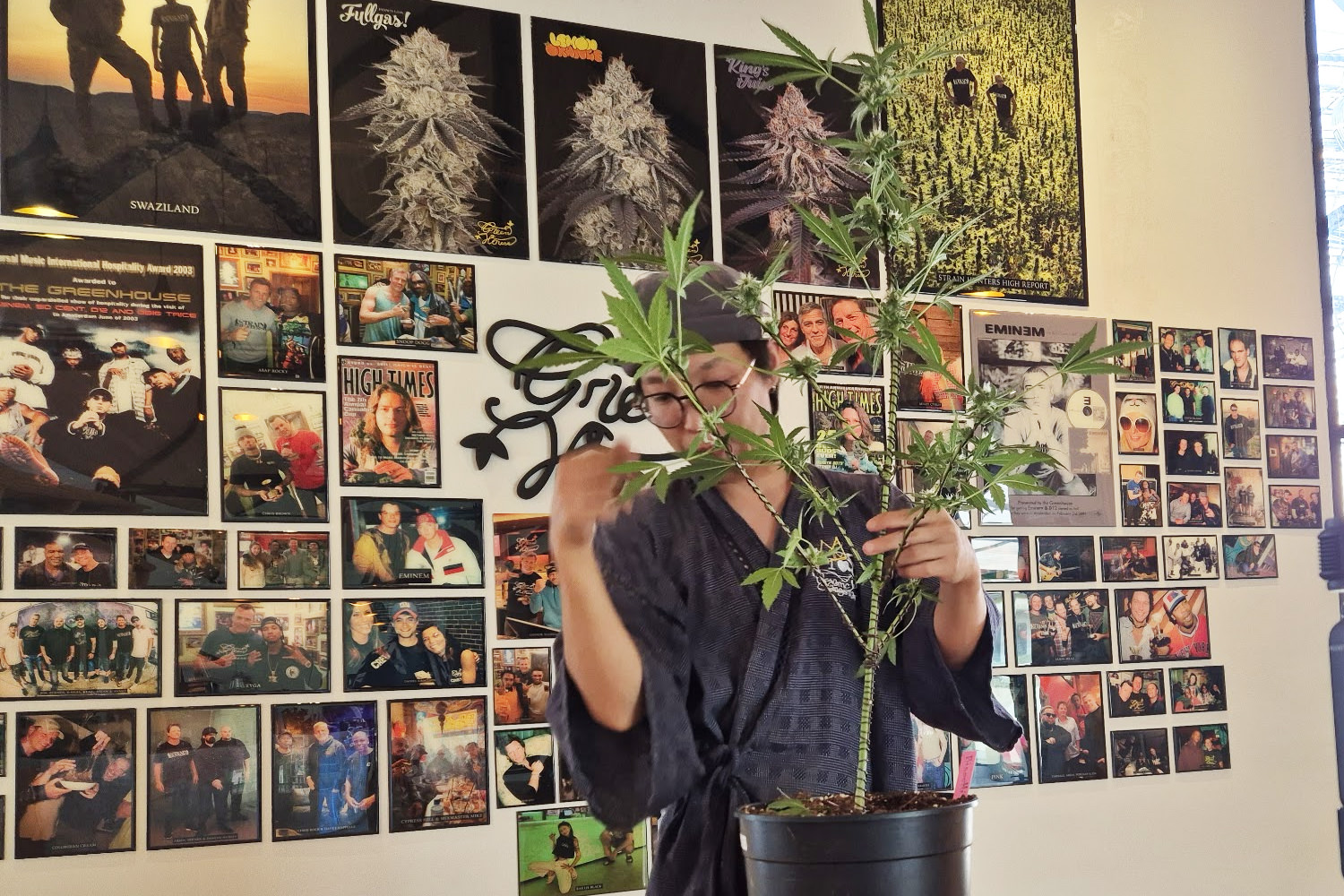
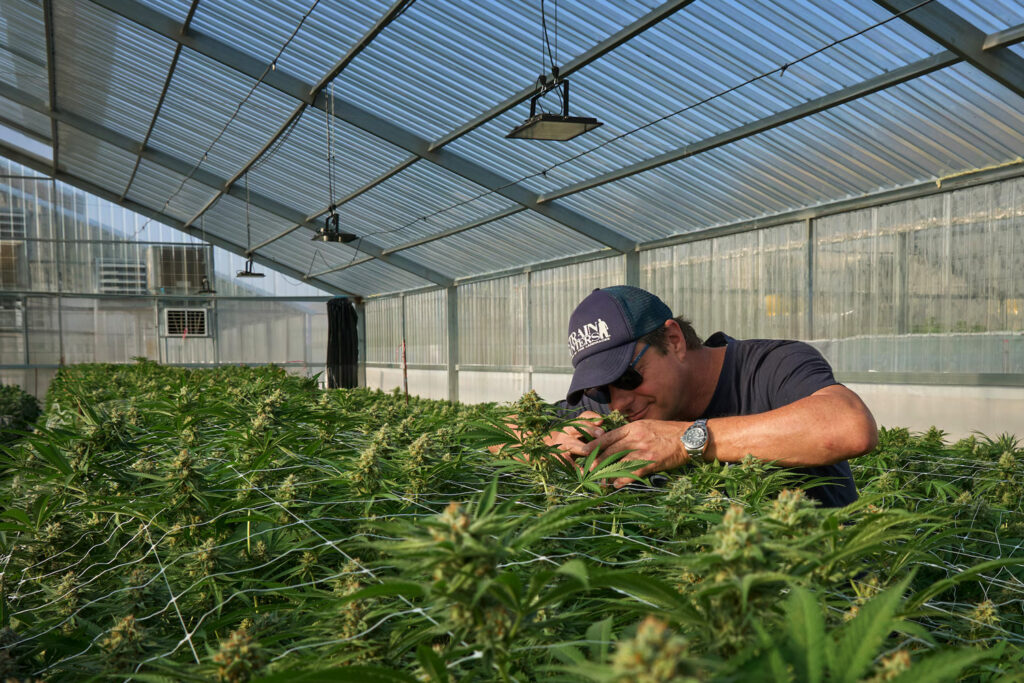
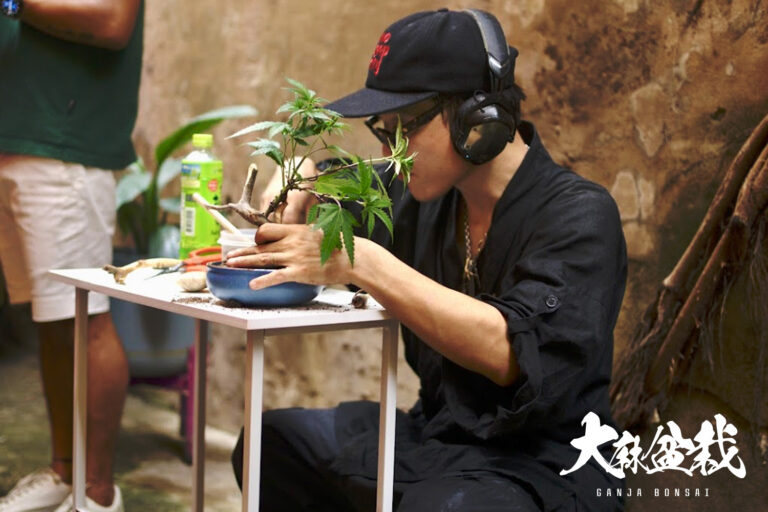
For this piece, Green House provided an autoflowering seedling. It had already entered the flowering stage, which meant the stems were starting to harden throughout, and I was not sure whether I would be able to create clean curves. Still, there was nothing to do but work carefully. The plant stood around 70 cm tall — the largest seedling I had worked with up to that point.
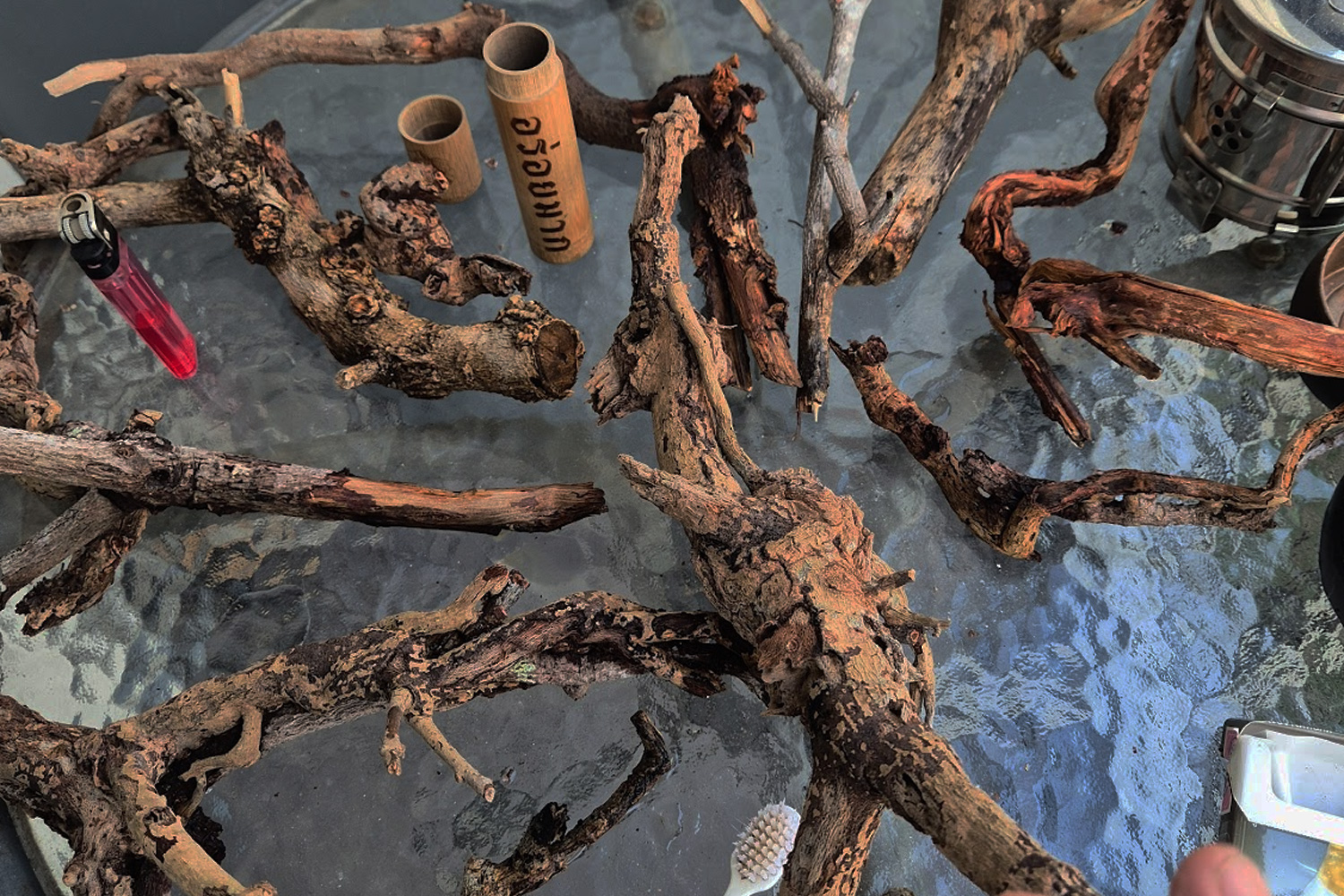
For this bonsai, I decided to combine two pieces of driftwood. Good driftwood is not easy to find in Bangkok, so I went all the way to Pattaya to collect it. Getting chased by stray dogs while searching for driftwood is something I have come to expect — but beautiful pieces often turn up in places that no one else bothers to look, so there is not much choice in the matter. Still, the time spent washing the wood and imagining the shape the bonsai might take is something I genuinely enjoy.
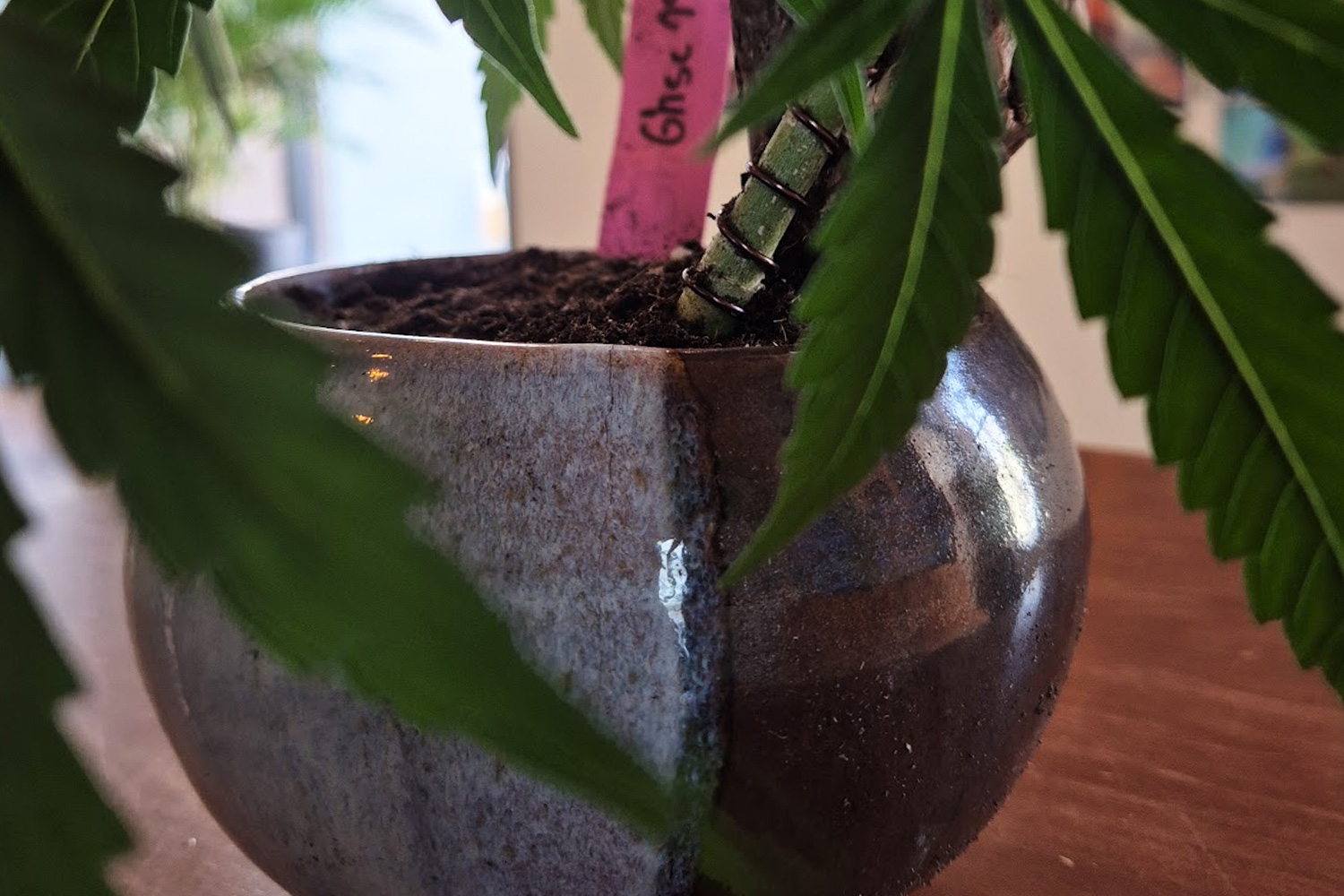
The pot is an old Japanese ceramic piece I found at a second-hand market, with a hole drilled through the base to use as a planter. It was made somewhere between the 1980s and 2000s — a handmade mingei-style piece fired with an iron glaze, with a surface that shifts from black into grey in a way that feels almost like a landscape. Because the glaze flows naturally during firing, no two pieces come out the same. That one-of-a-kind quality is part of what makes it feel right for this work.
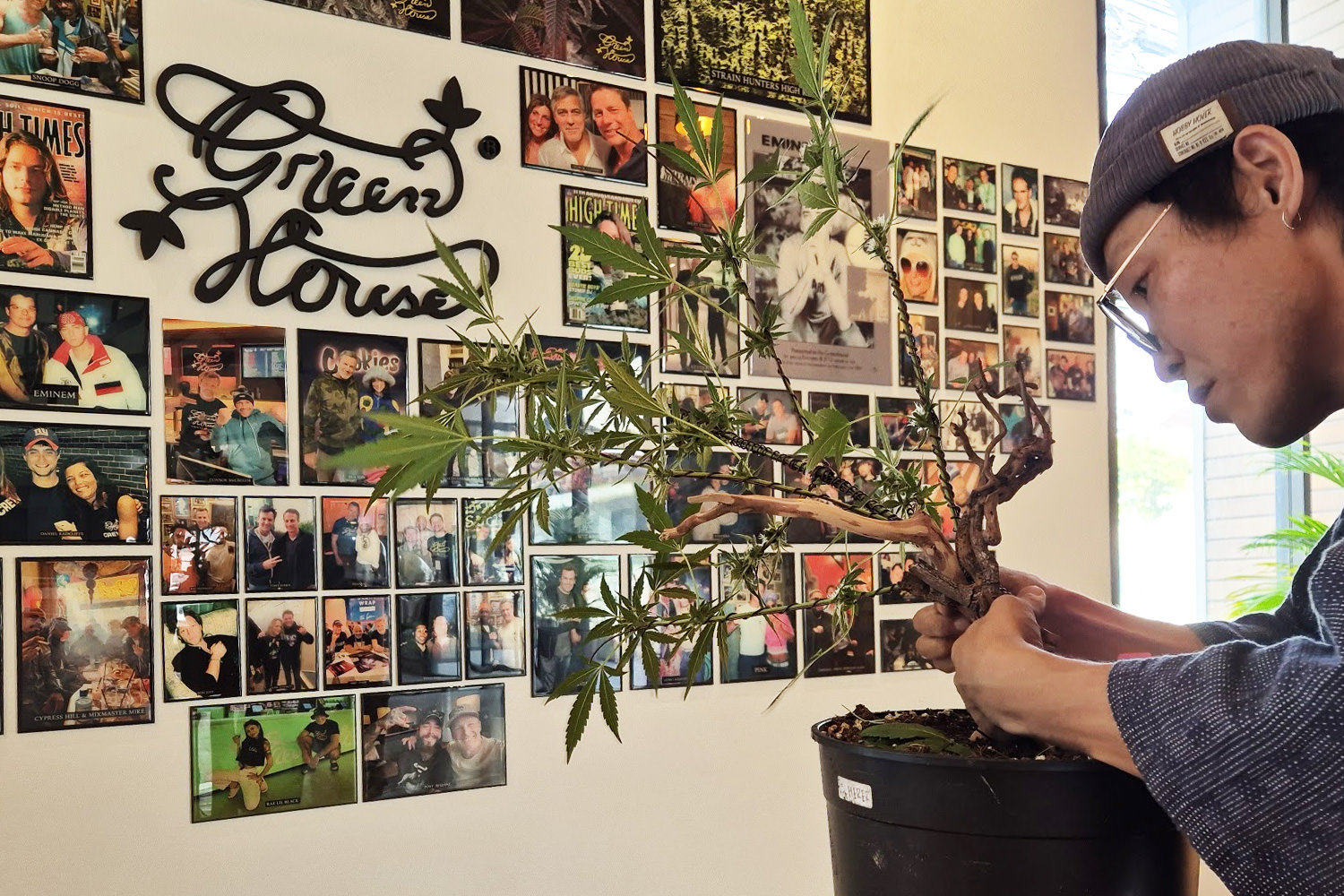
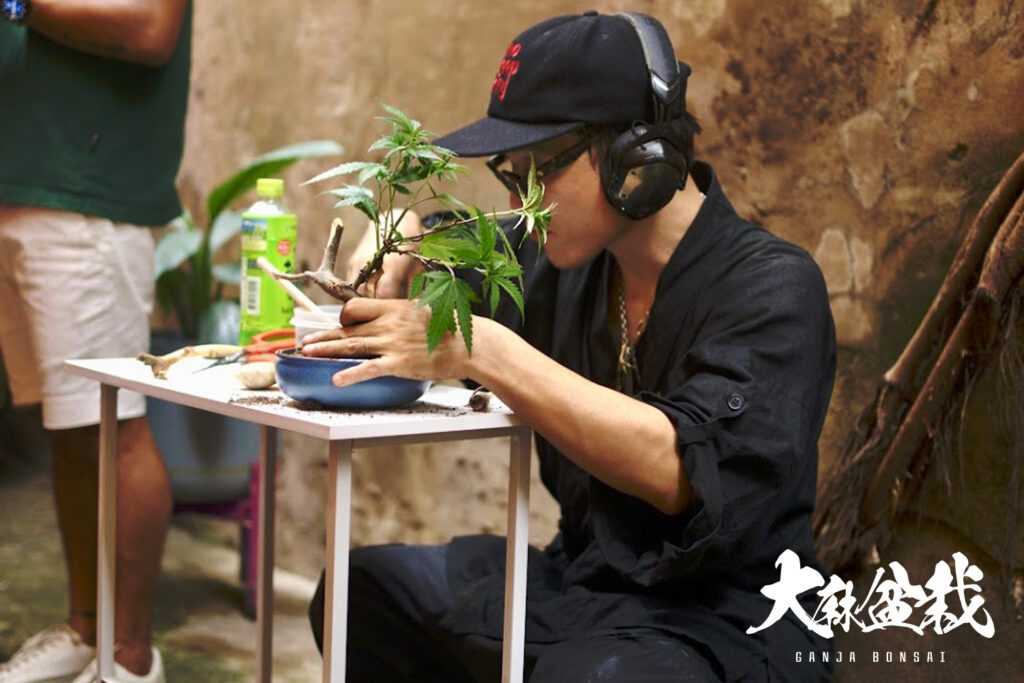
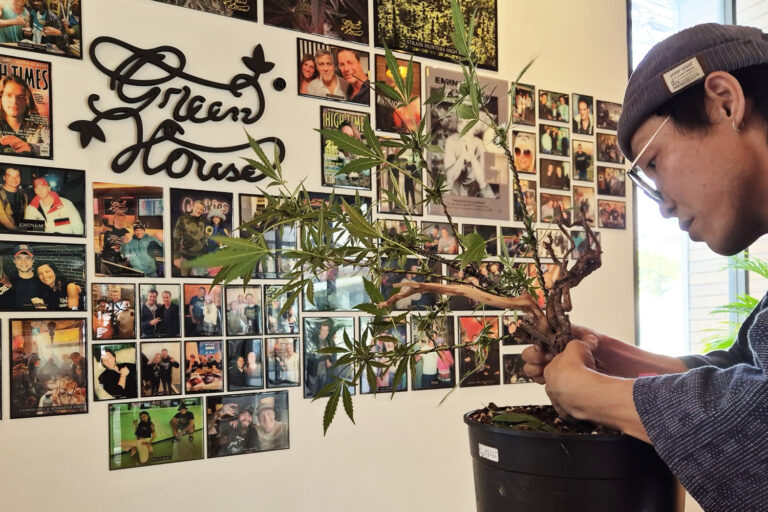
Working with the plant, I found that the lower trunk near the roots had already become quite stiff. A single wire would have risked snapping it, so I wrapped three wires together around that section. As expected, there was a small cracking sound when I bent the trunk to attach it to the wood — but it held. That section is the one point of failure that would kill the entire plant if something goes wrong, so I moved through it slowly.
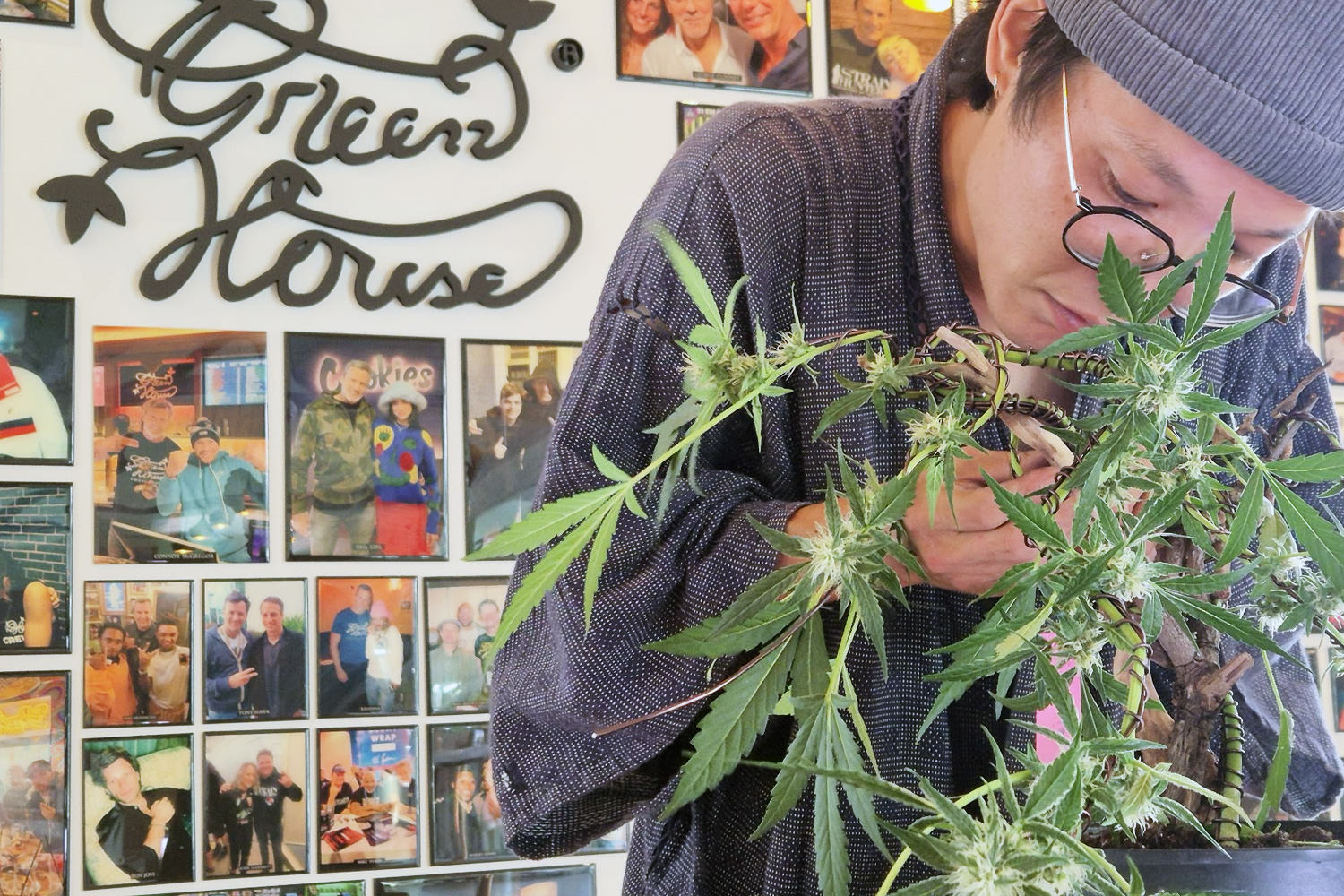
The upper branches were the opposite — soft enough to snap without much resistance, which brings its own difficulty. It took around 30 minutes to wrap the wires carefully through that section. After that, it was a matter of shaping: pressing the plant close to the driftwood, keeping everything compact, working toward the bonsai form. Cutting branches that are growing strongly always stings a little, but leaving too many only disrupts the balance.
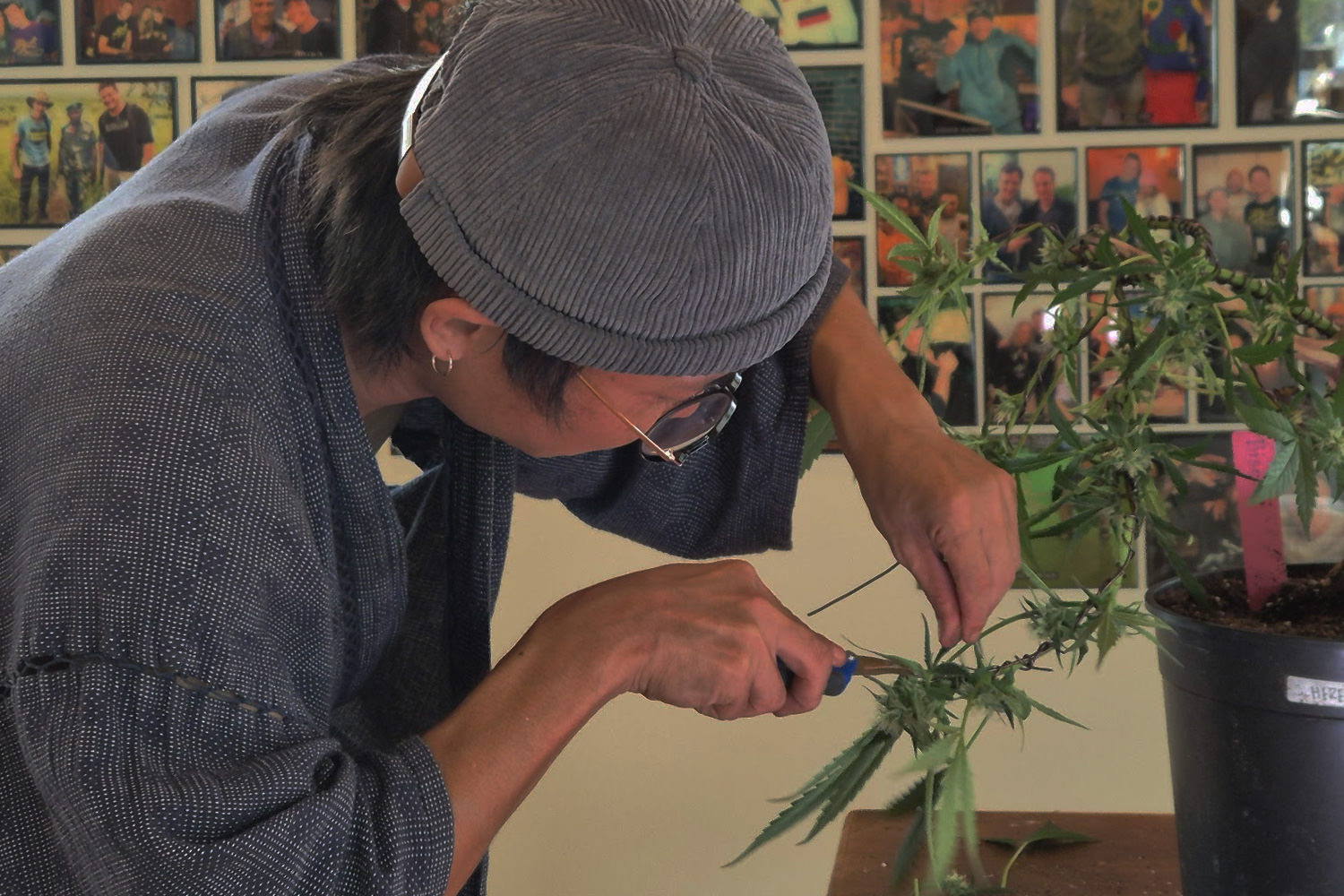
When wire changes the direction of a branch, some leaves end up facing the wrong way — and where the buds are hidden behind them, I cut those leaves back. Then it is just a matter of reading the overall shape and removing anything that interrupts the line.
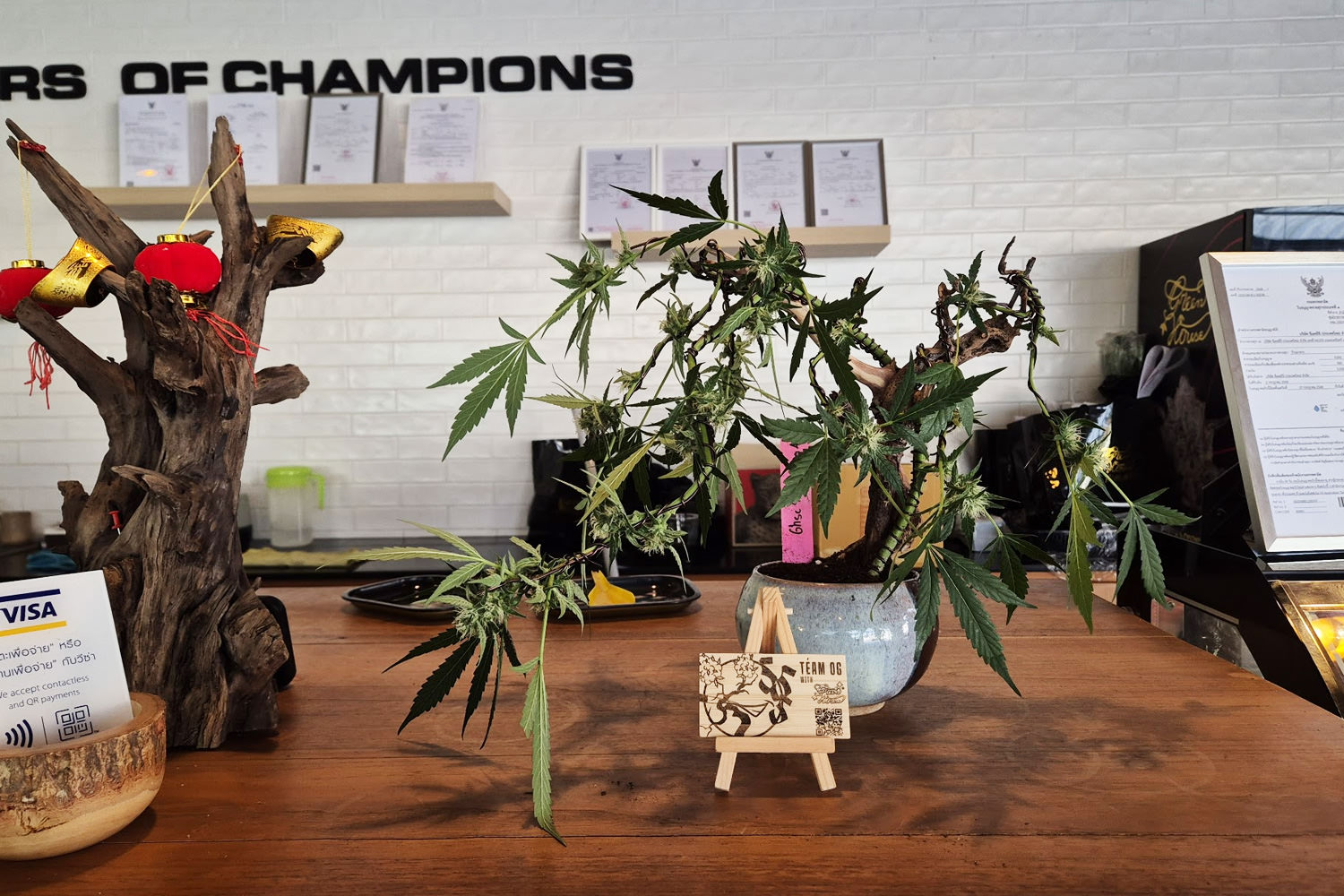
One of the two pieces of driftwood still had its bark; the other had been stripped clean. Working between those two textures, I arranged the branches so that the overall shape would hold together across both pieces. The plant is still around week four of flowering, so as the buds develop over the coming weeks, the piece should take on a different character entirely.
Updates on the bonsai are posted to the ganja bonsai Instagram account — follow along if you want to see how it progresses.
The piece will be on display at Green House Nuanchan through late April. If you are visiting Bangkok around that time and have an interest in cannabis or bonsai, it is worth stopping by. There is also a QR code at the store that links to more information about the bonsai project — scan it if you are curious.
Green House Nuanchan — Store Information
Green House Nuanchan
Bangkok / Nuanchan
- 46 202 Nuanchan Rd, Nuan Chan, Bueng Kum, Bangkok 10230
- Hours: 9:00 AM – 11:30 PM
Note: This article is based on content originally published on the Japanese edition of OG Times .