How I Started Making Ganja Bonsai — From Organic Cannabis Farmer to Bonsai Gallery
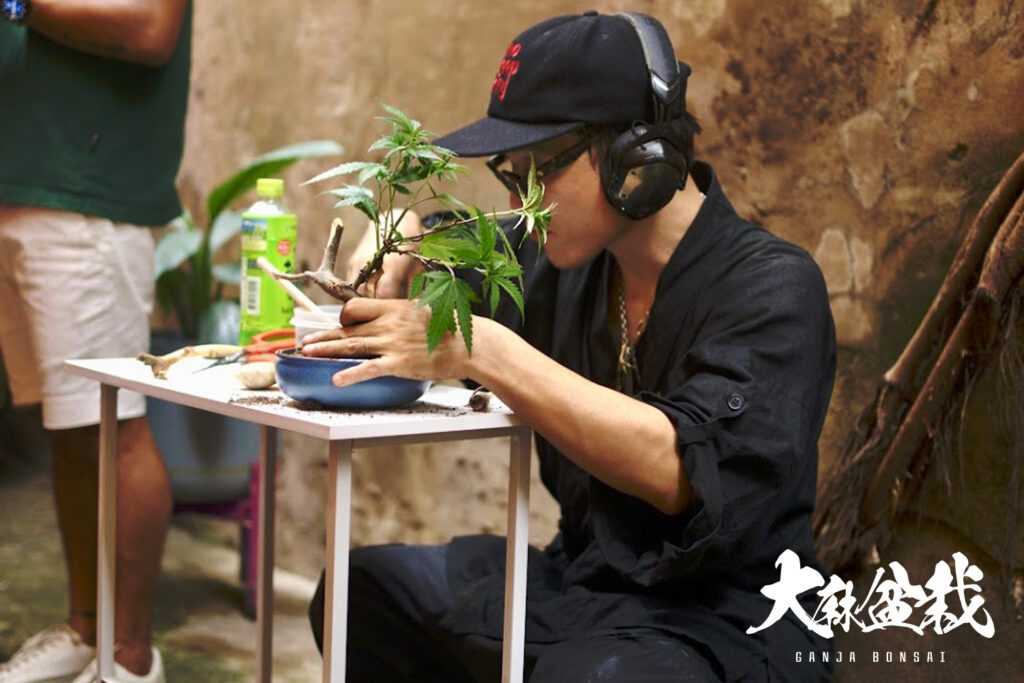
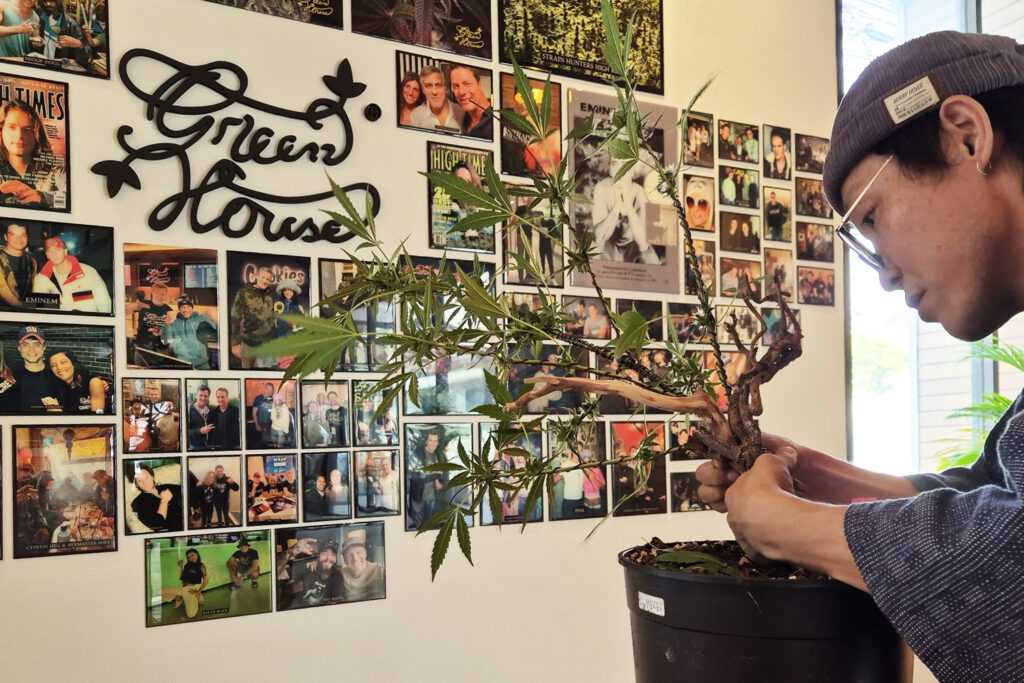
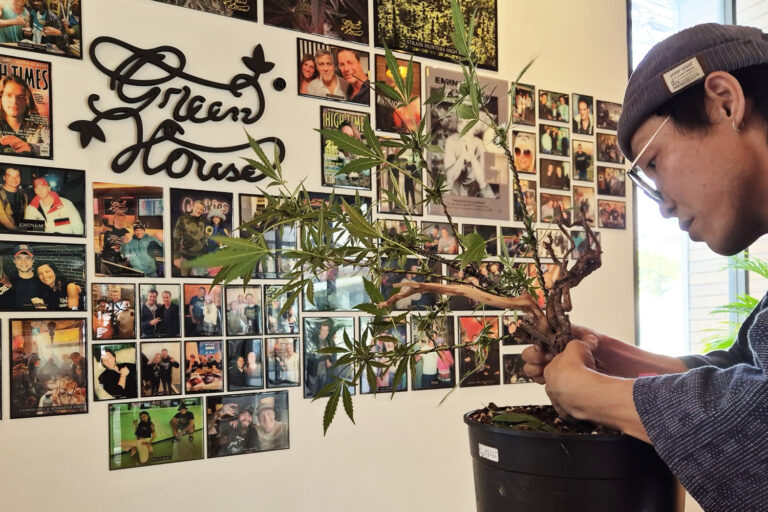
In December 2025, I opened the Ganja Bonsai Gallery in Bangkok, between the Thong Lo and Ekkamai areas. More people have been finding out about me through the bonsai lately, so I wanted to write down the full story — from the moment I first took the idea seriously, to how the gallery came to exist.
1: Where the Idea Came From
About two years ago, I was living in Pattaya. I had reached a point where I had to accept that continuing as a cannabis farmer was not going to work long-term, and I was trying different things, not sure what direction to take. One evening, I was hanging out with a close friend — a 3D modeller who lived near me — and he said, almost without thinking: “You should do something more Japanese.”
It was a casual remark over a smoke. But it stayed with me.
It was about a 20-minute walk from his place back to mine. The right kind of distance for turning something over in your head.
I first went to New York when I was 18, and for years after that — well into my early thirties — I was convinced I was going to become a New Yorker. When I was working as a buyer for sneakers and clothing, I was running around stores with New York friends on buying trips, spending time with staff who had grown up there, living something that felt like a New York life. I loved the city from the moment I arrived, and surrounded by all of it, I had told myself I was part of it. But the Japanese part of me never went away. No matter how hard I tried, New York had a way of reminding me that I was Japanese.
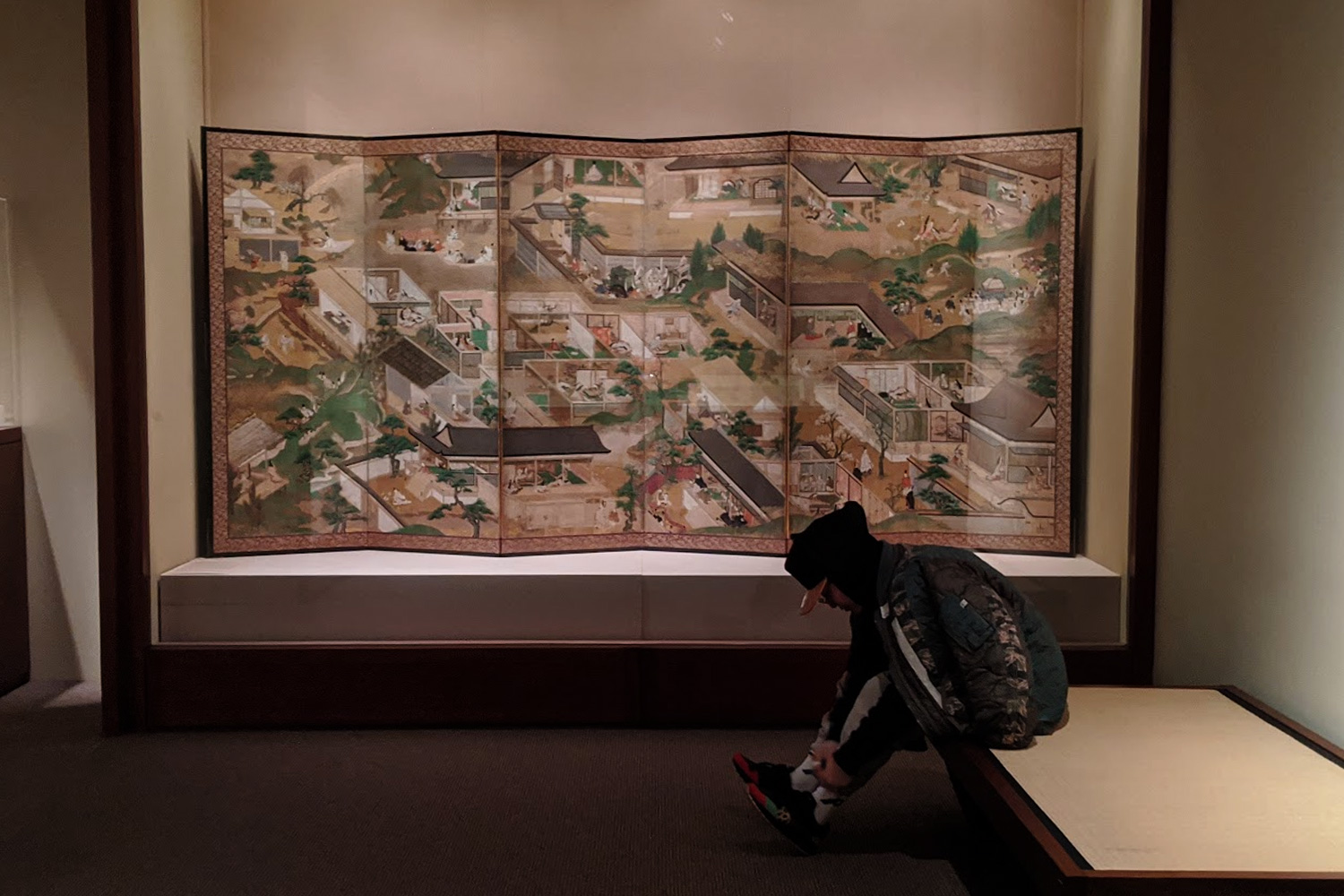
I think that Japanese sensibility is something anyone who grows up in Japan carries with them, but it gets shaped by what they experience when they are young. In my case, I spent my teenage years practicing budo — kendo and iaido — and those years taught me a great deal. That background stayed with me. I found myself regularly drawn to things from the Edo period: stories, swords, hanging scrolls. When I was living in New York and interested in art, I visited the Japanese galleries at the Metropolitan Museum of Art often. The aesthetic of that era had something the rest of the collection did not — a kind of beauty that felt entirely its own.
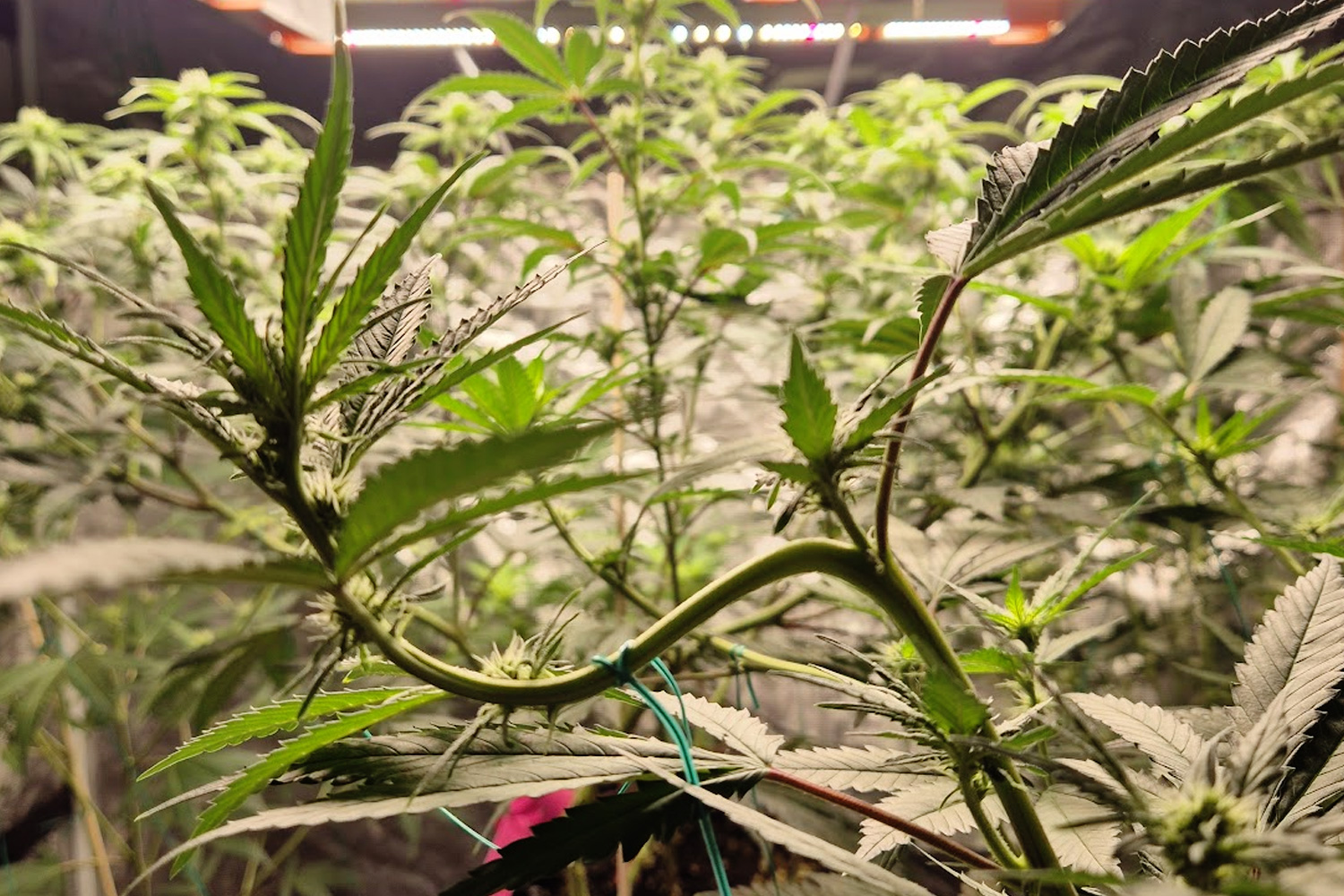
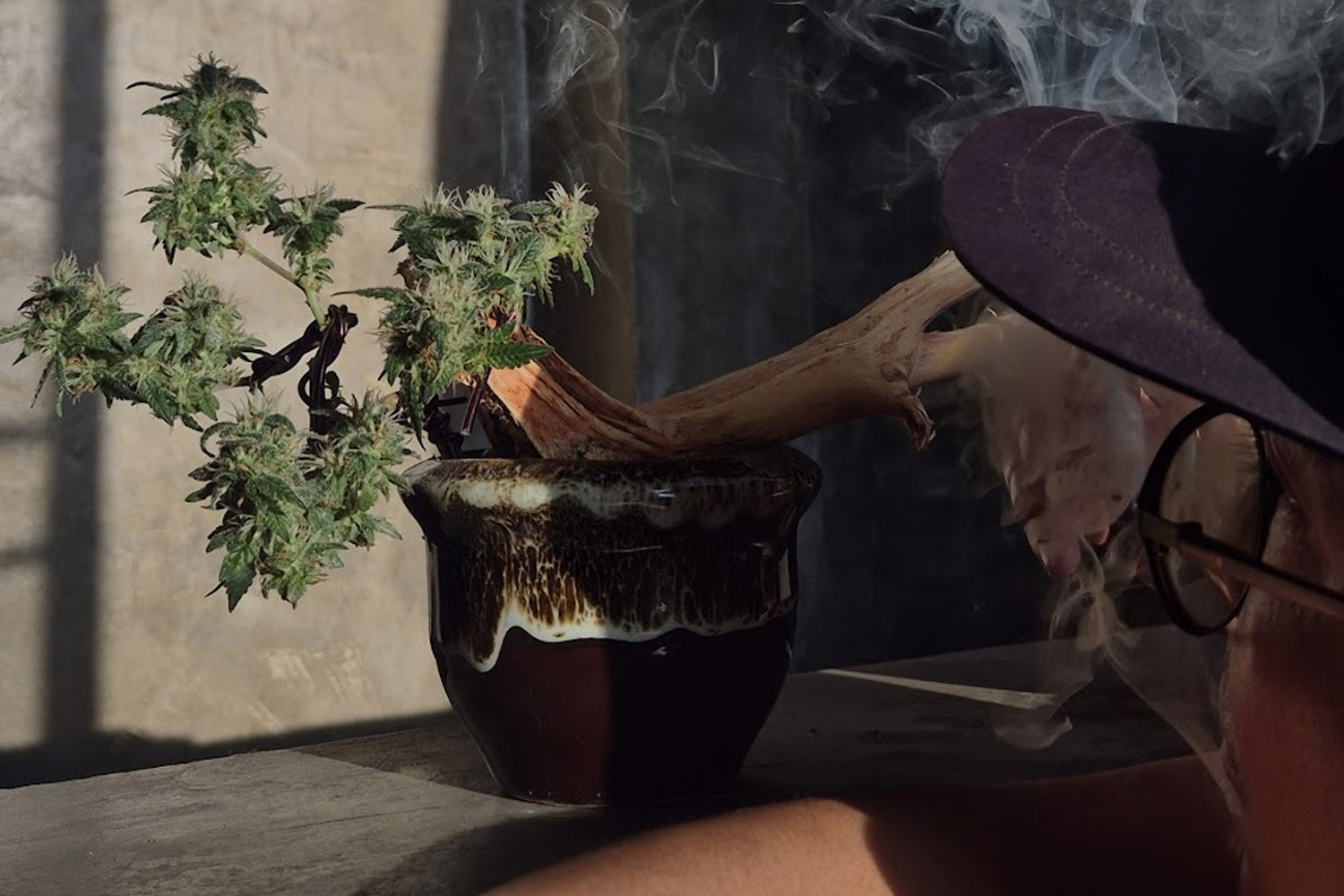
I was thinking about all of this on the walk home. Then I got back and looked at the cannabis seedlings I was growing indoors. Something about the shape of one of them made me think: that looks like a bonsai.
The technique that creates that shape is called Low Stress Training — LST. By bending the main stem outward, you allow light to reach the lower branches more evenly, which helps the whole plant flower consistently. It is a widely used cultivation method. But as anyone looking at the result can see, cannabis does not develop the thick, mature trunk that makes traditional bonsai feel powerful. The form was there, but the presence was missing.
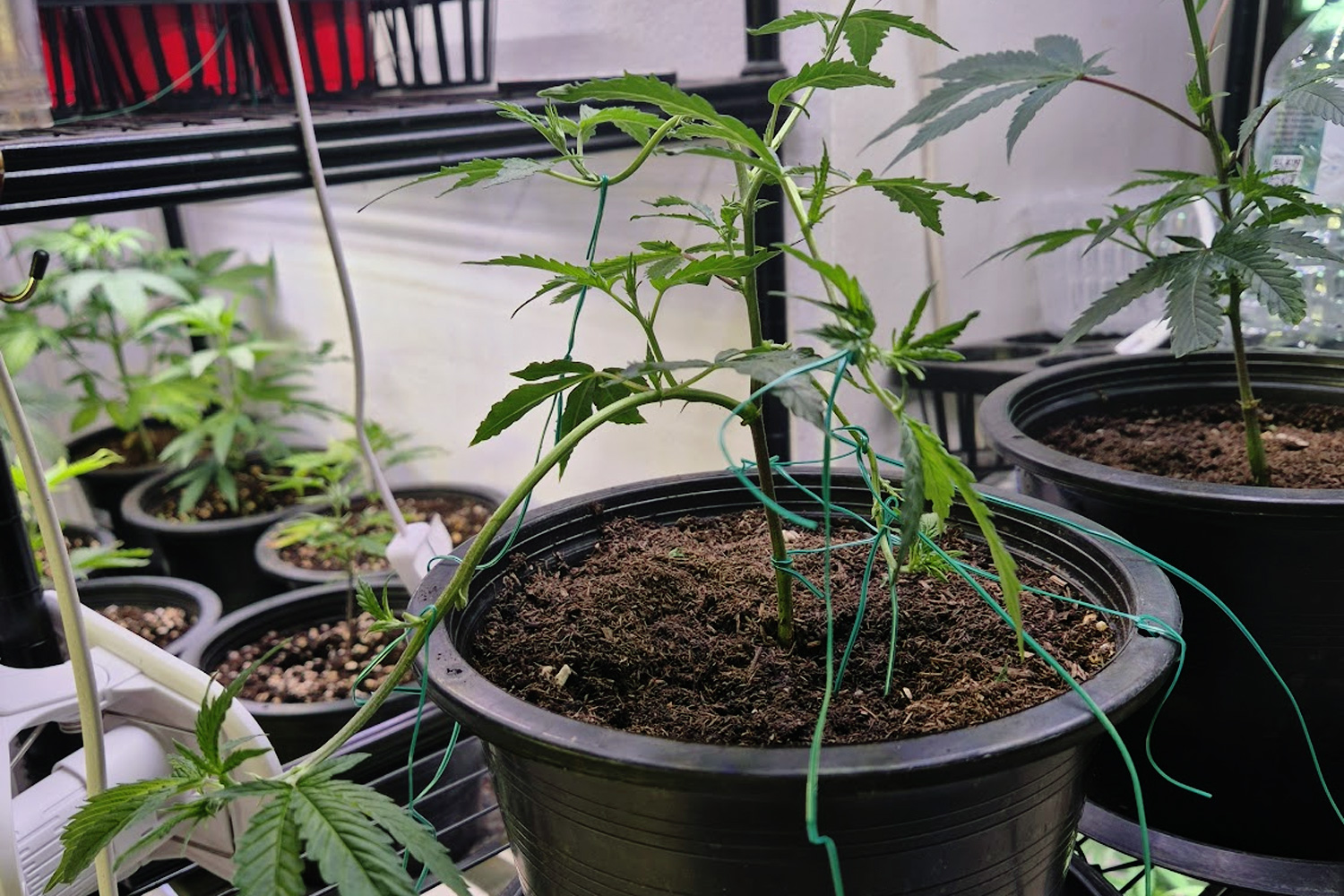
I had seen a few examples of cannabis trained into bonsai shapes before, and they confirmed what I had imagined — not quite there. I tried it myself and felt the same way. But when I showed that half-finished attempt to friends from outside Japan, the reaction surprised me. “Cool. Nice.” More often than I expected. That response made something click. If people were responding positively to something this unfinished, adding the Japanese sensibility I actually had inside me might produce something worth making. I decided to take it seriously.
No Money — So Only Free Materials
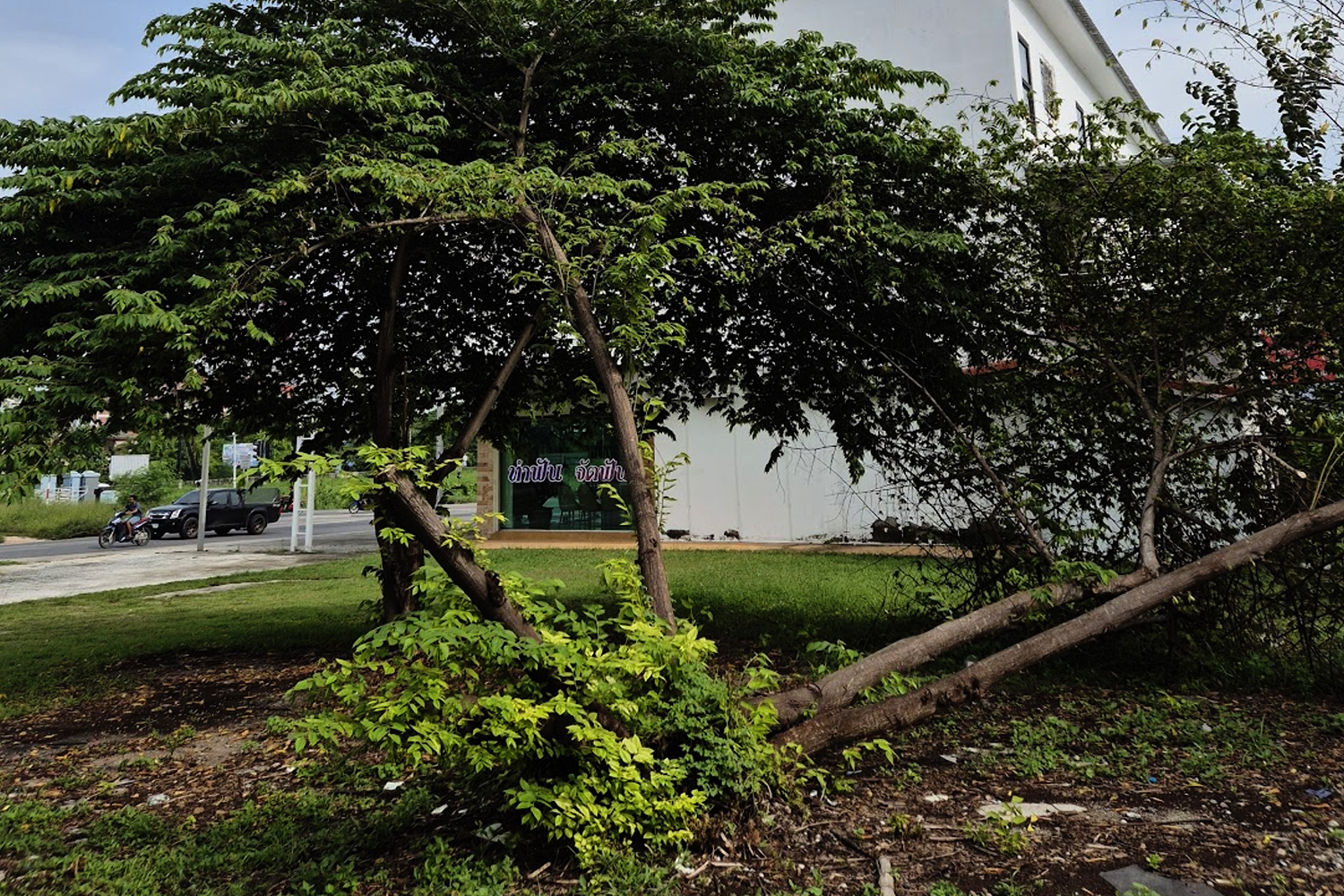
At that point I had almost no money. I was trying several different things at once, and the electricity costs for growing cannabis were hitting hard enough that I had nearly decided to stop cultivating entirely. But with the bonsai idea, I could not let it go. I started taking morning walks near my place, hoping something would come to me.
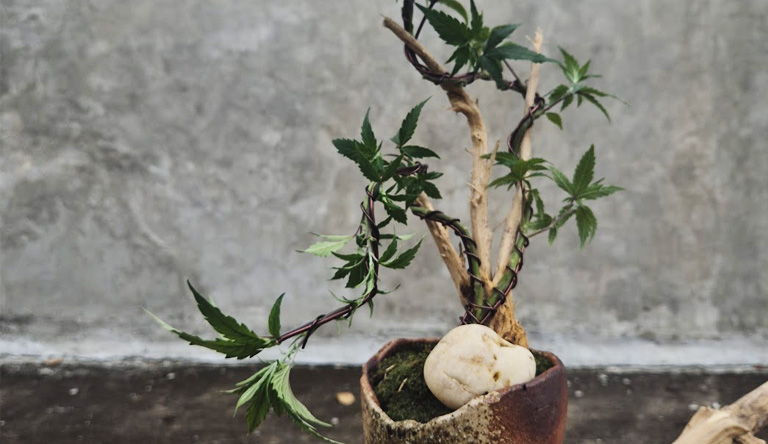
One morning I stopped in front of a tree that had been struck by lightning and split cleanly down the middle. I stood there for a few seconds. It was beautiful. Looking down, I noticed a branch on the ground nearby, exactly the right size, with a shape that seemed to already have something in it. I brought it home.
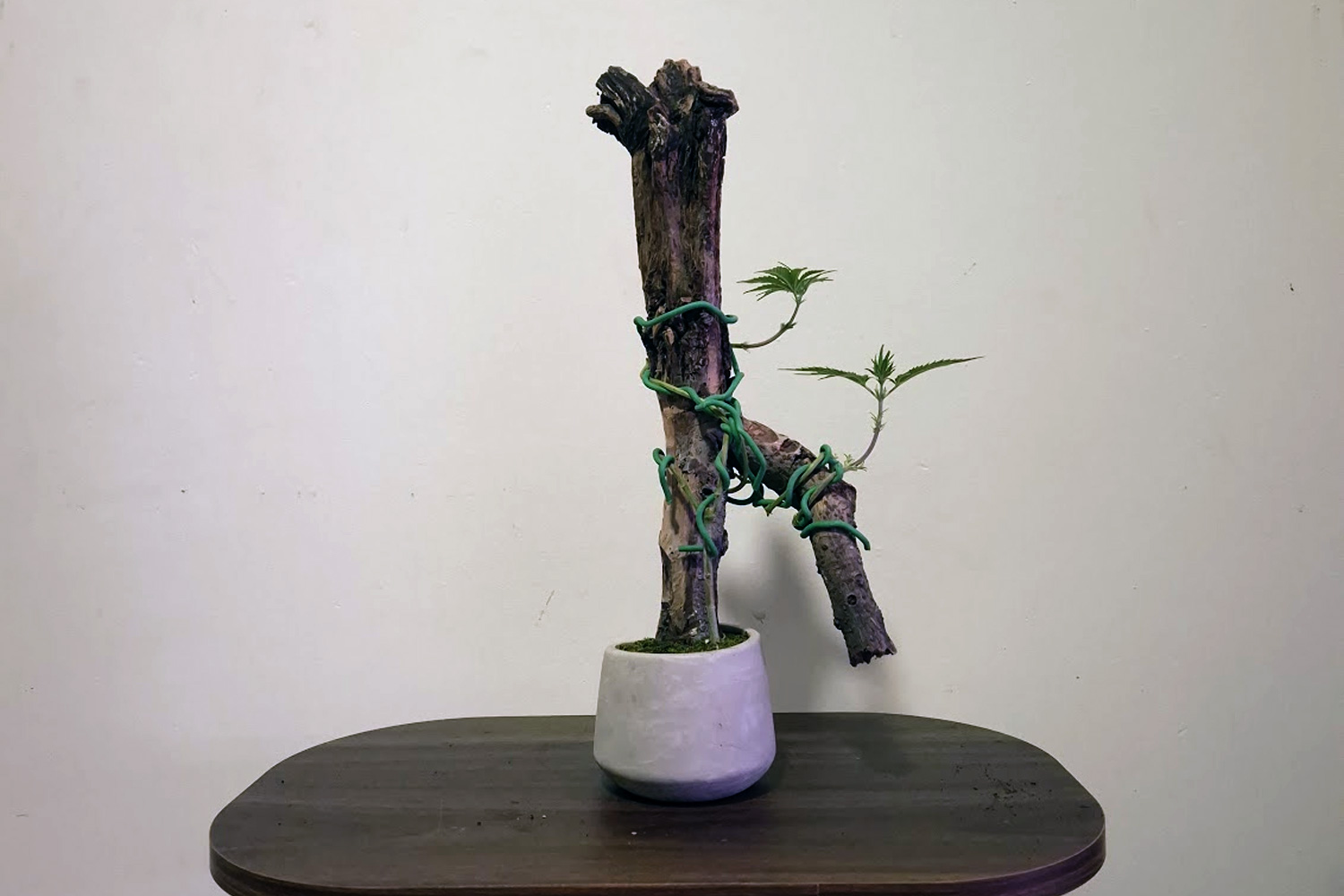
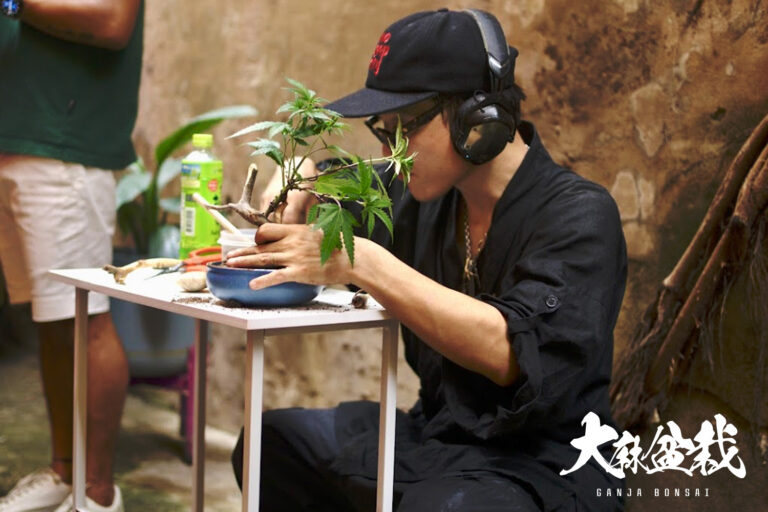
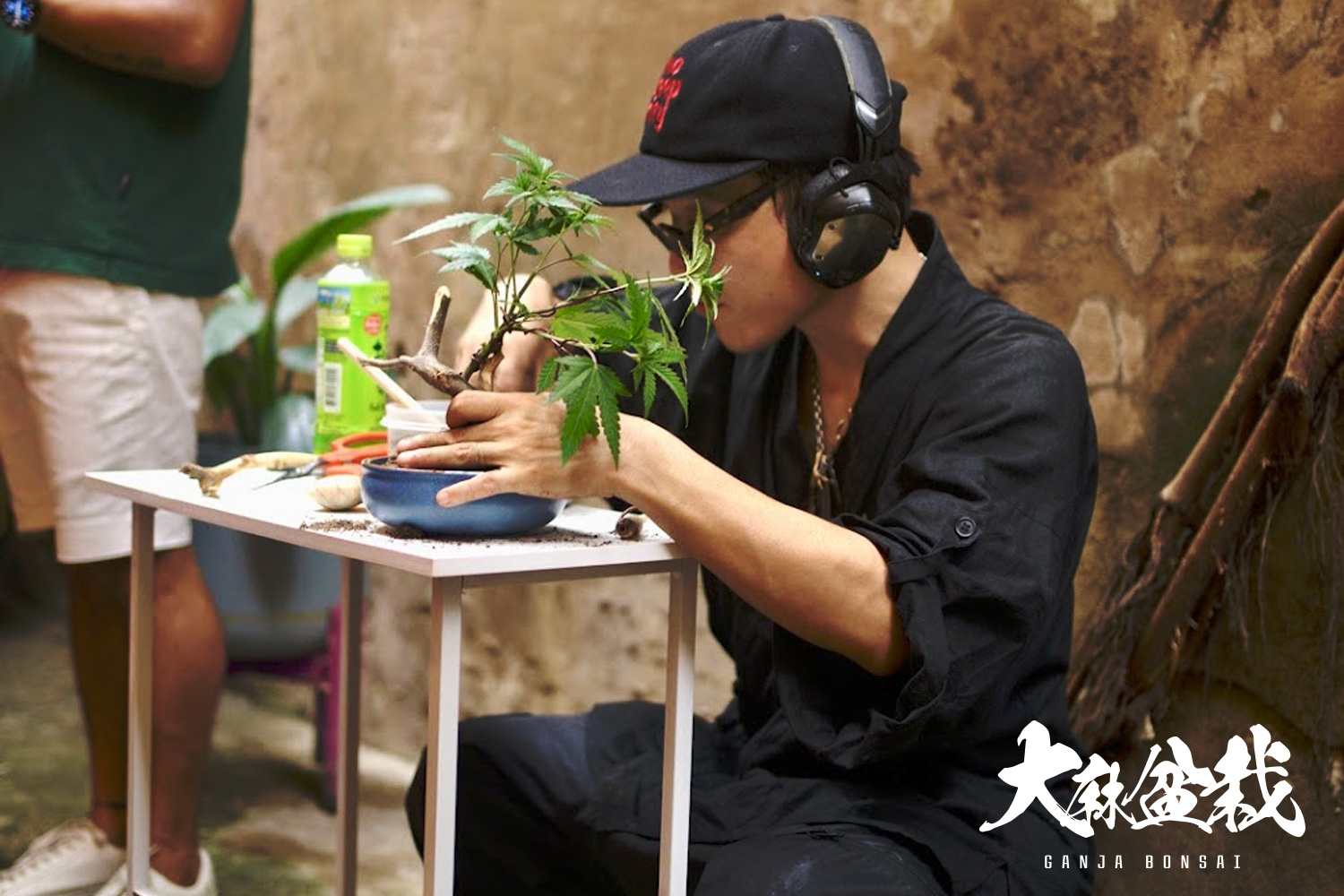
I stripped the bark, cut it to size, washed it, and made the first ganja bonsai I had imagined. Looking back at it now, the balance was off, I used green garden wire that is too visible, and the whole thing is frankly embarrassing. But the reaction from people who saw it was strong. Finding that piece of wood was one of the most important discoveries I made.
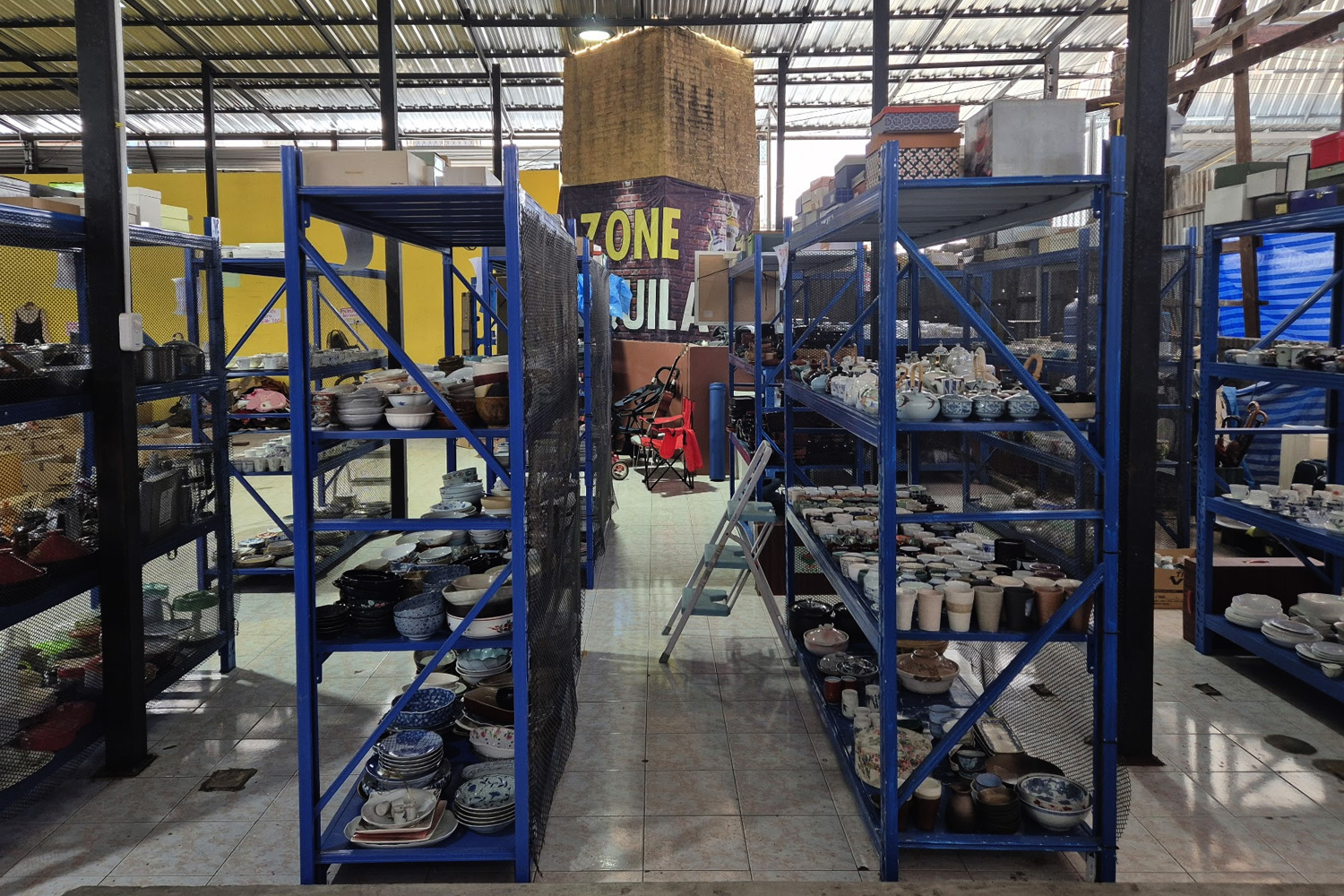
The pot was another turning point. I had been using standard bonsai pots from a shop, but a Japanese contact I had known since my New York days — someone who runs a business dealing in Japanese recycled goods in Pattaya — introduced me to what he had in stock. I was not prepared for what I found. Old Japanese ceramics, priced far below what they were worth, each one handmade, each one different. I used one as a bonsai pot and the result was better than I had pictured. And occasionally, something genuinely rare would turn up priced as if no one had noticed — a handmade ceramic from a known maker, sitting there for almost nothing.
The materials were in place. All that remained was whether my money would run out before I made something worth showing.
A Year of Struggling to Make It Work
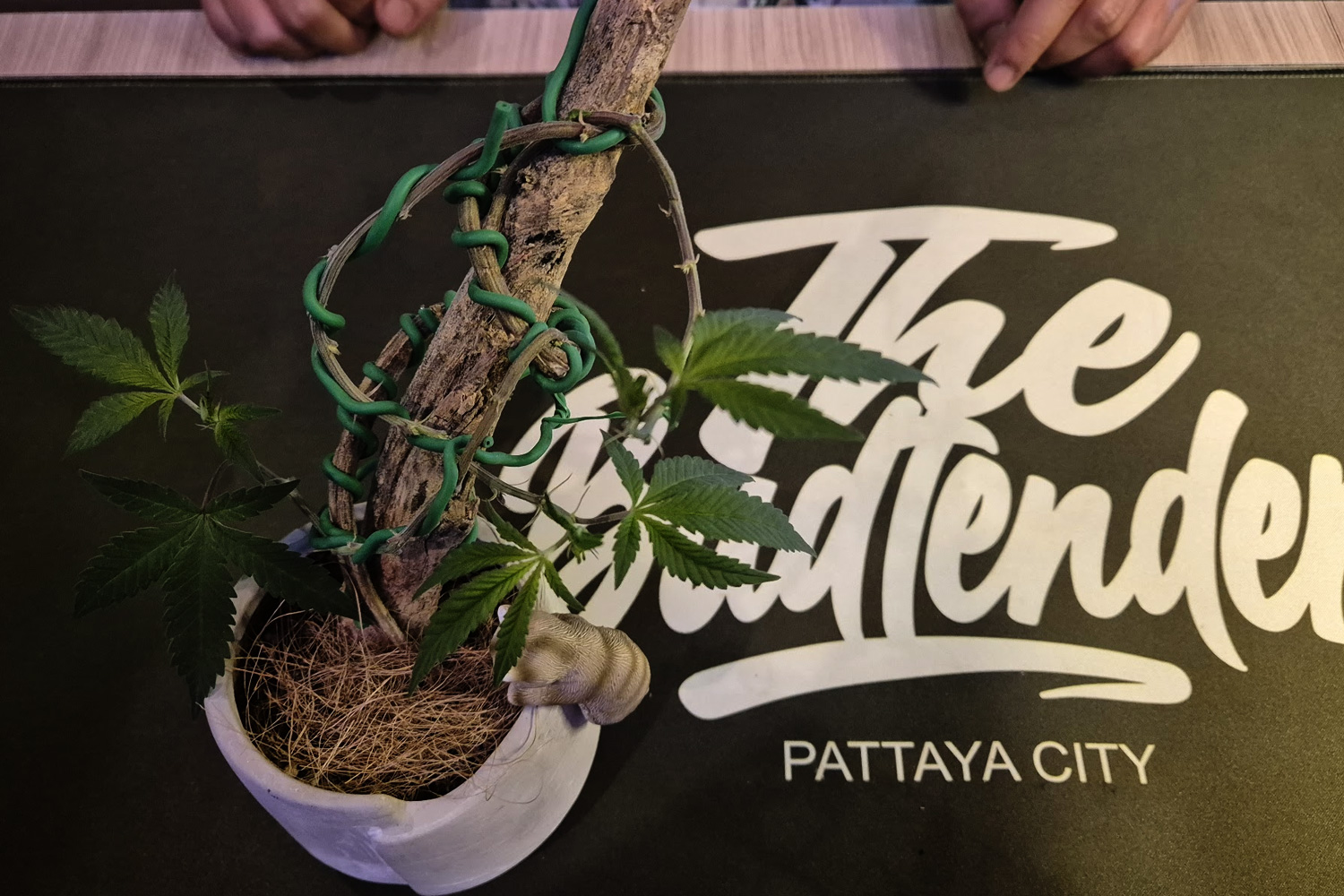
Keeping a ganja bonsai alive through to harvest was much harder than I had anticipated.
The stress placed on a seedling during shaping, combined with cutting large amounts of foliage to achieve the right form, made it difficult for the plant to photosynthesize properly. Problems came up constantly. Larger pieces required more time. As a home grower, the number of clones I could work with was limited, and each one took at least two months to develop — so a single failure cost a great deal.
The financial side was punishing. Electricity alone was running close to 50,000 yen a month, which over a year added up to around 600,000 yen. Add in supplies, pots, and materials, and the total was well over a million yen — with zero harvest to show for it. Plants kept dying. For months I was cutting back on food to cover the electricity. I came close to stopping more than once. But I could not bring myself to quit.
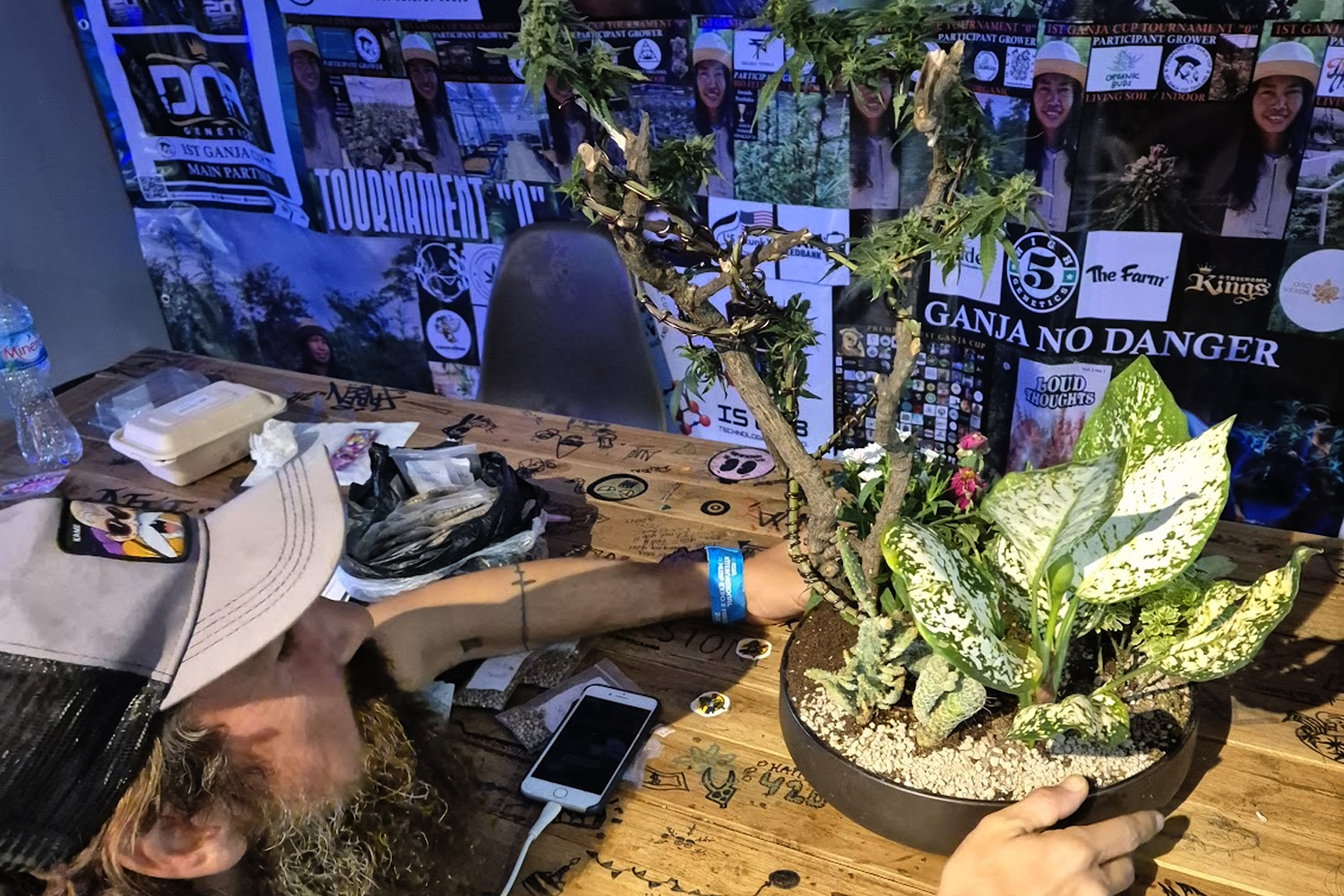
After about a year, the quality of the work started to reach a level I felt good about. My posts on Instagram began reaching people in the Thai cannabis scene. Around that time, Prempavee — a cannabis farmer who has appeared on Strain Hunters — reached out. He was planning a series of cannabis events called Ganja Cup, to be held in various cities over the coming years, and asked if I would exhibit at the first Bangkok edition. I was already planning to move from Pattaya to Bangkok, so I said yes.
The response at that event was far beyond what I had expected. After a year of difficult work, it felt like confirmation that continuing had been right. Exhibitions at Phuket Cannabis Cup and High Land followed, and the connections kept building — though behind the scenes, things were becoming unsustainable in a way I had not told anyone.
2: From the Edge of Quitting to Something Unexpected
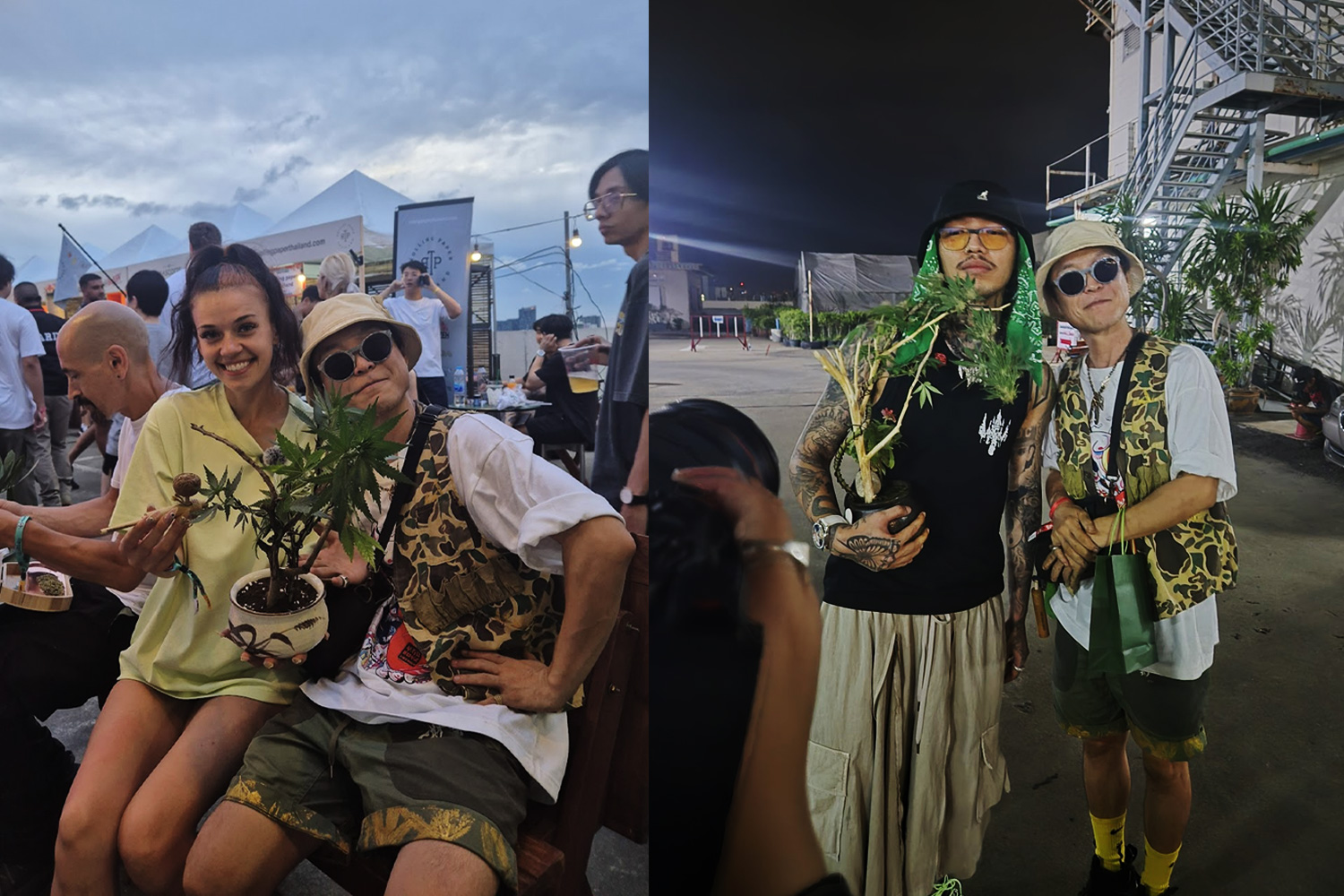
By the time the High Land exhibition arrived, I was close to a point where continuing was no longer realistic. The money and time needed to keep going were gone. I had quietly accepted that this might be the last time I exhibited. At the event itself, things felt alive — connecting with KOARA, a well-known cannabis figure internationally, giving a piece to Youngohm, a Thai rapper whose music I genuinely love, hearing from people I had never met before. None of that matched the reality waiting for me afterward.
When I thought honestly about my situation, the only answer I had was to stop, at least for a while. I had reached my limit.
Saying It Out Loud Changed Everything
After High Land, I was in the middle of thinking seriously about what came next when I received a message from someone I will call P — a cannabis enthusiast originally from Dubai who was considering moving to Thailand. He asked if he could come and see the bonsai at my place. I usually would not invite a stranger home, but since I was already thinking about stopping, I wanted as many people as possible to see the work while it still existed. I said yes.
He seemed a bit reserved at first, but when he saw the bonsai his reaction was immediate and genuine. I was glad, but knowing I might be stopping made it hard to take in fully. He noticed something was off and asked what was going on. I told him everything — the financial reality, the near-decision to stop. He was quiet for a moment. Then he said he was in a similar position himself: he had come to Thailand as a last attempt to make something work in the cannabis business.
“We’re kind of the same, aren’t we.” We both looked down for a moment. To shift the mood, I asked him why he had wanted to see the bonsai in the first place. His answer: a close friend of his was about to open a cannabis dispensary in Bangkok and had asked if I could make a few pieces for it. I decided that was enough reason to at least meet the friend.
The Day I Decided to Open the Gallery
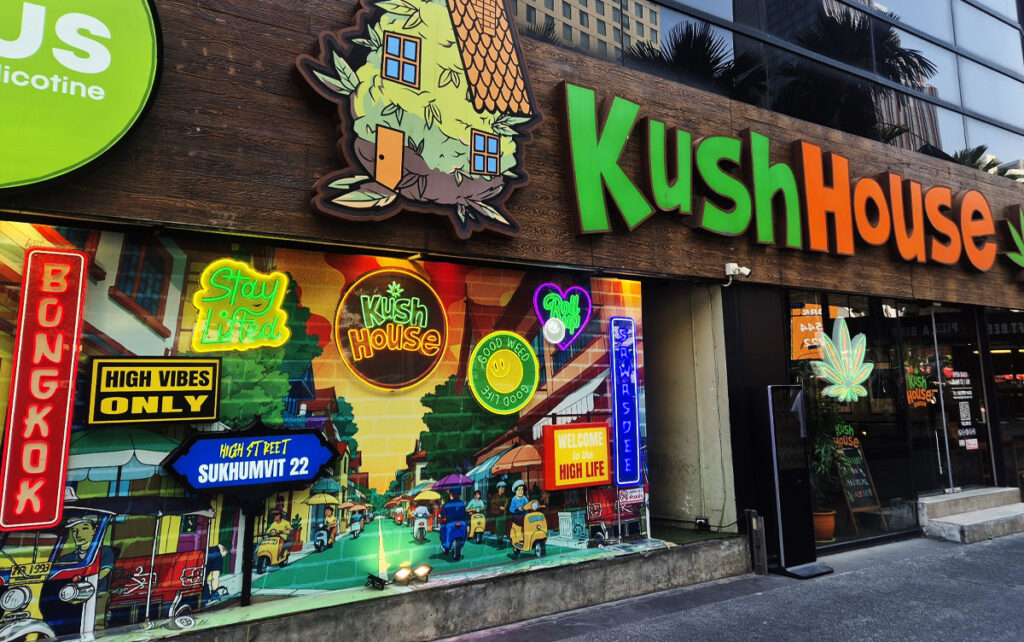
A few days later I met the team P had introduced me to: E, who led the group and was from Hong Kong, U from China, and J from South Korea. They had been friends since school. E’s long-held goal was to run a cannabis shop, and they were planning to open what would be one of the largest-floor-area dispensaries in Bangkok, timed for the high season. They had moved to Thailand a few months earlier. All three had spent years living abroad and running their own businesses — their plan was thought through.
I told them where things stood with me, honestly. E’s response came quickly: “Then let us cover the costs — and we’ll build a ganja bonsai gallery on the second floor of our dispensary.”
My first thought was that it was a joke, something said in the moment. But every time we met after that, the gallery came up again. I started to wonder whether this was some kind of last opportunity being handed to me. Once I accepted that they were serious, it did not take long to make up my mind.
That is how the Ganja Bonsai Gallery came to exist.
Note: This article is based on content originally published on the Japanese edition of OG Times .