How Cannabis Works: Endocannabinoid System, CB1/CB2 Receptors, and THC vs CBD Explained
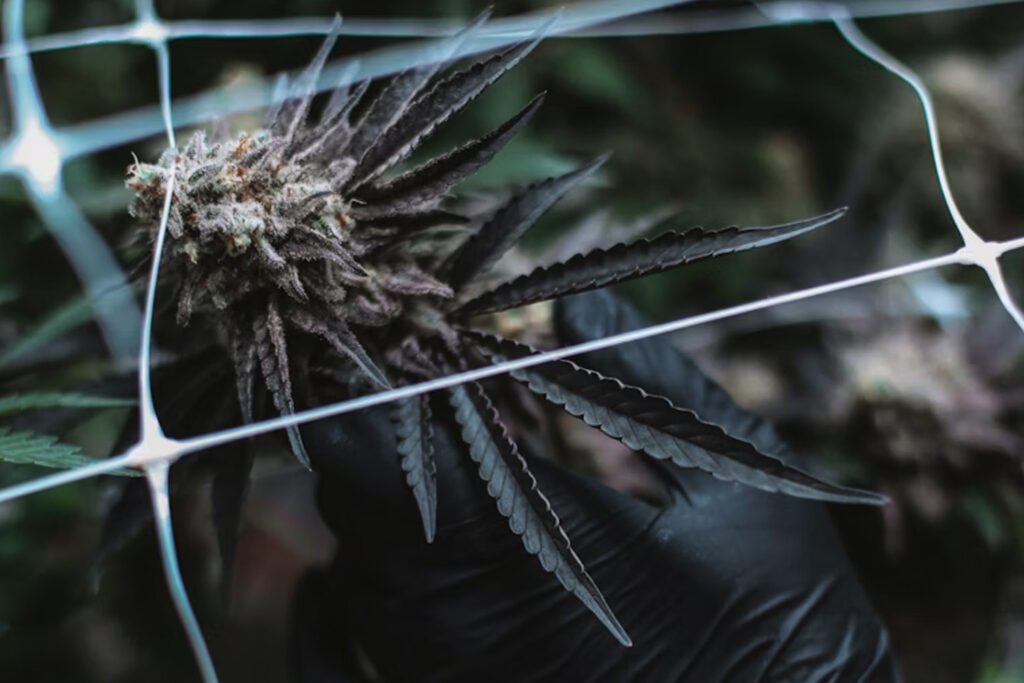

Cannabis effects are often described as relaxation, a high, or sleepiness. However, I have seen the same strain produce very different experiences. Because of this, subjective feeling alone is not enough to explain how cannabis works.
Cannabis is described as interacting with regulatory systems that already exist in the body. Cannabinoids influence receptors involved in neural and immune activity (U.S. National Library of Medicine). Understanding this structure helps separate sensation from mechanism.
1: Key Assumptions to Understand Before Learning How Cannabis Works
Before examining how cannabis works, it is necessary to clarify what we mean by “effect.” In my experience, labeling an outcome as simply “worked” or “did not work” hides important details.
Cannabis is explained as a substance that interacts with regulatory systems already present in the body. Because of this, differences in body condition, environment, and mental state can change how it is perceived (U.S. National Library of Medicine).
Starting from the assumption that variation exists is essential.
Why “It Just Works” Is Not Enough
Saying “it just works” does not explain the mechanism. I have seen vague interpretations lead to misunderstanding about strength and meaning.
THC is reported to bind primarily to CB1 receptors in the brain, influencing neural transmission (U.S. National Library of Medicine). Without this knowledge, stronger sensation can be misinterpreted as better, and weaker sensation as meaningless.
Understanding the structure allows a more objective interpretation.
Why I Felt the Need to Understand the Mechanism
My interest in mechanism began after experiencing different outcomes from the same amount. One day I felt calm. Another day my thoughts felt scattered.
The endocannabinoid system is involved in maintaining homeostasis and participates in neural and immune regulation (U.S. National Library of Medicine).
From this perspective, cannabis effects can be understood as interactions with an existing regulatory network. Learning the mechanism is not about promotion or rejection. It is about placing experience within a clear structure.
2: What Is the Endocannabinoid System?
The endocannabinoid system is a central concept for understanding how cannabis works. One key point is that the human body already contains mechanisms that respond to cannabinoids.
This system is described as consisting of endocannabinoids produced within the body, receptors that receive them, and enzymes that break them down (U.S. National Library of Medicine).
Cannabis affects the body not as an isolated external force, but by interacting with this existing regulatory network.
The Body’s Built-In Regulatory System
The endocannabinoid system is reported to be involved in neural activity, immune response, pain, appetite, and mood (U.S. National Library of Medicine).
From this perspective, changes described by users—such as relaxation or shifts in appetite—can be understood as the result of stimulation of an internal regulatory mechanism.
The body continuously works to maintain balance. The endocannabinoid system is described as one part of that regulatory structure.
Its Relationship With Homeostasis
The endocannabinoid system is explained as being involved in maintaining homeostasis, the process by which the body keeps internal conditions stable despite external change (U.S. National Library of Medicine).
Homeostasis refers to the body’s effort to prevent excessive imbalance in areas such as neural activity or immune response.
Cannabis compounds are understood as substances that can influence this existing network. Viewing the mechanism through the lens of regulation rather than stimulation provides a more structured way to interpret experience.
3: The Role of Cannabinoid Receptors
Cannabinoid receptors are a core part of the endocannabinoid system. THC and CBD are reported to influence neural transmission and immune response by binding to receptors in the body (U.S. National Library of Medicine).
Understanding where cannabinoids bind helps explain differences in mental and physical effects.
The Difference Between CB1 and CB2 Receptors
Two primary cannabinoid receptors are described: CB1 and CB2.
CB1 receptors are reported to be distributed mainly in the central nervous system, especially in the brain (U.S. National Library of Medicine). THC is described as having a strong tendency to bind to CB1 receptors.
CB2 receptors are reported to be located primarily in immune cells and peripheral tissues (U.S. National Library of Medicine).
The difference in receptor distribution forms the structural basis for different types of effects.
How Brain and Immune Functions Differ
In the brain, CB1 receptors are reported to regulate the release of neurotransmitters (U.S. National Library of Medicine). Because of this, changes in mood, perception, and cognition can occur when CB1 receptors are activated.
CB2 receptors are described as being involved in immune system regulation, including inflammatory response (U.S. National Library of Medicine).
From this structure, it is understood that the type and intensity of experience depend on which receptors are affected and to what degree.
4: Differences in How THC, CBD, and CBG Affect the Body
The major cannabinoids include THC, CBD, and CBG. Although they are derived from the same cannabis plant, their binding patterns and mechanisms differ (U.S. National Library of Medicine).
Because receptor interaction varies, the direction of effects also differs.
How THC Produces Psychoactive Effects
THC is reported to bind primarily to CB1 receptors (U.S. National Library of Medicine). CB1 receptors are distributed mainly in the brain.
Through this interaction, neural transmission is influenced, and changes in mood and perception can occur.
THC is described as having a property that directly affects neural activity. The intensity of experience varies depending on dose and individual condition.
Why CBD Is Described as Having a Modulatory Role
CBD is reported not to bind strongly or directly to CB1 receptors in the same way as THC (U.S. National Library of Medicine). Because of this, it does not produce the same psychoactive effects.
CBD is described as having the potential to moderate excessive neural excitation. Some reports indicate that CBD may act in a direction that reduces certain effects of THC (U.S. National Library of Medicine).
CBG is also being studied, and its interaction with receptors may differ. However, current clinical knowledge is not as extensive as for THC or CBD.
From this structure, differences are understood not as stronger or weaker, but as differences in direction of action.
5: What Happens When THC and CBD Are Used Together?
When THC and CBD are used together, the experience is described as not being a simple addition of their separate effects (U.S. National Library of Medicine).
Each compound interacts with the endocannabinoid system differently. Because of this, combined use can produce a distinct overall experience.
The Idea of Balancing “High” and “Calm”
THC acts primarily on CB1 receptors, which are associated with psychoactive changes. CBD does not bind strongly or directly to CB1 receptors in the same way (U.S. National Library of Medicine).
CBD is described as having the potential to moderate excessive neural activity. Reports indicate that CBD can act in a direction that reduces certain effects of THC (U.S. National Library of Medicine).
From this structure, combined use is often framed as a balance between stimulation and stabilization.
The Possibility of the Entourage Effect
The interaction of multiple cannabinoids and related compounds is referred to as the entourage effect.
This concept describes the possibility that combined compounds produce effects different from a single isolated component (U.S. National Library of Medicine).
Current discussions note that this area remains under active research. The interaction is described as a structural possibility rather than a fixed outcome.
6: Indica vs. Sativa and Their Relationship to Mechanism of Action
The terms Indica and Sativa are widely used as guides for expected experience. However, this binary classification does not fully explain mechanism of action.
Recent research reports that cannabinoid and terpene composition may have a stronger relationship to experience than traditional labels (U.S. National Library of Medicine).
Understanding mechanism requires moving beyond simple naming categories.
Why Traditional Labels Can Be Misleading
Indica is often described as relaxing, and Sativa as energizing. These descriptions are based on experiential patterns.
However, they are not described as universally or scientifically consistent (U.S. National Library of Medicine).
Because of this, relying only on strain names can lead to misunderstanding of mechanism.
The Shift Toward a Chemistry-Based Perspective
Recent approaches emphasize chemical composition rather than traditional classification.
The ratio of THC and CBD, along with terpene content, is reported as potentially influencing experience (U.S. National Library of Medicine).
From this perspective, mechanism is understood not by strain name, but by which compounds act on which receptors and to what degree.
7: Why Understanding the Mechanism Matters
Understanding mechanism is not the goal itself. The purpose is to interpret experience with structure.
Cannabis cannot be reduced to “it worked” or “it did not work.” Changes are described as interactions between cannabinoids, receptors, and the endocannabinoid system (U.S. National Library of Medicine).
This structural view allows a clearer interpretation of variation.
The Benefit of Explaining Differences in Experience
The same product can produce different experiences depending on physical condition and environment.
THC is reported to act on CB1 receptors, which can influence mental state (U.S. National Library of Medicine). CBD is described as having a role in regulating neural activity (U.S. National Library of Medicine).
Understanding receptor interaction helps explain why experiences vary. It shifts evaluation from “strong” or “weak” to structural interpretation.
Foundational Knowledge for Responsible Use
Without structural knowledge, sensation alone can guide decisions. This can lead to increasing quantity or forming unrealistic expectations.
Cannabis is described as interacting with the body’s regulatory mechanisms (U.S. National Library of Medicine). Recognizing this reduces the focus on intensity.
Mechanism serves as foundational knowledge for maintaining distance and clarity.
8: Choosing to Understand the Mechanism of Cannabis
Choosing to understand mechanism is a deliberate position. It does not promote or reject cannabis.
Cannabis interacts with systems already present in the body (U.S. National Library of Medicine). Effects vary depending on condition, environment, and composition.
Viewing cannabis through structure rather than sensation provides a stable reference point. Understanding mechanism supports balanced interpretation.
Note: This article is based on content originally published on the Japanese edition of OG Times .