Why CBD Feels Like It Is Not Working: Expectations, Timing, and Individual Differences


CBD may feel ineffective for some people, especially when it is tried for the first time. This impression does not necessarily mean that CBD has no effect. In many cases, it appears to be related to expectations, timing, and how changes are perceived rather than to the compound itself.
Research and public health discussions often describe CBD as a substance that works subtly and gradually, rather than producing immediate and obvious sensations. Understanding this context can help explain why “not feeling anything” is a common early reaction.
Why Does CBD Feel Like It Is Not Working for Some People
CBD is often discussed as a compound that may support balance rather than create a noticeable, immediate effect. Because of this, some people conclude that it is “not working” when they do not feel a clear change shortly after use. This reaction is frequently linked to how effects are expected to appear, rather than to a lack of activity. Public health sources commonly describe CBD as non-intoxicating and subtle, which can make its effects harder to recognize without context.
(According to: World Health Organization)
What Most People Expect When They First Try CBD
When people first try CBD, many expect a clear and immediate sensation, similar to how certain medications or stimulants are felt. This expectation can shape how the experience is evaluated. If no obvious change is noticed, the conclusion is often that CBD has no effect. However, CBD is not generally described as producing strong, short-term sensations, which can create a gap between expectation and reality. Research discussions frequently emphasize gradual or indirect changes rather than instant results.
(According to: National Library of Medicine)
Why “Feeling Nothing” Is a Common Early Experience
Not feeling anything after taking CBD is often reported, especially during early use. This does not automatically indicate ineffectiveness. In many cases, changes may be subtle or only noticeable when looking back over time, such as differences in sleep quality or baseline tension. Because these shifts are not always dramatic, they can be overlooked in the moment. Research literature often notes that subjective effects of CBD can be mild and vary between individuals, making early experiences feel indistinct.
(According to: Frontiers in Pharmacology)
How Long CBD Usually Takes to Be Noticed
CBD is not generally described as a substance that produces immediate, noticeable effects. Instead, it is often discussed as something that may influence the body gradually over time. Because of this, the timing of when CBD is “noticed” can vary widely between individuals. This variability is one of the main reasons people feel uncertain about whether CBD is working. Research and public health discussions emphasize that patience and observation are often required when evaluating CBD.
(According to: World Health Organization)
Why Immediate Effects Are Not Typical
Immediate effects are not typical with CBD because it is not intended to act like fast-acting medications or stimulants. CBD is generally discussed as influencing regulatory systems rather than triggering sharp sensations. As a result, expecting a rapid and obvious change may lead to disappointment. Research literature often frames CBD’s effects as subtle and context-dependent, which explains why many users do not notice anything right away.
(According to: National Library of Medicine)
How Absorption and Intake Method Affect Timing
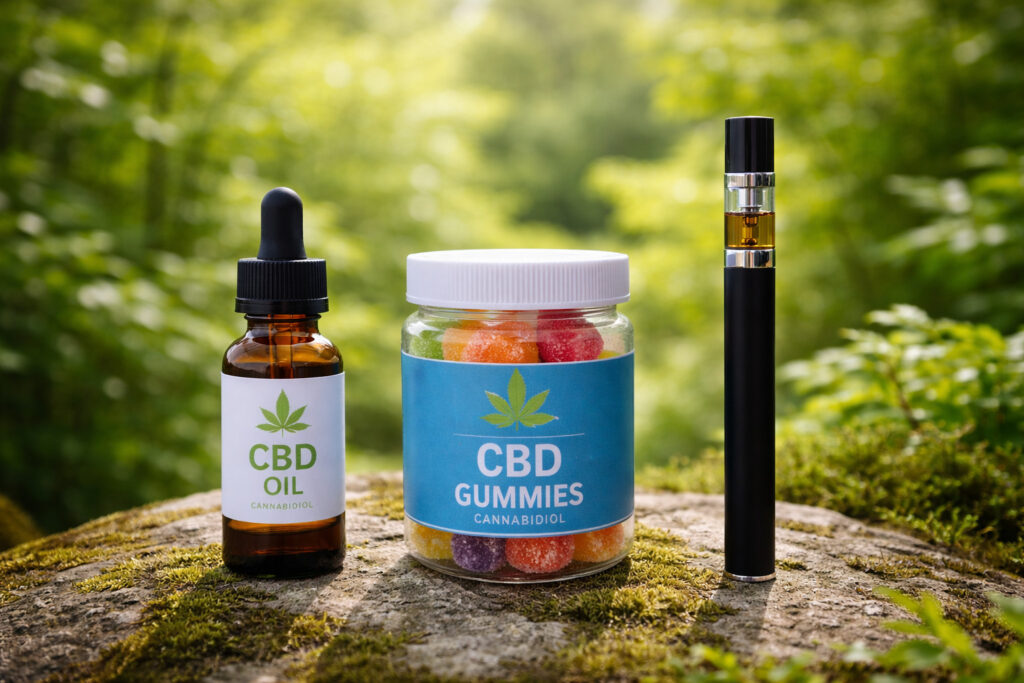
The time it takes to notice CBD can depend on how it is absorbed by the body. Oils, edibles, and topical products all follow different absorption pathways. These differences can influence how quickly CBD enters the bloodstream, which in turn affects when changes might be noticed. Research suggests that oral intake often takes longer to process than methods that allow for faster absorption, making timing an important factor when evaluating CBD.
(According to: Frontiers in Pharmacology)
Why Effects Are Often Recognized Only in Retrospect
CBD’s effects are often recognized only when looking back rather than in the moment. This is because changes may appear as small shifts in baseline comfort or daily patterns, such as feeling slightly calmer or sleeping more consistently. These changes are easy to overlook when actively searching for a sensation. Research discussions frequently note that subjective effects of CBD can be subtle, making retrospective awareness more common than immediate recognition.
(According to: National Library of Medicine)
Does CBD Need to Be Used Regularly to Notice Changes
CBD is often discussed in the context of ongoing observation rather than immediate evaluation. Because its effects may appear gradually, some people assume that it must be used every day to notice any change. However, regular use does not automatically guarantee a clearer or stronger effect. Research and public health sources suggest that how CBD is evaluated over time can be more important than strict daily use.
(According to: World Health Organization)
Why Single Use Is Often Not Enough to Evaluate CBD
Evaluating CBD based on a single use can be misleading. One-time use may not provide enough context to notice subtle or gradual changes, especially if expectations are focused on immediate sensations. Research discussions often note that CBD-related effects, when present, may depend on repeated exposure and observation rather than isolated experiences.
(According to: National Library of Medicine)
What Research Suggests About Ongoing Use and Observation
Research literature often emphasizes observation over time when discussing CBD. Rather than focusing on daily dosing alone, studies suggest paying attention to patterns such as sleep, baseline tension, or overall comfort. This approach highlights gradual trends instead of immediate reactions. Public health sources also frame CBD as a compound whose effects, when noted, may emerge through continued awareness rather than constant use.
(According to: Frontiers in Pharmacology)
Why Daily Use Is Not Always Necessary
Daily use of CBD is not always necessary to evaluate its suitability. Some individuals notice changes with intermittent use, while others prefer spacing out intake. This variability reflects individual differences rather than a strict usage rule. Research does not uniformly indicate that daily use is required for CBD to be meaningful, suggesting that flexibility may be appropriate depending on personal response.
(According to: National Library of Medicine)
Why Expecting Fast Relief Can Lead to Disappointment
Expecting fast relief from CBD can easily lead to disappointment. This expectation often comes from comparing CBD to medications or substances known for producing immediate, noticeable effects. CBD is generally discussed as a compound that may influence the body gradually rather than providing rapid symptom relief. When this difference is not understood, the absence of quick changes may be misinterpreted as ineffectiveness.
(According to: World Health Organization)
How CBD Differs From Medications With Immediate Effects
CBD differs from medications designed to act quickly on specific symptoms. Many pharmaceuticals are formulated to produce clear effects within a short time frame. In contrast, CBD is often described as interacting with regulatory systems rather than targeting symptoms directly. Because of this, its effects, when noticed, may develop more slowly and be less obvious in the moment.
(According to: National Library of Medicine)
Why Relaxation Is Often Misunderstood as Instant Relief
Relaxation is often misunderstood as something that should happen instantly. When CBD is associated with relaxation, some people expect an immediate sense of calm. However, relaxation usually results from multiple factors, including environment, mindset, and physical condition, rather than from a single substance alone. Research discussions suggest that CBD-related relaxation, when reported, may be subtle and context-dependent rather than sudden.
(According to: Frontiers in Pharmacology)
Common Mistakes When Trying CBD for the First Time
First-time experiences with CBD are often shaped by how it is used rather than by the compound itself. Many people conclude that CBD does not work after an initial trial, but this impression is frequently linked to practical mistakes made during early use. Research and public health discussions suggest that dosage, timing, and personal evaluation criteria all influence how CBD is perceived, especially at the beginning.
(According to: National Library of Medicine)
Using an Unclear Dose or Concentration
One common mistake is using CBD without clearly understanding the dose or concentration. Products vary widely, and too little may be difficult to notice while too much can make evaluation confusing. Research literature notes that CBD responses are dose-dependent, meaning that inappropriate amounts can lead to unclear impressions rather than meaningful observation.
(According to: Frontiers in Pharmacology)
Choosing the Wrong Timing or Environment
Timing and environment can strongly influence how CBD is perceived. Using CBD during periods of stress, distraction, or fatigue may make subtle changes harder to notice. Context plays a significant role in subjective experiences, and research suggests that mental state and surroundings can shape how bodily sensations are interpreted.
(According to: National Library of Medicine)
Not Defining What “Working” Means Personally
Another frequent issue is not defining what “working” means on a personal level. Many people look for dramatic or immediate sensations, but CBD-related changes, when noticed, are often subtle and gradual. Without a clear reference point, it becomes difficult to recognize small shifts in baseline comfort or daily patterns. Research discussions emphasize the importance of observation rather than instant judgment.
(According to: Frontiers in Psychology)
Why CBD Feels Different From Person to Person
Differences in how CBD is experienced are commonly reported and are not considered unusual. Rather than producing uniform effects, CBD appears to interact with individual conditions in varied ways. Research and public health discussions suggest that personal sensitivity, lifestyle factors, and psychological context all contribute to how CBD is perceived. This variability helps explain why experiences often differ from one person to another.
(According to: National Library of Medicine)
Differences in Sensitivity, Lifestyle, and Baseline Condition
Individual sensitivity and baseline condition play an important role in how CBD is noticed. Factors such as sleep quality, daily stress levels, diet, and general health may influence perception. People starting from different physical or emotional states may notice different responses, even when using similar products. Research literature suggests that these background conditions can affect how subtle changes are interpreted.
(According to: World Health Organization)
How Expectations and Prior Beliefs Influence Perception
Expectations and prior beliefs can shape how CBD is perceived. When people anticipate strong or immediate effects, they may focus closely on bodily sensations. This heightened attention can amplify or diminish perceived changes. Psychological research suggests that expectations can influence subjective evaluation, making experiences feel more pronounced or, in some cases, less noticeable.
(According to: Frontiers in Psychology)
Observed Variation Among Real World Users
Reports from real world users consistently show wide variation in CBD experiences. Some people notice changes quickly, while others recognize differences only after repeated use or reflection. There are also users who report little to no noticeable change. Public health discussions emphasize that such variation does not necessarily indicate misuse or product failure, but rather reflects individual diversity.
(According to: National Library of Medicine)
How to Reevaluate CBD When It Feels Ineffective
When CBD feels ineffective, it may be helpful to pause before making a final judgment. Rather than assuming failure, reevaluation focuses on conditions, expectations, and context. Public health discussions often suggest that reassessing use can clarify whether the experience reflects CBD itself or surrounding factors such as timing, mindset, or baseline condition.
(According to: National Library of Medicine)
Questions to Ask Before Concluding CBD Does Not Work
Before concluding that CBD does not work, several questions may be worth considering. For example, was enough time allowed to notice changes, and were expectations aligned with how CBD is generally described? Clarifying what “working” was expected to mean can help distinguish between lack of effect and mismatched expectations. Research discussions often emphasize careful observation rather than immediate judgment.
(According to: Frontiers in Psychology)
Why Stepping Back Can Be a Useful Part of the Process
Stepping back from CBD use can sometimes be a constructive choice rather than a setback. Taking distance may reduce overattention to bodily sensations and allow a more neutral perspective. This pause can help determine whether perceived effects were temporary, situational, or meaningful. Public health sources note that reassessment over time is often part of responsible use.
(According to: World Health Organization)
What Can Be Said About CBD Effectiveness Today
Based on current research and public health discussions, CBD effectiveness appears to be context dependent rather than uniform. Reports suggest that outcomes may vary depending on individual sensitivity, expectations, and usage conditions. As a result, effectiveness is often described in cautious terms rather than as a guaranteed result.
(According to: World Health Organization)
Why “Not Feeling It” Does Not Always Mean “No Effect”
Not feeling noticeable changes does not necessarily indicate that CBD has no effect. Research discussions often note that subtle or gradual changes may be harder to recognize, especially when expectations are focused on immediate sensations. In many cases, effects are identified only when comparing overall condition over time.
(According to: National Library of Medicine)
A Balanced Perspective for Using CBD Without Overexpectation
A balanced approach to CBD involves avoiding both excessive expectations and premature dismissal. Viewing CBD as something that may support observation rather than produce dramatic change can help maintain realistic judgment. Public health perspectives often emphasize moderation, reflection, and personal assessment over definitive claims.
(According to: World Health Organization)
Understanding CBD Effectiveness Without Overexpectation
Current discussions suggest that CBD effectiveness cannot be judged by immediate or dramatic sensations alone. Many people who feel that CBD is “not working” may be experiencing effects that are gradual, subtle, or only noticeable in retrospect. Research and public health sources often describe CBD as generally well tolerated, while also emphasizing individual variability rather than guaranteed outcomes.
(According to: World Health Organization)
Rather than asking whether CBD works in a universal sense, it may be more appropriate to consider how, when, and under what conditions changes are observed. Expectations shaped by fast acting medications or strong sensory effects can make CBD feel ineffective, even when small shifts are present.
A calmer framework involves using personal observation over time, adjusting expectations, and recognizing that “not feeling it” does not automatically mean “no effect.” This perspective allows CBD to be approached with caution, realism, and less unnecessary anxiety.
Note: This article is based on content originally published on the Japanese edition of OG Times .