What an “Organic Gangsta” Cannabis Smoking Style Really Means in Practice


Medical cannabis can be consumed in many ways, but the “how” often shapes how it is perceived. In Thailand, where cannabis-related discussions may feel normalized in some spaces, the social image around smoking can still vary widely depending on materials, etiquette, and the level of care shown in the process.
This article organizes one approach that prioritizes natural materials and a calmer, more considerate smoking style, while also explaining why supply quality, consistency, and presentation may matter for both comfort and public perception.
Some points may be based on on-the-ground observations, but the goal is to clarify the logic and the trade-offs rather than promote any specific behavior.
Why Do Some People Call It an “Organic Gangsta” Smoking Style?
Some people refer to this approach as an “Organic Gangsta” smoking style because it draws attention to elements that are often overlooked in everyday cannabis use. The focus is not only on the cannabis flower itself, but also on the surrounding materials and routines that shape the overall experience.
In practice, this label tends to appear when someone consistently selects natural or minimally processed components across the entire setup. This may include the source of the cannabis, the herbs mixed into a joint, the rolling paper, and the filter or accessories used during smoking.
In Thailand, where cannabis use can appear casual or inconsistent depending on location, such visible consistency often stands out. It can signal that the person is intentionally managing how cannabis fits into daily life, rather than treating it as a purely recreational or impulsive act.
How materials and presentation can shape the social image of cannabis
The social image of cannabis is often shaped by context rather than by consumption alone. People tend to react not only to the act of smoking, but to what they see around it, including materials, cleanliness, and overall presentation.
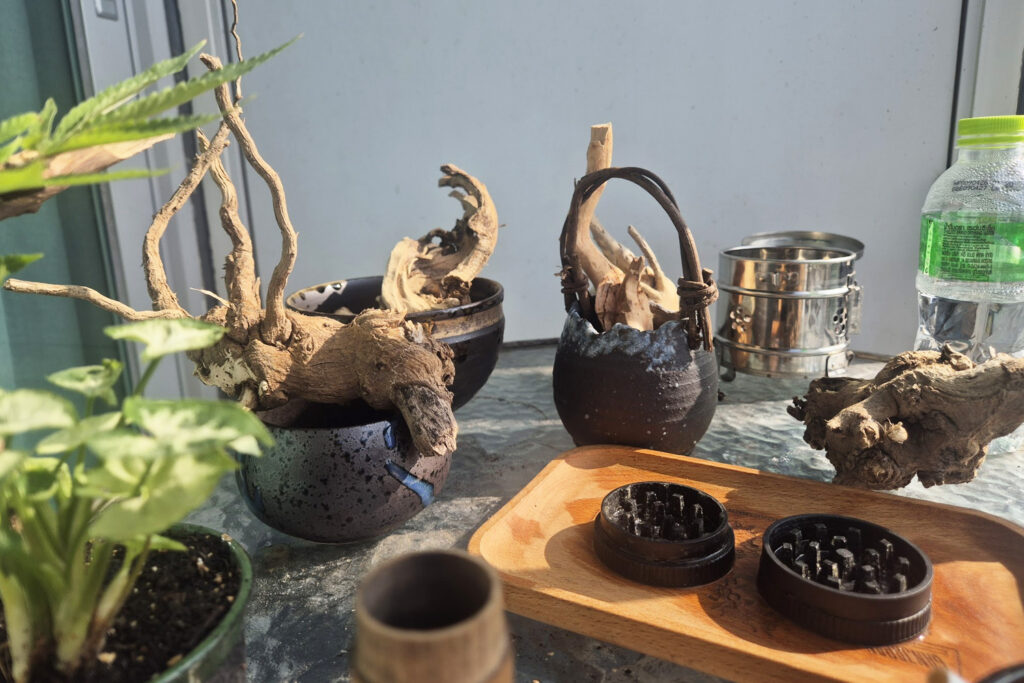
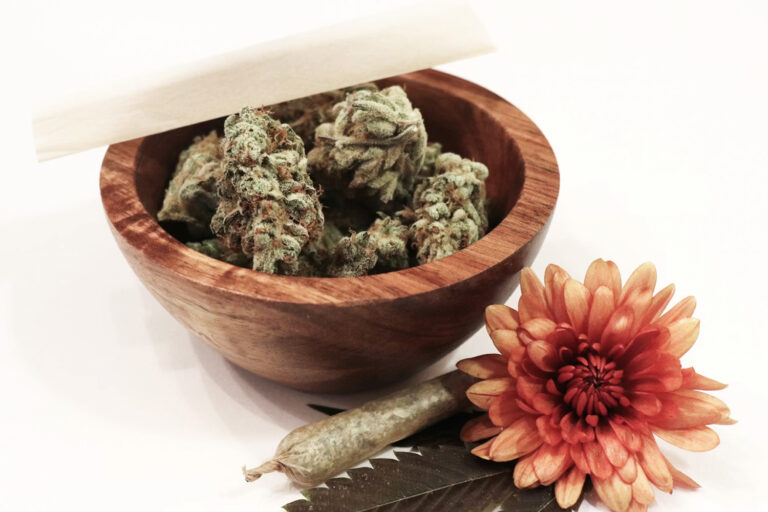
For example, the use of unbleached hemp paper, handmade natural filters, or tools designed to reduce direct contact can suggest a preference for controlled and deliberate use. These choices may reduce visible mess, limit odor spread, and make shared situations appear more considerate.
While such presentation does not change legal status or guarantee acceptance, it can influence how cannabis use is interpreted. In some cases, it shifts perception away from stereotypes and toward associations with craft, wellness, or personal discipline.
Why “medical cannabis” framing often leads to questions about purity and care
When cannabis is described using a medical frame, listeners often assume that certain standards are being considered, even if those standards differ by country or regulation. This framing tends to move attention away from strength and toward how the cannabis is produced and consumed.
Questions commonly follow about sourcing, cultivation practices, and what materials are burned alongside the flower. In this sense, “medical cannabis” framing naturally emphasizes purity, process, and consistency rather than intensity.
This pattern aligns with how medical cannabis is generally discussed by public institutions, which often focus on quality control and risk reduction rather than lifestyle or image
(According to: World Health Organization).
The key point is not that these choices ensure safety, but that the medical framing itself encourages closer attention to care, materials, and routine.
Why Do Some People Call It an “Organic Gangsta” Smoking Style?
Some people refer to this approach as an “Organic Gangsta” smoking style because it draws attention to elements that are often overlooked in everyday cannabis use. The focus is not only on the cannabis flower itself, but also on the surrounding materials and routines that shape the overall experience.
In practice, this label tends to appear when someone consistently selects natural or minimally processed components across the entire setup. This may include the source of the cannabis, the herbs mixed into a joint, the rolling paper, and the filter or accessories used during smoking.
In Thailand, where cannabis use can appear casual or inconsistent depending on location, such visible consistency often stands out. It can signal that the person is intentionally managing how cannabis fits into daily life, rather than treating it as a purely recreational or impulsive act.
How materials and presentation can shape the social image of cannabis
The social image of cannabis is often shaped by context rather than by consumption alone. People tend to react not only to the act of smoking, but to what they see around it, including materials, cleanliness, and overall presentation.
For example, the use of unbleached hemp paper, handmade natural filters, or tools designed to reduce direct contact can suggest a preference for controlled and deliberate use. These choices may reduce visible mess, limit odor spread, and make shared situations appear more considerate.
While such presentation does not change legal status or guarantee acceptance, it can influence how cannabis use is interpreted. In some cases, it shifts perception away from stereotypes and toward associations with craft, wellness, or personal discipline.
Why “medical cannabis” framing often leads to questions about purity and care
When cannabis is described using a medical frame, listeners often assume that certain standards are being considered, even if those standards differ by country or regulation. This framing tends to move attention away from strength and toward how the cannabis is produced and consumed.
Questions commonly follow about sourcing, cultivation practices, and what materials are burned alongside the flower. In this sense, “medical cannabis” framing naturally emphasizes purity, process, and consistency rather than intensity.
This pattern aligns with how medical cannabis is generally discussed by public institutions, which often focus on quality control and risk reduction rather than lifestyle or image
(According to: World Health Organization).
The key point is not that these choices ensure safety, but that the medical framing itself encourages closer attention to care, materials, and routine.
What “Organic” Can Mean in a Medical Cannabis Smoking Setup
In a medical cannabis context, the term “organic” is not always defined by a single certification or legal standard. Instead, it is often used as a practical description of how materials are selected and combined within a smoking setup.
For many users, “organic” refers to an overall approach rather than a claim of medical superiority. It reflects an effort to reduce unnecessary additives and to maintain clarity about what is being inhaled alongside cannabis.
This interpretation becomes especially visible when cannabis is framed as something used repeatedly over time, rather than occasionally or recreationally.
How people commonly define “organic” across cannabis, herbs, paper, and filters
Across cannabis, herbs, rolling paper, and filters, “organic” is commonly understood as a combination of sourcing and processing choices. These may include cultivation methods with fewer chemical inputs, unbleached or minimally processed papers, and filters made from natural materials.
Rather than relying on a single label, users often assess each component separately. Cannabis may be selected based on cultivation standards, while herbs are chosen for combustion behavior and paper for how cleanly it burns.
In this sense, “organic” functions as a materials-based judgment rather than a strict scientific classification. The focus is on transparency and familiarity with each element that enters the smoking process.
Why consistency in materials may matter more than “stronger effects”
When cannabis is positioned as part of a medical or daily-use routine, consistency often becomes more important than intensity. Users tend to prioritize predictability in taste, smoke quality, and physical response.
Using similar materials across sessions can reduce unexpected irritation or variation, especially for people who consume frequently. This aligns with broader medical discussions that emphasize stability and risk awareness over maximization of effect
(According to: World Health Organization).
From this perspective, the value of an “organic” setup is less about achieving stronger effects and more about maintaining a repeatable and manageable experience.
How Cannabis Supply Quality Is Chosen and Signaled in Thailand
In Thailand, cannabis supply quality is not typically communicated through detailed laboratory reports at the point of purchase. Instead, quality is often signaled through visible compliance frameworks and how products are presented within dispensaries.
For visitors, especially those unfamiliar with local regulations, these signals function as practical indicators rather than guarantees. Understanding how quality is selected and communicated helps explain why certain standards are emphasized more than others.
Why GACP is used as a compliance signal when selecting flower
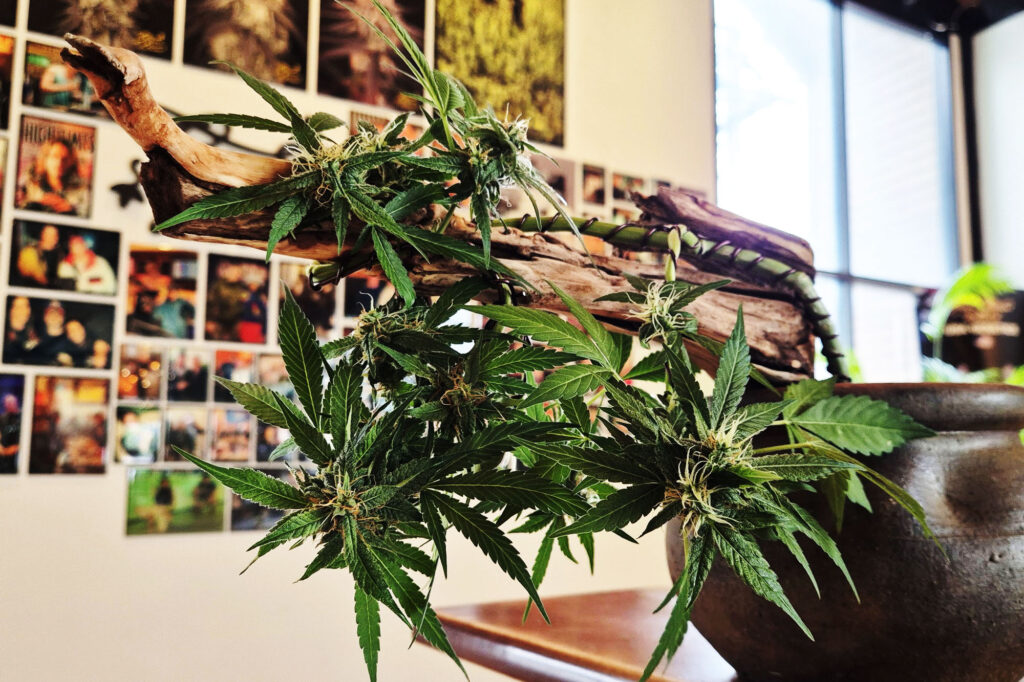
GACP, or Good Agricultural and Collection Practice, is widely referenced in Thailand as a baseline indicator for cannabis cultivation practices. While it does not certify final product safety on its own, it indicates that cultivation and post-harvest handling follow recognized agricultural guidelines.
Because cannabis regulation in Thailand continues to evolve, GACP serves as a visible compliance signal that farms are operating within an accepted framework. This makes it easier for dispensaries to demonstrate due diligence when sourcing flower.
From a regulatory perspective, GACP aligns with international agricultural standards rather than consumer-facing quality claims
(According to: World Health Organization).
How visitors may interpret dispensary curation as a safety proxy
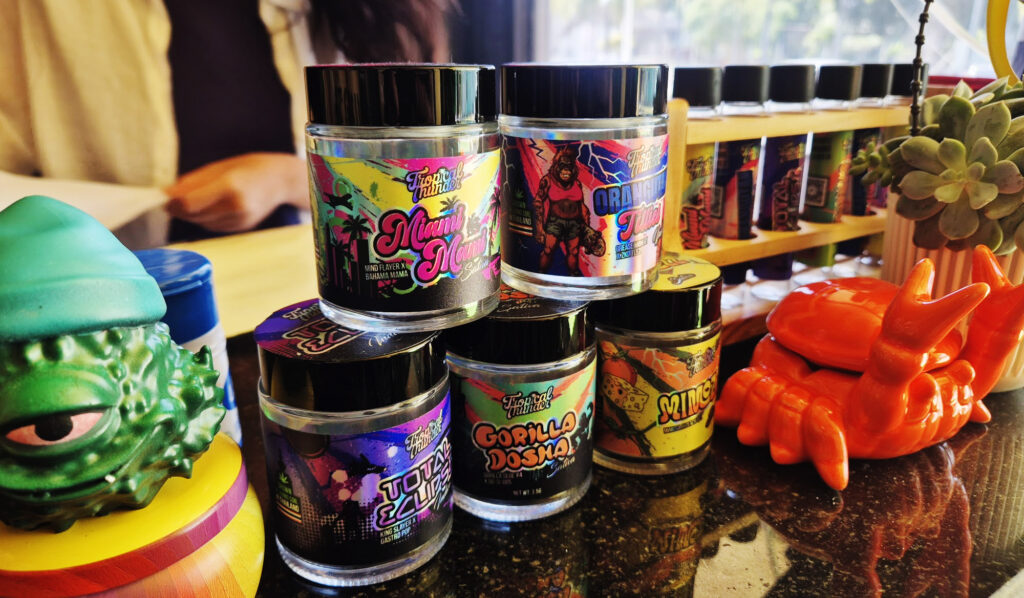
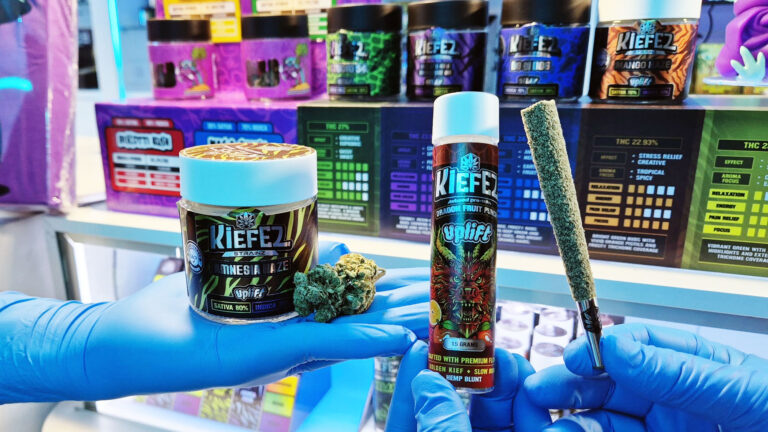
For many visitors, dispensary curation becomes a substitute for direct technical evaluation. Factors such as store cleanliness, staff explanations, strain labeling, and sourcing narratives often influence perceived safety.
This interpretation does not necessarily reflect verified product quality, but it does shape user decision-making. Visitors may assume that curated selections imply screening or quality control, even when detailed testing information is not displayed.
In practice, dispensary presentation functions as a risk-reduction heuristic rather than a formal safety assurance. Recognizing this distinction helps set more realistic expectations when purchasing cannabis in Thailand.
Why Some Users Mix Smoking Herbs With Medical Cannabis
In medical cannabis use, smoking is not always approached as a pursuit of intensity or maximum effect. For some users, mixing cannabis with non-psychoactive smoking herbs is a way to adjust how the experience unfolds over time.
This practice is often less about enhancement and more about control. By altering combustion, flavor, and intake rhythm, users may aim to maintain comfort and functionality rather than peak intoxication.
How mixing may be used to manage pace, quantity, and comfort
Mixing medical cannabis with smoking herbs is commonly used to slow down consumption. When cannabis is diluted with herbs, each inhalation typically contains less active compound, which may help users regulate pace and total intake.
This approach can also influence physical comfort. Users often report that softer smoke, lower heat density, and gentler inhalation reduce throat irritation and fatigue during longer sessions. In this context, mixing functions as a self-regulation method rather than a potency strategy.
Such practices are often observed among users who consume cannabis regularly and prioritize sustainability over immediacy.
Why “higher THC” is not always treated as “better” in long-term use
While high-THC cannabis is often highlighted in retail environments, long-term users may evaluate quality differently. Over time, stronger products can lead to quicker tolerance buildup, increased fatigue, or reduced functional clarity.
For this reason, some users deliberately avoid maximizing THC concentration. Instead, they focus on balance, aroma, and how the experience integrates into daily life. In this framing, effectiveness is defined by maintainability and comfort, not intensity.
This perspective aligns with broader medical use patterns, where consistency and control are often valued more than strength
(According to: National Center for Biotechnology Information).
What a Water-Based “Bamboo Pipe” Concept Suggests About Smoothness
A water-based bamboo pipe setup is often discussed as a way to make smoke feel gentler rather than stronger. The core idea is not to intensify effects, but to adjust how smoke reaches the body. By passing smoke through water and natural materials, this setup is commonly associated with a smoother, less aggressive inhalation experience.
In many discussions, smoothness is framed as a reduction in irritation rather than a change in potency. This distinction is important, especially in medical cannabis contexts where comfort and repeatability tend to matter more than intensity.
How cooling and particulate reduction are commonly discussed in water filtration
Water filtration is frequently described as performing two basic functions: cooling the smoke and reducing some particulate matter before inhalation. When smoke passes through water, its temperature may decrease, and heavier particles can be partially captured.
Some studies have suggested that water filtration can reduce certain combustion byproducts, although it does not remove all harmful components. Because of this, water filtration is often discussed as a comfort-focused adjustment rather than a health guarantee.
(According to: National Institutes of Health)
Why shared settings often emphasize hygiene and considerate setup
In shared smoking environments, water-based devices tend to raise questions about hygiene and etiquette. A bamboo pipe setup is often discussed in terms of how it can be cleaned, maintained, and shared without direct mouth contact.
This is why considerate setup and cleaning routines are frequently treated as part of the experience itself, not just an afterthought. In group settings, the perception of cleanliness and care can influence how cannabis use is socially received, particularly in medical or wellness-oriented contexts.
How Rolling Paper Choices Affect Taste and Perception
In medical cannabis smoking, rolling paper is not just a functional tool. The material itself can influence how smoke is perceived, both in flavor and overall impression. For some users, paper choice becomes part of how carefully or intentionally the experience feels.
Rather than focusing on strength, paper selection is often discussed in terms of neutrality, consistency, and how much it interferes with the plant’s natural aroma.
How hemp-based paper is commonly described compared with other materials
Hemp-based rolling paper is often described as having a slower, more even burn compared with wood pulp or heavily processed papers. Users frequently note that it produces less residual taste, allowing cannabis aroma to come through with fewer distractions.
In contrast, some conventional papers may introduce paper-like bitterness or burn unevenly, which can affect how flavors are perceived. From this perspective, hemp paper is chosen not to enhance effects, but to reduce external influence on taste.
This distinction matters most to users who pay attention to strain aroma, terpene profile, and subtle sensory differences.
Why material transparency can be part of a “cleaner” impression
Material transparency refers to how clearly the origin and processing of a product are communicated. When users know what a rolling paper is made from, how it is processed, and whether additives are used, it may create a sense of trust.
This does not necessarily imply medical superiority, but it can contribute to a “cleaner” impression by reducing uncertainty. In this framing, cleanliness is defined less by purity claims and more by clarity of materials and process.
Such perceptions align with broader consumer behavior, where transparency is often associated with careful production rather than stronger performance
(According to: National Center for Biotechnology Information).
Design and Culture: Why Visual Language Matters in Cannabis Tools
In cannabis-related tools, design is often discussed as more than decoration. Visual language such as typography, symbols, and material choices can signal how a product should be understood and used. Rather than emphasizing rebellion or excess, many contemporary cannabis tools appear to use design to communicate care, restraint, and everyday usability.
In this context, design functions as a social cue. It may influence whether cannabis is perceived as disruptive, private, medical, or culturally integrated, depending on how familiar or unfamiliar the visual language feels to the viewer.
How typography, symbols, and local references are used to communicate intent
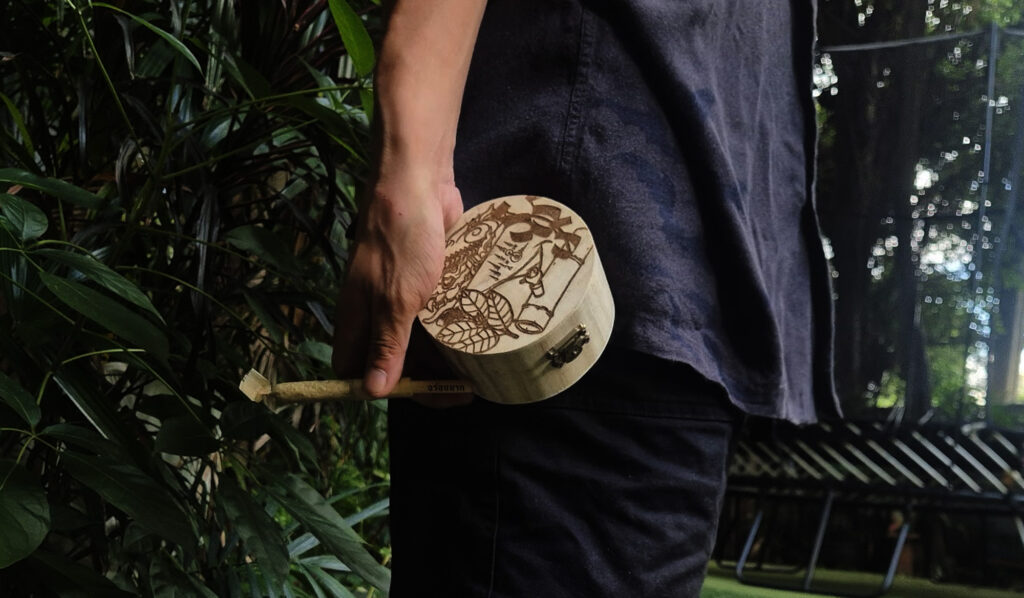
Typography and symbols are commonly used to frame intent without explicit explanation. For example, traditional fonts, religious or cultural motifs, and locally recognizable visual styles may suggest respect, continuity, or calmness rather than novelty.
These choices are often described as a way to anchor cannabis tools within an existing cultural vocabulary, making them feel less foreign. When local references are used carefully, they can signal that the product is meant to coexist with established values rather than challenge them.
Why “daily-life compatibility” is positioned as a pathway to normalization
Many discussions around cannabis design emphasize how easily a tool can blend into everyday life. Objects that resemble common household items or traditional crafts are often framed as easier to accept socially.
Because of this, daily-life compatibility is frequently positioned as a step toward normalization, especially in environments where cannabis still carries stigma. The assumption is not that design alone changes perception, but that familiar visual cues can lower psychological resistance over time.
How Cannabis Culture May Be Shaped by Everyday User Behavior
Cannabis culture is often discussed in terms of laws, products, or industry growth, but everyday user behavior may also play a role in how cannabis is perceived over time. Small, repeated actions in daily life can influence whether cannabis use is seen as disruptive, neutral, or quietly integrated into society.
From this perspective, culture is shaped less by statements and more by patterns. How people behave in shared spaces, how they manage visibility, and how they relate cannabis use to ordinary routines may gradually affect public perception.
Why etiquette and low-friction public perception are treated as long-term factors
Etiquette is often mentioned because it directly affects others who are not choosing to participate. Odor control, noise awareness, and timing are commonly described as practical considerations rather than moral rules.
Because of this, low-friction behavior is often treated as a long-term stabilizing factor. When cannabis use does not create discomfort or confrontation, it may be less likely to trigger negative attention, complaints, or backlash over time.
How to hold a balanced view without turning it into advocacy or moralizing
Discussions around behavior can easily shift into advocacy or judgment, which is why a balanced framing is often emphasized. The focus is usually placed on observation rather than instruction, and on choice rather than obligation.
In this way, the goal is not to promote a specific lifestyle, but to recognize how individual actions may interact with broader social contexts. Maintaining this balance allows the conversation to stay descriptive rather than prescriptive.
How an “Organic Gangsta” Approach Frames Cannabis as Everyday Culture
The idea often referred to as an “Organic Gangsta” smoking style does not appear to be about standing out or proving intensity. Instead, it is commonly framed as a way of paying attention to materials, processes, and everyday behavior surrounding medical cannabis use.
Across the elements discussed, a consistent pattern emerges. Choices such as organic flower sourcing, mixed smoking herbs, natural rolling papers, reusable bamboo filters, and water-based tools are not positioned as methods to increase potency. Rather, they are described as ways to reduce friction, manage comfort, and maintain a stable relationship with cannabis over time.
This approach also suggests that culture may be shaped incrementally. When cannabis use aligns with ordinary routines, hygiene, and shared-space awareness, it may appear less disruptive and more compatible with daily life. In this sense, the focus is not on advocacy or instruction, but on observation.
Taken together, the “Organic Gangsta” framing is best understood as a perspective on balance. It reflects how material choices and user behavior may quietly influence how cannabis is perceived, without relying on statements, trends, or confrontation.
Note: This article is based on content originally published on the Japanese edition of OG Times .