What HempExpo 2025 Suggests About the Direction of Hemp and Cannabis in Thailand

HempExpo 2025 was held in Bangkok as a regional exhibition focused on industrial hemp and related supply chains. While Thailand’s cannabis landscape is often discussed in terms of recreational use, this event highlighted a different side of the industry, centered on materials, manufacturing, research, and regulated production.
Based on on-site observations, HempExpo functions less as a consumer festival and more as a business-oriented platform where cultivation inputs, processing technologies, hemp-based materials, and wellness applications are presented together. This article organizes what HempExpo 2025 appeared to represent in practice, what types of products and organizations were visible on the floor, and how the event reflects the current direction of Thailand’s hemp industry.
What Is HempExpo and Why It Matters in Thailand
HempExpo is an international exhibition and business forum held annually in Bangkok, focusing on the development of the industrial hemp sector across Asia. Based on on-site observations, the event functions as a platform that brings together the entire hemp supply chain, from cultivation and raw materials to processing, manufacturing, and finished products. Rather than positioning hemp as a lifestyle or recreational topic, HempExpo frames it as an industrial, agricultural, and materials-based industry with long-term economic relevance in Thailand.
Thailand’s cannabis discussion is often centered on decriminalization and retail cannabis, but HempExpo highlights a different layer of the market. The event matters because it shows how hemp is being integrated into regulated industries, including construction, textiles, wellness, agriculture, and manufacturing, under formal business and policy frameworks.
How HempExpo Is Positioned as an Industrial Hemp Exhibition
HempExpo is positioned as an industrial exhibition rather than a consumer-facing cannabis event. Exhibitors primarily include farmers, material suppliers, manufacturers, research-oriented organizations, and industry associations. Products and displays focus on inputs, processing methods, and applications, such as cultivation soil, fertilizers, lighting systems, hemp-derived building materials, textiles, and industrial components.
The presence of professional forums and scheduled talks further reinforces this positioning. Topics observed at the event include medical cannabis research, industrial hemp utilization, regulatory frameworks, and export strategies. This structure indicates that HempExpo is designed for industry stakeholders rather than casual visitors, emphasizing business development, compliance, and supply-chain collaboration.
Why the Event Focuses on Supply Chains Rather Than Consumption
HempExpo places its emphasis on supply chains because hemp-related industries in Thailand are still strongly shaped by regulation and formal licensing. Instead of promoting direct consumption, the event highlights upstream and midstream processes, such as cultivation standards, material processing, product formulation, and manufacturing infrastructure.
This focus reflects how hemp is currently treated within Thailand’s legal and industrial environment. By concentrating on supply chains, HempExpo presents hemp as a regulated resource and industrial material, rather than a recreational product. This approach allows companies, researchers, and manufacturers to explore practical applications while staying aligned with existing legal and economic structures.
What Is HempExpo and Why It Matters in Thailand
HempExpo is an international exhibition and business forum held annually in Bangkok, focusing on the development of the industrial hemp sector across Asia. Based on on-site observations, the event functions as a platform that brings together the entire hemp supply chain, from cultivation and raw materials to processing, manufacturing, and finished products. Rather than positioning hemp as a lifestyle or recreational topic, HempExpo frames it as an industrial, agricultural, and materials-based industry with long-term economic relevance in Thailand.
Thailand’s cannabis discussion is often centered on decriminalization and retail cannabis, but HempExpo highlights a different layer of the market. The event matters because it shows how hemp is being integrated into regulated industries, including construction, textiles, wellness, agriculture, and manufacturing, under formal business and policy frameworks.
How HempExpo Is Positioned as an Industrial Hemp Exhibition
HempExpo is positioned as an industrial exhibition rather than a consumer-facing cannabis event. Exhibitors primarily include farmers, material suppliers, manufacturers, research-oriented organizations, and industry associations. Products and displays focus on inputs, processing methods, and applications, such as cultivation soil, fertilizers, lighting systems, hemp-derived building materials, textiles, and industrial components.
The presence of professional forums and scheduled talks further reinforces this positioning. Topics observed at the event include medical cannabis research, industrial hemp utilization, regulatory frameworks, and export strategies. This structure indicates that HempExpo is designed for industry stakeholders rather than casual visitors, emphasizing business development, compliance, and supply-chain collaboration.
Why the Event Focuses on Supply Chains Rather Than Consumption
HempExpo places its emphasis on supply chains because hemp-related industries in Thailand are still strongly shaped by regulation and formal licensing. Instead of promoting direct consumption, the event highlights upstream and midstream processes, such as cultivation standards, material processing, product formulation, and manufacturing infrastructure.
This focus reflects how hemp is currently treated within Thailand’s legal and industrial environment. By concentrating on supply chains, HempExpo presents hemp as a regulated resource and industrial material, rather than a recreational product. This approach allows companies, researchers, and manufacturers to explore practical applications while staying aligned with existing legal and economic structures.
How Entry, Registration, and Access Are Structured
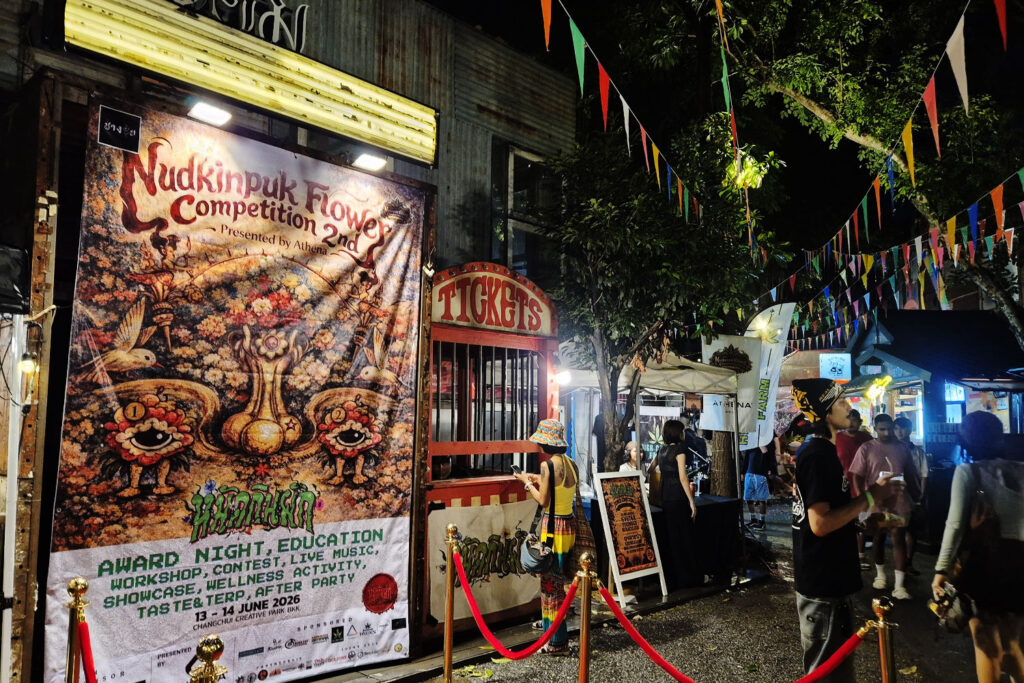
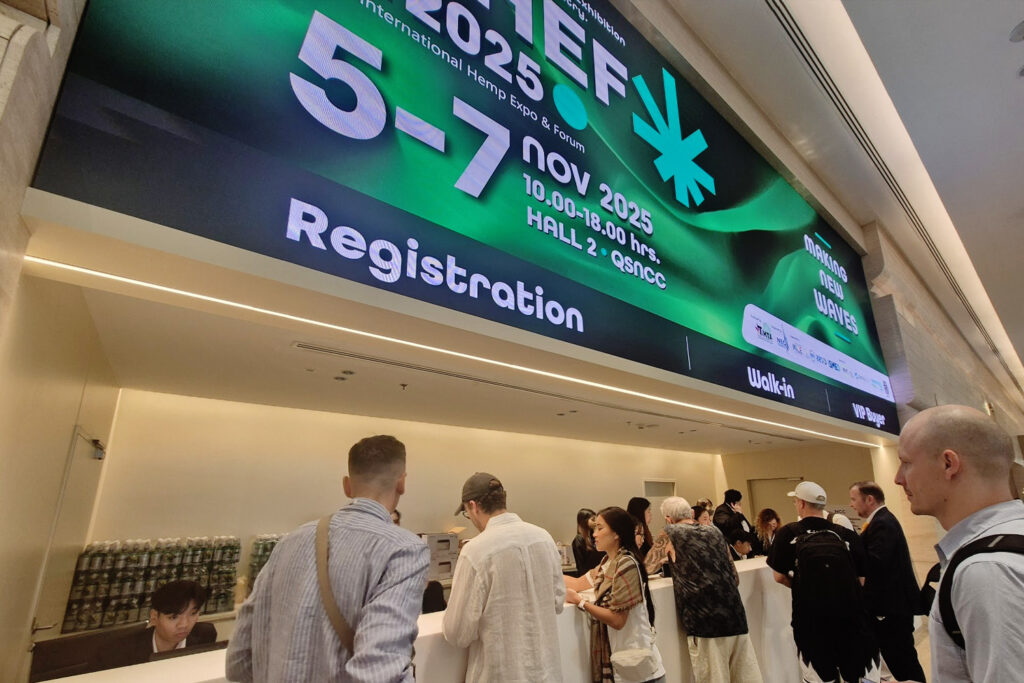
Entry to HempExpo 2025 was structured around a simple but clearly segmented registration system. Visitors who completed online registration in advance were able to enter for free, while on-site registration required a paid ticket. This dual system reflects an event designed to prioritize planned, industry-oriented attendance rather than spontaneous consumer foot traffic.
The process itself was streamlined. Entry required only the presentation of a QR code, with no identity verification at the gate. This balance of formality and accessibility suggests that the event aims to remain open to a wide range of participants while still maintaining a business-focused framework.
Online Registration Versus On-Site Tickets
Online registration allowed visitors to secure free entry prior to the event dates, while on-site tickets were priced at 500 THB. This pricing structure subtly incentivizes advance registration, which is typical for trade exhibitions that want to understand attendee profiles and manage flow before the event begins.
The availability of same-day tickets ensures accessibility, but the added cost and registration time create a natural distinction between industry participants who plan ahead and casual visitors who decide to attend on the day.
What the Entry Process Indicates About Target Audiences
The absence of ID checks and the use of QR-based access indicate that HempExpo is not positioned as a restricted or invitation-only event. At the same time, the registration-first structure suggests that the primary target audience consists of professionals, businesses, and organizations rather than walk-in consumers.
This approach aligns with HempExpo’s broader positioning as an industrial and supply-chain-focused exhibition. The entry system supports networking, data collection, and structured attendance, reinforcing the event’s role as a business and industry platform rather than a consumer expo.
Forum Programs and Industry Talks Observed On-Site
HempExpo 2025 featured a structured forum program running alongside the exhibition floor. These sessions were positioned as an informational and policy-oriented layer of the event, offering context beyond product displays. Rather than promotional talks, the programs focused on research, regulation, and industrial application, reflecting the event’s role as a business and policy-facing platform.
The forum schedules were clearly displayed near the entrance, allowing visitors to understand the scope of discussions before entering the main exhibition area. Topics ranged across cannabis-related research, hemp material utilization, and regulatory frameworks shaping the industry in Thailand and the wider region.
Medical Cannabis, Hemp Materials, and Regulatory Topics
Forum sessions covered a wide range of subject matter, including medical cannabis research, industrial hemp applications, and evolving legal frameworks. These topics indicate that HempExpo prioritizes upstream knowledge and system-level understanding rather than consumer trends.
Talks related to medical cannabis focused on research progress and institutional perspectives, while hemp material discussions addressed construction, textiles, and industrial processing. Regulatory sessions examined how laws and compliance structures affect cultivation, processing, and distribution across the supply chain.
Why Government and Industry Speakers Are Central to the Program
Many sessions featured speakers from government agencies, research institutions, and established industry organizations. Their presence signals that HempExpo functions as a policy-aligned industry forum rather than a purely commercial showcase.
By placing government and institutional voices at the center of the program, the event reinforces its position as a platform for coordination between regulators, researchers, and businesses. This structure supports long-term industry development by aligning private-sector activity with official frameworks and regulatory direction.
Types of Exhibitors Commonly Seen at HempExpo 2025
HempExpo 2025 featured a wide range of exhibitors that collectively illustrated how Thailand’s hemp and cannabis-related industries are structured upstream. Rather than focusing on end-user products, the exhibition floor emphasized inputs, infrastructure, and manufacturing processes that support cultivation and large-scale production.
The booths were organized in a way that made it easy to observe how different stages of the supply chain connect, from growing environments to finished, packaged outputs.
Cultivation Inputs: Soil, Fertilizers, and Lighting Systems
A significant portion of the exhibition space was occupied by companies supplying cultivation-related inputs. These included soil manufacturers, fertilizer brands, and lighting system providers designed to improve plant growth efficiency.
In particular, lighting brands showcased systems intended to deliver light to lower parts of plants that typically receive insufficient exposure. This highlights a strong focus on yield optimization and controlled cultivation environments, which are critical in licensed and indoor farming contexts.
Processing, Packaging, and OEM Manufacturing Booths
Beyond cultivation, many exhibitors specialized in processing, packaging, and OEM manufacturing. These booths represented companies capable of turning raw hemp materials into finished or semi-finished products across health, wellness, and industrial categories.
Packaging solutions, display cases for dried cannabis, and OEM services for supplements, cosmetics, and pet products were commonly observed. This reflects HempExpo’s role as a place where product development and brand manufacturing pathways are explored, rather than direct consumer sales.
Hemp-Based Wellness and Consumer Products on Display
In addition to cultivation and industrial infrastructure, HempExpo 2025 also showcased a wide range of hemp-based wellness and consumer products. These exhibits demonstrated how hemp-derived materials are being positioned beyond agriculture, moving into everyday health and lifestyle categories.
Rather than emphasizing recreational use, the products on display were framed around functionality, safety, and long-term use within regulated markets.
Skincare, Supplements, and Pet Health Applications
Many booths focused on wellness-oriented products such as skincare items, dietary supplements, and pet health solutions. Exhibitors introduced serums, ampoules, and topical products designed for regular use, alongside functional supplements targeting digestion, weight balance, and general health.
Pet-related products were particularly visible, including waterless shampoos, gentle facial cleaners, and nutritional supplements for dogs and cats. This suggests that hemp-derived ingredients are being actively explored as part of broader health-support categories, rather than niche cannabis products.
How Hemp Is Framed Within the Wellness Industry
Across these exhibits, hemp was consistently presented as a neutral, functional material rather than a controversial substance. Messaging emphasized purity, controlled processing, and compatibility with existing wellness routines.
This framing reflects an industry strategy that positions hemp as an extension of the health and wellness sector. By aligning hemp with familiar product formats and regulated manufacturing standards, exhibitors appear to be reducing barriers to market acceptance, both domestically and internationally.
Hemp-Based Wellness and Consumer Products on Display
In addition to cultivation and industrial infrastructure, HempExpo 2025 also showcased a wide range of hemp-based wellness and consumer products. These exhibits demonstrated how hemp-derived materials are being positioned beyond agriculture, moving into everyday health and lifestyle categories.
Rather than emphasizing recreational use, the products on display were framed around functionality, safety, and long-term use within regulated markets.
Skincare, Supplements, and Pet Health Applications
Many booths focused on wellness-oriented products such as skincare items, dietary supplements, and pet health solutions. Exhibitors introduced serums, ampoules, and topical products designed for regular use, alongside functional supplements targeting digestion, weight balance, and general health.
Pet-related products were particularly visible, including waterless shampoos, gentle facial cleaners, and nutritional supplements for dogs and cats. This suggests that hemp-derived ingredients are being actively explored as part of broader health-support categories, rather than niche cannabis products.
How Hemp Is Framed Within the Wellness Industry
Across these exhibits, hemp was consistently presented as a neutral, functional material rather than a controversial substance. Messaging emphasized purity, controlled processing, and compatibility with existing wellness routines.
This framing reflects an industry strategy that positions hemp as an extension of the health and wellness sector. By aligning hemp with familiar product formats and regulated manufacturing standards, exhibitors appear to be reducing barriers to market acceptance, both domestically and internationally.
Industrial and Material Uses of Hemp Highlighted at the Event
HempExpo 2025 placed strong emphasis on the industrial and material potential of hemp, highlighting applications that extend well beyond wellness or consumer goods. These exhibits focused on durability, sustainability, and long-term infrastructure use rather than short-term trends.
The materials on display positioned hemp as a practical industrial resource, particularly in construction and manufacturing contexts.
Hempcrete and Construction-Related Applications
One of the most visually distinctive exhibits involved hemp-based construction materials, including hempcrete blocks. These materials are typically produced by combining hemp fibers with lime-based binders, resulting in blocks that offer insulation, moisture regulation, and reduced environmental impact.
At the event, hempcrete was presented not as an experimental concept, but as a next-generation building material already being discussed within sustainable architecture and industrial planning. The physical display of blocks and raw materials allowed visitors to directly observe texture, density, and structural characteristics.
Textiles and Traditional Craft-Based Hemp Products
Textile-focused exhibits highlighted hemp’s role in traditional craftsmanship and small-scale manufacturing. Handwoven fabrics, naturally dyed textiles, and artisanal garments demonstrated how hemp fibers are processed using labor-intensive methods that prioritize material quality over mass production.
These displays emphasized that the higher cost of hemp textiles is closely tied to processing complexity and reliance on skilled manual work, particularly when chemical treatments are avoided. The presence of traditional techniques alongside modern industrial uses suggested that hemp continues to occupy multiple layers of value within material culture.
Hemp in Transportation and Manufacturing Concepts
HempExpo 2025 also presented hemp as a material relevant to transportation and industrial manufacturing, particularly in contexts where weight reduction, durability, and environmental impact are key considerations.
Rather than positioning hemp as a novelty material, these concepts framed it as a functional alternative to conventional synthetic components used in manufacturing.
Hemp Fiber Use in Automotive Interiors
One of the notable displays involved automotive interior components made using hemp fibers. These applications included panels and interior surfaces designed to replace plastic-based materials commonly used in vehicle cabins.
Hemp fibers were presented as offering advantages such as light weight, structural strength, sound absorption, and reduced reliance on petroleum-derived plastics. The exhibits suggested that hemp-based interiors are being explored not as design experiments, but as practical material options within sustainable manufacturing discussions.
Why Sustainability Is Emphasized in These Applications
Sustainability was repeatedly emphasized in relation to hemp-based transportation materials due to their renewable origin and end-of-life characteristics. Hemp fibers can be cultivated with relatively low environmental burden and, in some applications, allow for partial biodegradability after use.
Within the exhibition context, sustainability was framed less as a marketing concept and more as a material-selection rationale driven by regulation, lifecycle assessment, and environmental standards increasingly relevant to manufacturers.
Cannabis Farms and Regulated Cultivation Presence
At HempExpo 2025, cannabis farms were present, but in noticeably smaller numbers compared to earlier years. Their presence was framed less around promotion and more around compliance, licensing, and alignment with formal agricultural standards.
This shift suggested that participation by growers is increasingly shaped by regulatory clarity and certification status, rather than market visibility alone.
GACP-Certified Farms and Compliance Signaling
The farms that did appear commonly highlighted GACP certification and licensed cultivation practices. Displays focused on documentation, cultivation methods, and post-harvest handling rather than aggressive product marketing.
GACP references functioned as a signal of legitimacy and export readiness, positioning these farms within a regulated supply chain rather than a casual domestic market.
Why Fewer Growers Appear Compared to Earlier Years
The reduced number of cannabis farm exhibitors appeared to reflect broader regulatory and economic pressures. Licensing requirements, compliance costs, and uncertainty around future policy direction were commonly cited factors within the industry context.
As a result, participation seemed to favor farms that had already invested in long-term compliance and standardized operations, rather than smaller or transitional growers.
Design, Display, and Retail-Oriented Innovations
At HempExpo 2025, a noticeable portion of the exhibition focused on design and retail-oriented tools rather than cultivation or raw materials. These displays reflected how cannabis retail is increasingly shaped by presentation, information clarity, and customer experience, especially in regulated or semi-regulated environments.
Rather than emphasizing consumption, many exhibitors highlighted how products are stored, shown, and explained at the point of sale.
Storage, Display Cases, and Information Access Tools
Several booths showcased storage and display cases designed specifically for dried cannabis flower. These systems often addressed issues such as light exposure, odor control, and product degradation, while still allowing customers to visually inspect the contents.
Some displays integrated digital or contact-based information access tools, allowing visitors to view strain details or product data without opening containers. This approach positioned information access as part of compliance and hospitality, not just marketing.
How Product Presentation Is Evolving in Cannabis Retail
The overall presentation suggested a shift away from casual or improvised displays toward more controlled and intentional retail environments. Emphasis was placed on cleanliness, transparency, and minimizing unnecessary handling.
This evolution indicated that cannabis retail in Thailand is gradually aligning with pharmacy-like or specialty retail standards, where how a product is shown can influence trust as much as the product itself.
Design, Display, and Retail-Oriented Innovations
At HempExpo 2025, a noticeable portion of the exhibition focused on design and retail-oriented tools rather than cultivation or raw materials. These displays reflected how cannabis retail is increasingly shaped by presentation, information clarity, and customer experience, especially in regulated or semi-regulated environments.
Rather than emphasizing consumption, many exhibitors highlighted how products are stored, shown, and explained at the point of sale.
Storage, Display Cases, and Information Access Tools
Several booths showcased storage and display cases designed specifically for dried cannabis flower. These systems often addressed issues such as light exposure, odor control, and product degradation, while still allowing customers to visually inspect the contents.
Some displays integrated digital or contact-based information access tools, allowing visitors to view strain details or product data without opening containers. This approach positioned information access as part of compliance and hospitality, not just marketing.
How Product Presentation Is Evolving in Cannabis Retail
The overall presentation suggested a shift away from casual or improvised displays toward more controlled and intentional retail environments. Emphasis was placed on cleanliness, transparency, and minimizing unnecessary handling.
This evolution indicated that cannabis retail in Thailand is gradually aligning with pharmacy-like or specialty retail standards, where how a product is shown can influence trust as much as the product itself.
Craft, Art, and Cultural Exhibits Within HempExpo
Alongside industrial and commercial displays, HempExpo 2025 also included craft and art-oriented exhibits that approached hemp from a cultural and expressive perspective. These booths focused less on scale or efficiency and more on material meaning, heritage, and interpretation.
The presence of these exhibits suggested that hemp in Thailand is not viewed solely as an industrial resource, but also as a medium for cultural storytelling and creative work.
Handcrafted Objects and Artistic Interpretations
Several exhibitors presented handcrafted objects made from hemp-related materials, including sculptural pieces, decorative items, and art objects inspired by cannabis forms. These works emphasized texture, form, and manual techniques rather than mass production.
The displays framed hemp as a material with aesthetic and symbolic value, positioning craft and art as complementary to industrial applications rather than separate from them.
Japanese Hemp Culture and Traditional Techniques
One notable area introduced Japanese hemp culture, highlighting traditional techniques such as hand-spun fibers, handwoven textiles, and plant-based dyeing methods. These exhibits emphasized hemp’s historical role in Japanese craftsmanship and its association with purity and ritual contexts.
By presenting these techniques within an international trade exhibition, the displays suggested that cultural heritage can coexist with modern hemp industries, offering alternative ways to understand hemp beyond contemporary regulation or market trends.
How HempExpo 2025 Reflects the Current State of the Industry
HempExpo 2025 appeared to mirror a phase of adjustment within Thailand’s hemp and cannabis-related sectors. Compared with earlier editions, the event atmosphere suggested a market that is stabilizing rather than rapidly expanding.
The overall structure of the exhibition indicated that the industry is moving away from early-stage momentum and toward a more selective and pragmatic phase.
Signs of Consolidation and Reduced Market Excitement
A clear pattern was the reduced presence of newly launched or highly speculative ventures. Fewer exhibitors emphasized rapid scaling narratives, while more focused on compliance, operational continuity, and established supply chains.
This trend may suggest that the market is consolidating, with short-term participants exiting and more resilient businesses remaining. The reduced sense of excitement reflected an industry becoming more disciplined and structured.
Why the Event Still Serves as a Discovery Space
Despite these signs of consolidation, HempExpo 2025 continued to function as a discovery-oriented environment. Niche innovations, material experiments, and cross-industry applications were still visible across the venue.
Rather than highlighting explosive growth, the event emphasized incremental innovation and practical use cases, allowing visitors to observe where the industry is quietly evolving and where sustainable development may be taking shape.
How to Understand HempExpo as a Visitor or Industry Observer
HempExpo can be best understood as an observation-oriented event rather than a consumer-focused cannabis expo. For visitors and industry observers, the value lies less in spectacle and more in understanding how Thailand’s hemp-related sectors are organizing themselves.
Approaching the event with an analytical mindset allows visitors to read industry signals, policy alignment, and practical business directions rather than expecting entertainment or retail-driven experiences.
What Expectations Are Reasonable for First-Time Visitors
First-time visitors may reasonably expect to see a wide range of industrial, material, and wellness-oriented applications of hemp. However, expectations of vibrant cannabis culture or product consumption experiences are likely to be misplaced.
The event is structured around business networking, regulatory framing, and supply-chain visibility, making it more suitable for learning and comparison than casual exploration.
How HempExpo Fits Into Thailand’s Broader Cannabis Direction
Within Thailand’s broader cannabis direction, HempExpo appears to function as a controlled and policy-aligned platform. The emphasis on hemp, materials, and regulated cultivation reflects a national tendency to prioritize industrial and medical frameworks over recreational narratives.
Seen in this context, the event provides insight into how the government and industry stakeholders may prefer cannabis-related development to progress in a structured and internationally presentable form.
What HempExpo 2025 Suggests About the Direction of Hemp and Cannabis in Thailand
HempExpo 2025 appears to function less as a celebration of cannabis culture and more as a structured reflection of where Thailand’s hemp and cannabis-related industries currently stand.
Across exhibitors, talks, and product categories, the emphasis consistently leans toward regulated supply chains, industrial applications, and policy-aligned development, rather than consumer-driven or recreational narratives. This framing suggests an industry that is consolidating, stabilizing, and seeking long-term legitimacy rather than rapid expansion.
At the same time, the event still offers value as a discovery space. Even with reduced excitement compared to earlier years, HempExpo provides visibility into emerging materials, processing approaches, and adjacent botanical industries that may shape the next phase of Thailand’s cannabis economy.
Viewed as a whole, HempExpo 2025 serves as a practical indicator of how Thailand may continue to balance economic opportunity, regulation, and international perception within the hemp and cannabis sector.
Note: This article is based on content originally published on the Japanese edition of OG Times .